The Complete BARF Diet Guide for UK Dog Owners
Master Biologically Appropriate Raw Food (BARF) feeding with the 70/10/5/5/10 ratio. Developed by Dr. Ian Billinghurst, BARF incorporates raw meat, bones, organs, and plant matter to replicate your dog’s ancestral diet.
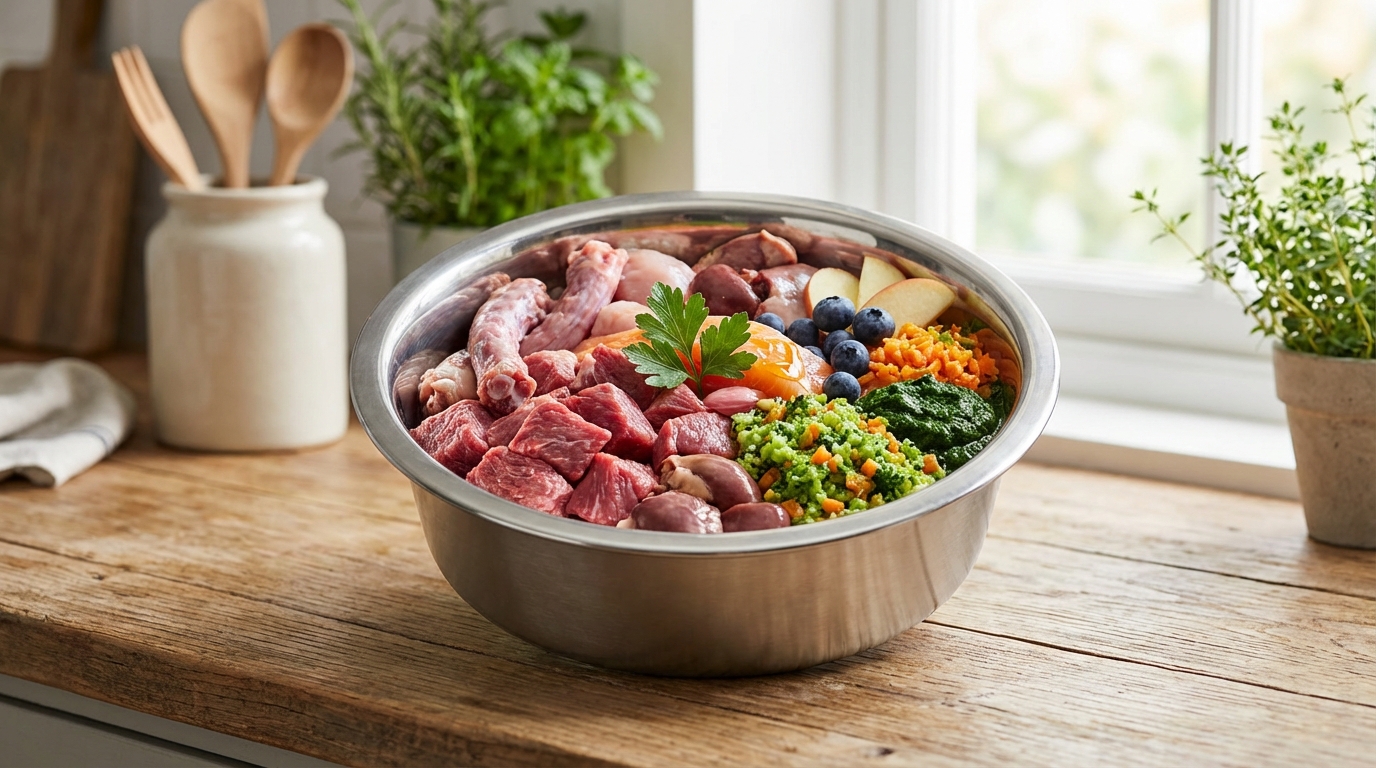
Table of Contents
What Is BARF?
BARF stands for both Biologically Appropriate Raw Food and Bones And Raw Food. It’s a feeding model developed by Australian veterinarian Dr. Ian Billinghurst, who published his groundbreaking work “Give Your Dog a Bone” in 1993. Billinghurst’s research challenged conventional thinking about dog nutrition by arguing that dogs are essentially wolves—and therefore should be fed diets that more closely mimic what their ancestors consumed in the wild.
However, BARF differs from other raw feeding models in one crucial way: it includes plant matter. Whilst critics argue that wolves are obligate carnivores, Billinghurst and other BARF advocates contend that domestic dogs are opportunistic omnivores that benefit from the fibre, antioxidants, and phytonutrients found in vegetables and fruits. This makes BARF the most popular raw feeding model in the UK, particularly among owners seeking a more holistic approach to canine nutrition.
The philosophy behind BARF is straightforward: replicate what a dog would naturally consume, including the stomach contents of prey animals (which would contain plant matter), whilst maintaining nutritional balance through a structured ratio.
Key Differences: BARF vs PMR
Whilst Prey Model Raw (PMR) feeding comprises 80% muscle meat, 10% bone, 5% liver, and 5% other organs, BARF shifts the balance to include 10% plant matter. This means BARF reduces muscle meat to 70% and eliminates the strict organ percentages in favour of flexibility. BARF advocates argue this additional plant matter aids digestion, provides prebiotic fibre, and supplies phytonutrients that may help prevent chronic disease.
For UK dog owners, BARF has become the preferred choice for several reasons: it’s easier to balance over time, more forgiving for beginners, and allows owners to include seasonal vegetables and fruits that support digestive health and natural detoxification.
The 70/10/5/5/10 Ratio Explained
The BARF model uses a specific ratio to ensure complete nutrition. Here’s how each component works:
Muscle Meat
The foundation of the diet. Provides protein, amino acids, and B vitamins.
Chicken, beef, turkey, lamb, duck, rabbit
Edible Bone
Raw bones only. Provides calcium, phosphorus, and minerals.
Chicken wings, duck necks, rabbit ribs
Liver
Organ meat rich in vitamin A, iron, and trace minerals.
Beef, chicken, pork, lamb liver
Other Organs
Secreting organs provide unique nutrients and enzyme cofactors.
Kidney, spleen, brain, heart
Fruit & Veg
Blended plant matter for fibre and phytonutrients.
Must be blended/puréed
70% Muscle Meat
Muscle meat forms the nutritional backbone of BARF. It provides complete protein with all essential amino acids, B vitamins (especially B12), iron, zinc, and selenium. Variety is crucial—rotating between different protein sources ensures your dog receives a broader spectrum of micronutrients.
Suitable Muscle Meat Sources in the UK:
- Beef: Chuck, brisket, mince, heart
- Chicken: Thighs, leg, breast, mince
- Turkey: Thighs, mince, leg
- Lamb: Shoulder, leg, mince
- Duck: Thighs, breast, leg
- Rabbit: Whole rabbit or jointed
- Fish: Whole small fish (mackerel, sprats, sardines)—excellent omega-3 source
- Pork: Less common but acceptable—shoulder, leg
- Venison: Premium option, excellent nutrient density
- Game: Pheasant, grouse, pigeon
Special Mention: Green Tripe
Green tripe (the stomach lining of grass-fed cattle, not bleached white tripe) is highly valued in raw feeding circles. It contains beneficial enzymes, naturally occurring probiotics, and is rich in nutrient bioavailability. Many BARF feeders include 5-10% green tripe within their 70% muscle meat allocation for its probiotic benefits and improved digestibility.
10% Edible Bone
CRITICAL: Only raw bones are safe. Cooked bones become brittle and splinter, posing a serious choking and bowel obstruction risk. Raw bones, by contrast, remain flexible and digestible.
Suitable Bones for Dogs:
Chicken wings
~46% bone content. Soft, digestible, ideal for all dogs.
Duck necks
~50% bone content. Excellent for medium to large dogs.
Chicken necks
Smaller, good for toy and small breeds.
Rabbit ribs
Delicate bones, excellent for puppies and seniors.
Sprats / sardines
Whole small fish provide bone, calcium, and omega-3s.
Lamb neck fillet
Larger, softer bones suitable for adult dogs.
Calculating Bone Content
If you’re using minced meat with bone, the bone percentage is already accounted for. If you’re feeding whole prey or separate meat and bone, calculate as follows:
Example: A 20kg dog needs 500g daily. At 10% bone, that’s 50g bone content. A chicken wing weighs ~40-50g with ~46% bone, giving ~20g actual bone. You’d need 2-3 chicken wings daily.
5% Liver
Liver is a nutrient-dense secreting organ packed with vitamin A, B vitamins, iron, copper, and folate. However, it’s also high in vitamin A, and excess vitamin A can be toxic. The 5% maximum ensures balance.
Introduction Protocol
Start small and build tolerance gradually. Many dogs experience loose stools when liver is introduced too quickly, as it has a natural laxative effect.
- Week 1: Introduce tiny amounts (2-3g for small dogs, 5g for large)
- Week 2: Increase to 10-15g
- Week 3: Aim for the full 5% allocation
5% Other Secreting Organs
Beyond liver, “secreting organs” include any organ that produces enzymes, hormones, or other bioactive compounds. These include kidney, spleen, heart, brain, pancreas, and thymus. You might feed 5% liver and rotate other organs, or mix throughout the week—the key is averaging 5% organ content over time.
10% Fruit & Vegetables (The BARF Difference)
This is what truly distinguishes BARF from other raw feeding models. The 10% plant matter allocation provides fibre, phytonutrients, and antioxidants that carnivorous-only diets lack.
Why Include Plant Matter?
- Fibre: Supports healthy digestion and bowel regularity
- Antioxidants: Combat free radicals and support cellular health
- Phytonutrients: Plant compounds with potential anti-inflammatory and antimicrobial properties
- Prebiotics: Feed beneficial gut bacteria
- Hydration: Many vegetables are water-rich, supporting kidney function
The Critical Rule: Must Be Blended/Puréed
Dogs cannot break down plant cell walls—they lack cellulase. Therefore, vegetables must be blended or puréed to break down cell walls and improve bioavailability. Feeding whole vegetables is largely ineffective and may pass through undigested.
Safe Fruits & Vegetables for Dogs (UK Available)
Safe & Recommended
Broccoli
Cruciferous, rich in sulforaphane
Spinach
Excellent iron and calcium source
Kale
Nutrient-dense green, detoxifying
Carrots
Beta-carotene, promotes dental health
Courgette
Low-calorie, easy to digest
Butternut Squash
Vitamin A, soluble fibre
Sweet Potato
Feed cooked. Complex carbs & fibre.
Cucumber
Hydrating, low-calorie
Green Beans
Vitamin K, lutein (eye health)
Peas
Protein and fibre
Blueberries
Antioxidants, memory support
Raspberries
Vitamin C, ellagic acid (antioxidant)
Strawberries
Vitamin C, moderate sugar
Apples
Remove seeds. Pectin aids digestion.
Pears
Remove seeds. High fibre.
Watermelon
Remove seeds. Hydrating treat.
Cranberries
Urinary tract support
Pumpkin
Soluble fibre, aids digestion
Beetroot
Detoxifying, support circulation
Bananas
Potassium, use as occasional treat
Toxic & Dangerous (Never Feed)
Grapes & Raisins
Unknown toxin causing acute kidney failure. No safe quantity known.
Onions, Garlic & Leeks
Contain thiosulfates damaging red blood cells, causing haemolytic anaemia.
Avocado
Contains persin, causing vomiting and diarrhoea. All parts toxic.
Cherries
Cyanide in pits and leaves. Very dangerous if cracked.
Wild Mushrooms
Many species fatally toxic. Avoid entirely.
Macadamia Nuts
Unknown toxin causing tremors, weakness, and hyperthermia.
Rhubarb & Tomato Leaves
Oxalic acid and solanine cause GI upset and calcium loss.
Xylitol
Artificial sweetener causing hypoglycaemia and liver failure. Tiny quantities are fatal.
When in Doubt, Leave It Out
If you’re unsure whether a vegetable is safe, don’t risk it. Always consult your vet before introducing new foods. Some resources include Blue Cross and RSPCA which provide excellent pet safety guidance.
How Much BARF to Feed
The standard guideline is 2-3% of body weight daily, depending on activity level and metabolism. Here’s a comprehensive feeding table:
| Dog Weight | Daily Amount | Muscle (70%) | Bone (10%) | Liver (5%) | Organs (5%) | Veg & Fruit (10%) |
|---|---|---|---|---|---|---|
| 5 kg | 100-150g | 70-105g | 10-15g | 5-7.5g | 5-7.5g | 10-15g |
| 10 kg | 200-300g | 140-210g | 20-30g | 10-15g | 10-15g | 20-30g |
| 20 kg | 400-600g | 280-420g | 40-60g | 20-30g | 20-30g | 40-60g |
| 30 kg | 600-900g | 420-630g | 60-90g | 30-45g | 30-45g | 60-90g |
| 40 kg | 800-1200g | 560-840g | 80-120g | 40-60g | 40-60g | 80-120g |
Special Circumstances
Puppies
Growing puppies require more calories and calcium for bone development: 5-7% body weight daily (3-4 meals). Keep bone at 10% but monitor for constipation.
Seniors & Inactive Dogs
Reduce to 1.5-2% body weight daily. Monitor body condition score weekly and adjust slightly if ribs become too prominent.
Active & Working Dogs
High-energy dogs require 3-4% body weight daily. May feed 2-3 meals to aid digestion.
Pregnant & Nursing Dogs
During pregnancy: increase to 3-4% by final trimester. While nursing: increase to 4-6% (depending on litter size). Feed 3+ meals daily.
How to Prepare the Vegetable Mix
Step-by-Step Preparation
Wash Thoroughly
Rinse all vegetables under running water to remove soil and pesticide residues. Use organic vegetables where possible to reduce chemical exposure.
Chop & Prepare
Roughly chop vegetables into 2-3cm pieces. Remove any tough stems. For leafy greens, blanch briefly (30 seconds in boiling water) to improve nutrient availability and remove oxalic acid.
Blend or Purée
Use a high-powered blender, food processor, or hand blender to pulverise vegetables into a smooth mush. The finer the blend, the better the digestibility and nutrient absorption.
Portion & Freeze
Divide the vegetable mush into ice cube trays or small containers. Each cube is typically 10-15ml (roughly 15-20g). Freeze solid, then transfer cubes to freezer bags for organisation. Label with the date and contents.
Serve
Thaw portions as needed. Mix with meat and bones just before feeding. Some owners prefer serving the vegetable mix at room temperature or slightly warmed (never hot).
Ideal Vegetable Mix Proportions
50%
Leafy Greens
Spinach, kale, parsley, lettuce, chard. Rich in minerals and vitamins.
30%
Above-Ground Veg
Broccoli, courgette, carrot (grated), green beans. Provide fibre and nutrients.
20%
Fruit & Extras
Apples, berries, pumpkin. Adds variety, palatability, and antioxidants.
Sample 7-Day BARF Meal Plan
Here’s a detailed 7-day plan for a 20kg adult dog requiring 500g daily (2.5% body weight). Rotate proteins, bones, organs, and vegetables to ensure nutritional variety:
| Day | Protein Source (350g) | Bone (50g) | Liver (25g) | Organ (25g) | Veg Mix (50g) |
|---|---|---|---|---|---|
| Monday | Beef mince | Chicken wing | Beef liver | Beef kidney | Spinach, apple, carrot |
| Tuesday | Chicken thighs (diced) | Duck neck (½) | Chicken liver | Beef heart | Kale, blueberry, pumpkin |
| Wednesday | Lamb shoulder (minced) | Chicken neck | Lamb liver | Beef spleen | Broccoli, pear, beetroot |
| Thursday | Turkey mince | Sprats (whole, 2-3) | Beef liver | Chicken heart | Lettuce, strawberry, courgette |
| Friday | Rabbit (whole or jointed) | Rabbit ribs (with meat) | Pork liver | Beef kidney | Chard, raspberry, sweet potato |
| Saturday | Duck thighs (diced) | Duck neck (½) | Chicken liver | Beef liver (rotate) | Spinach, apple, green beans |
| Sunday | Venison mince | Chicken wing | Lamb liver | Beef spleen | Parsley, blueberry, pumpkin |
Protein Rotation Guide
Rotating proteins provides nutritional variety and reduces the risk of developing food sensitivities. Most BARF feeders rotate 3-5+ different proteins on a weekly or bi-weekly basis.
Beginner’s Rotation (3 Proteins)
If you’re new to BARF, start with three reliable proteins and rotate weekly:
Week 1: Chicken
Readily available, affordable, lean
Week 2: Beef
Rich in iron and B12, versatile
Week 3: Turkey
Lean, hypoallergenic, budget-friendly
Advanced Rotation (5-7+ Proteins)
Once established on BARF, expand to include diverse proteins:
1. Chicken—lean, common, year-round availability
2. Beef—rich, nutrient-dense
3. Turkey—lean alternative to chicken
4. Lamb—richer flavour, good for picky eaters
5. Duck—higher fat, warming energy
6. Rabbit—lean, easily digestible
7. Venison—premium, nutrient-dense
8. Fish—whole sprats/sardines weekly for omega-3s
Sourcing UK Proteins for BARF
Local Butchers
Often offer the best value and quality. Many will freeze meat to order. Ask for offcuts and bulk discounts.
Farmers’ Markets
Excellent for seasonal proteins and supporting local farmers. Often have competitive pricing.
Online Raw Suppliers
Specialist raw pet food suppliers deliver pre-packed BARF meals and components. Convenient but more expensive.
Supermarkets
Budget option, though limited variety. Yellow-sticker reductions ideal for raw feeders.
How to Start BARF — Beginner’s Timeline
Transitioning to BARF should be gradual to allow your dog’s digestive system to adapt. Here’s a recommended 5-week timeline:
1 Week 1: Meat Only
Start with a single, familiar meat source to establish baseline tolerance. Feed 100% meat, no bones, no organs, no vegetables. Use 2.5% body weight daily. Watch for digestive changes.
2 Week 2: Add Edible Bone
Introduce soft, digestible raw bones. Ratio ~90% meat, ~10% bone by weight. Introduce gradually (1-2 bones every other day, building daily). Monitor for constipation and adjust if needed.
3 Week 3: Add Liver
Introduce organ meat, starting with liver. Start with tiny amounts (2-3g for small dogs, 5g for large). Increase gradually by 5g per week over 3-4 weeks. Target 5% of daily ration. Loose stools possible (liver has a natural laxative effect).
4 Week 4: Add Other Organs
Introduce additional secreting organs (kidney, spleen, heart). Start with small pieces (5-10g). Mix with familiar meat to ease acceptance. Increase to 5% total organ content (including liver).
5 Week 5: Introduce Vegetables
Complete the transition with plant matter. Prepare vegetable mush (blended, not whole). Start with small amounts (10g for small dogs, 25g for large). Begin with mild vegetables (pumpkin, carrot, apple). Increase over 2-3 weeks to reach 10% target.
Important Safety Notes
- Never mix raw and commercial kibble in the same meal.
- If doing a complete transition, phase out kibble completely over 1-2 weeks.
- Consult your vet before starting BARF, especially for puppies or dogs with health conditions.
- Store safely: Frozen meat can last 3-6 months. Thawed meat should be fed within 24 hours.
BARF Supplements
A well-balanced BARF diet should provide most nutrients. However, some supplements can be beneficial additions:
Fish Oil (Omega-3)
Recommendation: Optional but beneficial
Provides EPA and DHA for skin, coat, joint, and cognitive health. Especially useful if not feeding whole fish regularly.
Dosage: 100-300mg combined EPA/DHA per 10kg body weight, 2-3x weekly
Kelp Powder
Recommendation: Optional; beneficial for iodine
Sea vegetables provide iodine, essential for thyroid function, and trace minerals.
Dosage: ¼–½ teaspoon daily for medium dogs (monitor: excess can suppress thyroid)
Vitamin E
Recommendation: Optional; supports antioxidant status
Antioxidant that protects cell membranes. May be beneficial in older dogs or those with inflammatory conditions.
Dosage: 100-400 IU daily depending on dog size
Raw Eggs
Recommendation: Optional; nutrient boost
Excellent source of choline, selenium, and lutein. Feed whole (shell + yolk + white) 2-3x weekly. Some risk of salmonella exists.
Dosage: One egg per 10-15kg body weight
Apple Cider Vinegar
Recommendation: Optional; digestive support
May aid digestion, support immune function, and improve nutrient absorption. Must be raw and unfiltered.
Dosage: ¼–½ teaspoon per 10kg daily, mixed with food or water
Probiotics
Recommendation: Optional; beneficial post-antibiotic
Multi-strain probiotics support gut microbiome balance, especially useful after antibiotic courses or during digestive upset.
Dosage: Follow product instructions; typically 1-5 billion CFU daily
Supplements NOT Recommended in BARF
- Synthetic multivitamins: Unnecessary and may cause imbalance
- Added calcium: BARF already provides adequate calcium through bone
- Taurine supplementation: Not needed in meat-based diets
- Most vitamin A supplements: Can cause toxicity when combined with liver
Adjusting Portions: Body Condition Scoring
The best way to know if you’re feeding the right amount is to assess your dog’s body condition regularly through visual inspection and hands-on evaluation.
The 5-Point Body Condition Score
1: Underweight
Ribs, spine, hip bones very prominent. Severe waist. Belly tucked sharply.
Action: Increase portions by 0.25%
2: Lean
Ribs easily felt, slight visibility. Clear waist. Abdomen tucked.
Action: Increase portions by 0.125%
3: Ideal
Ribs felt but not seen. Visible waist. Abdominal tuck. Smooth contours.
Action: Maintain current portions
4: Overweight
Ribs difficult to feel. Minimal waist. Slight abdominal bulge.
Action: Reduce portions by 0.125%
5: Obese
Ribs cannot be felt. No waist. Prominent abdominal bulge. Fat pads.
Action: Reduce portions by 0.25%
How to Assess Your Dog
Visual Assessment
- View your dog from above. You should see a clear waist.
- View from the side. There should be an abdominal tuck (not saggy).
- Assess overall silhouette—smooth and streamlined is ideal.
Hands-On Palpation
- Place your hands on your dog’s ribcage.
- Apply gentle pressure. Ribs should be felt easily but not prominently visible.
- You should feel the spine easily along the back.
Functional Assessment
- Watch your dog move. Does it move easily and energetically?
- Does it tire quickly or maintain stamina?
- Energy levels and mobility reflect overall health and condition.
Adjustment Protocol
- Assess weekly for the first month on BARF
- Score your dog’s condition using the 5-point scale
- Make adjustments of 0.125% at a time (very small changes)
- Wait 2-3 weeks before reassessing—body composition changes slowly
- Once ideal, assess monthly to maintain condition
- Track adjustments—write down what you changed and the result
Pros and Cons of BARF
Advantages of BARF
Complete Nutritional Profile
The inclusion of plant matter adds fibre, vitamins, and phytonutrients not found in PMR or meat alone.
Easier to Balance
BARF is more forgiving long-term. The 70/10/5/5/10 ratio is easier to maintain than PMR’s strict percentages.
Digestive Support
Added fibre aids digestion, promotes healthy bowel movements, and feeds beneficial gut bacteria.
Natural Detoxification
Cruciferous vegetables contain sulforaphane and other compounds supporting natural detoxification.
Cost-Effective
The 10% vegetable requirement can be bulk-purchased and frozen affordably, reducing overall feeding costs.
Customisable
BARF allows flexibility in rotating proteins, vegetables, and supplements based on your dog’s individual needs.
Improved Coat & Skin
Many BARF feeders report shinier coats, reduced itching, and improved skin health within weeks.
Whole-Food Ingredients
BARF uses only whole, recognisable foods—no synthetic vitamins, fillers, or questionable additives.
Disadvantages of BARF
Time-Intensive Preparation
Vegetable blending and meal prep requires more effort than PMR feeding. Monthly batch prep sessions are essential.
Learning Curve
BARF requires understanding the 70/10/5/5/10 ratio, vegetable preparation, and rotation principles.
Risk of Imbalance
If portions are miscalculated or rotation is inconsistent, nutritional imbalances can develop over months.
Veterinary Scepticism
Many conventional vets lack training in raw feeding and may discourage BARF despite growing evidence of safety.
Picky Eaters
Some dogs resist vegetable mush initially. Patience and consistency are required to establish acceptance.
Food Safety Concerns
Raw meat carries theoretical risk of bacterial contamination. Not ideal for immunocompromised dogs or homes with young children.
Storage Requirements
Requires freezer space for bulk meat and vegetable mixes. Not practical for those with limited storage.
Transitional Digestive Upset
Dogs switching from kibble may experience loose stools, nausea, or vomiting during the first 2-4 weeks.
Common BARF Mistakes & FAQ
Common Mistakes to Avoid
1. Feeding Whole Unblended Vegetables
Dogs cannot digest whole vegetables. They pass through undigested. Always blend or purée plant matter.
2. Overfeeding Fruit
Fruit is high in natural sugars. Limit to <10% of the vegetable mush (roughly 1-2% of total daily ration).
3. Insufficient Bone Content
Underfeeding bone leads to calcium deficiency and mineral imbalance. Stick to 10% edible bone weight.
4. Feeding Cooked Bones
Cooked bones splinter and are dangerous. Raw bones only. Never feed cooked poultry bones.
5. Over-Supplementing
BARF provides complete nutrition. Unnecessary supplements cause imbalances. Use supplements only as directed.
6. Feeding Toxic Foods
Research before introducing new vegetables. Grapes, onions, avocado, and macadamia nuts are dangerous.
7. Inadequate Protein Rotation
Feeding the same protein continuously may develop intolerances. Rotate 3-5+ proteins weekly or bi-weekly.
8. Ignoring Body Condition
Don’t assume a standard percentage is perfect. Monitor and adjust based on your dog’s individual condition.
Frequently Asked Questions
Can I feed raw vegetables without blending?
No. Dogs lack the enzyme cellulase needed to break down plant cell walls. Whole vegetables are largely indigestible and pass through unabsorbed. Always blend or purée plant matter for maximum nutrient availability.
How much fruit is too much?
Fruit is high in natural sugars. Limit to no more than 10% of the vegetable mush allocation (roughly 1-2% of total daily food). Feed low-sugar fruits like berries and avoid sugar-dense fruits as staples.
Can I feed garlic in small amounts?
No. All members of the allium family (garlic, onions, leeks) contain thiosulfates that damage red blood cells and cause haemolytic anaemia. There is no safe quantity. Never feed garlic, even in tiny amounts.
Is BARF suitable for puppies?
Yes, BARF is excellent for puppies, but portions must be adjusted. Puppies require 5-7% of body weight daily (vs 2-3% for adults) and need careful monitoring to ensure adequate calcium for bone development. Consult your vet on large-breed puppies.
What about seeds and stones?
Remove all seeds and stones. Apple seeds, apricot stones, and peach pits contain amygdalin, which converts to cyanide. Cherry, plum, and peach pits are especially dangerous if cracked. Always remove seeds before feeding fruit.
Do I need supplements on BARF?
A well-balanced BARF diet provides complete nutrition without supplements. However, optional additions like fish oil, kelp, or probiotics can be beneficial. Never add synthetic calcium or multivitamins unless recommended by a vet for specific deficiencies.
Can I batch prep BARF meals?
Yes. Many feeders prepare vegetable mush monthly and freeze in ice cube trays. Meat and bones can be portioned and frozen separately. Thawed meat should be fed within 24 hours. Vegetable mixes last 3-4 months in the freezer when properly stored.
What if my dog refuses vegetables?
Persistence is key. Many dogs resist vegetables initially. Start with mild, naturally sweet vegetables (pumpkin, carrot, apple) mixed thoroughly with meat. Increase variety gradually. Some dogs accept vegetables better when lightly warmed or mixed with a small amount of fish oil. Avoid forcing; allow time for taste preferences to develop.
BARF vs PMR Quick Comparison
| Muscle Meat | BARF: 70% | PMR: 80% |
| Bone | BARF: 10% | PMR: 10% |
| Liver | BARF: 5% | PMR: 5% |
| Other Organs | BARF: 5% | PMR: 5% |
| Vegetables | BARF: 10% | PMR: 0% |
BARF’s key advantage is the inclusion of plant matter for fibre, antioxidants, and digestive support. Learn more in our PMR Guide or read a detailed BARF vs PMR comparison.
Ready to Get Started?
Use our free BARF calculator to determine exact portions for your dog based on weight, age, and activity level.
Calculate Your Dog’s BARF Portions