Transition Your Dog to Raw Food: UK Guide
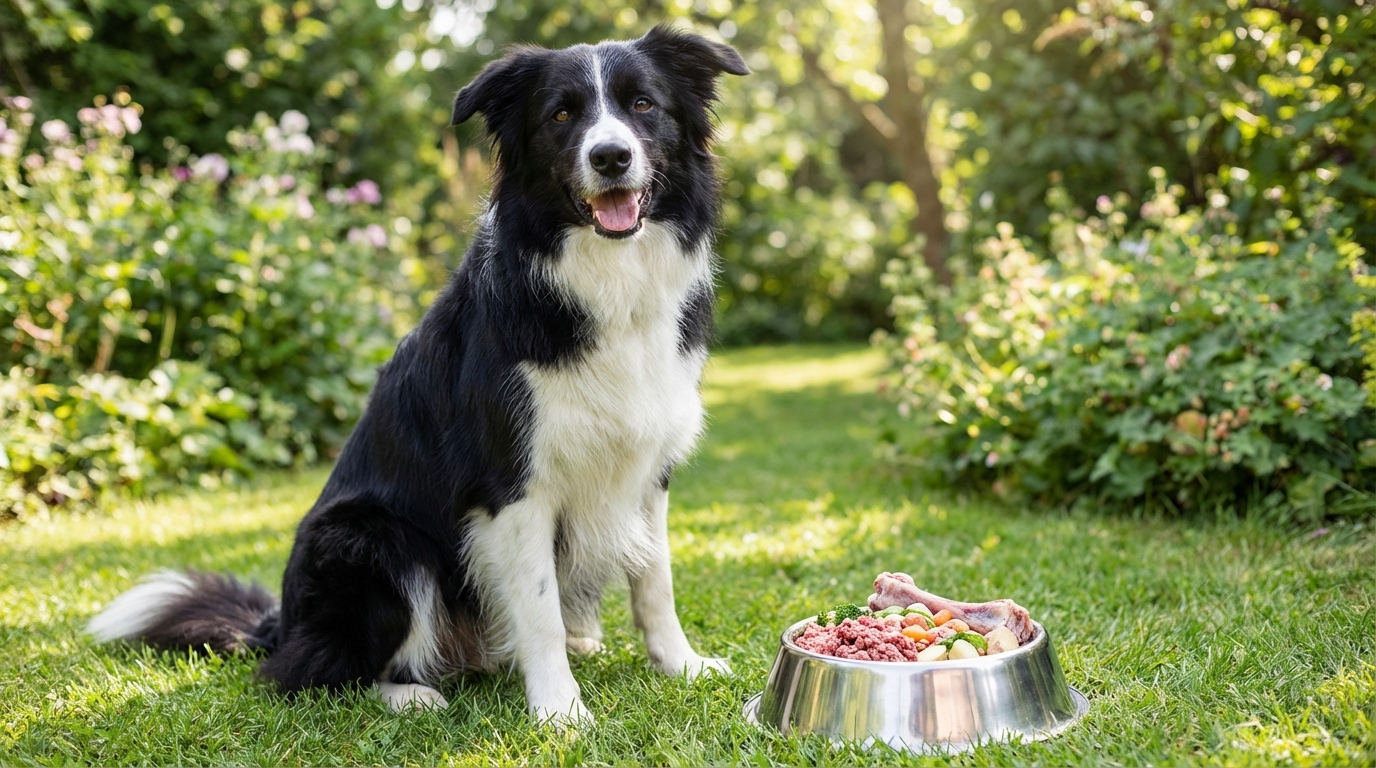
You've decided raw feeding is right for your dog. Now comes the transition—perhaps the most important step. Switch too fast, and your dog experiences digestive upset. Do it gradually with the right approach, and your dog thrives. This guide walks you through both transition methods, what to expect week by week, and how to troubleshoot common issues. Consult Blue Cross for additional transition support if needed.
Two Transition Methods: Cold Turkey vs Gradual
Cold Turkey (Abrupt Switch)
How it works:
Stop kibble entirely. Feed 100% raw from day one. Takes 1 day.
Best for:
- • Healthy adult dogs with no digestive sensitivity
- • Dogs with strong immune systems
- • Owners without time for gradual transition
Pros:
- • Quick start—see benefits faster
- • No mixing of two foods (simpler)
Cons:
- • Higher risk of loose stools initially
- • Stronger detox symptoms (see below)
- • Not ideal for sensitive dogs
Gradual Transition (7-10 Days)
How it works:
Slowly increase raw whilst decreasing kibble over 7-10 days using the ratio method below.
Best for:
- • Puppies and young dogs
- • Dogs with sensitive stomachs
- • Senior dogs
- • Dogs with mild digestive issues
Pros:
- • Minimises digestive upset
- • Fewer detox symptoms
- • Safer for delicate digestive systems
Cons:
- • Takes 7-10 days (longer planning)
- • Requires daily ratio adjustments
Gradual Transition: 7-Day Plan
Use this ratio-based approach for a smooth switch. If your dog tolerates well, move to the next ratio earlier. If digestive upset occurs, stay at that ratio an extra day.
Days 1-2: 25% Raw + 75% Kibble
Portions: If your dog normally eats 400g kibble daily, give 100g raw + 300g kibble.
What to expect: Minimal change. Dog may eat slightly less kibble if raw is more appetising.
Days 3-4: 50% Raw + 50% Kibble
Portions: 200g raw + 200g kibble daily (two meals, split evenly or mix together).
What to expect: Stools may soften slightly. This is normal as the gut adapts. Energy may increase noticeably.
Days 5-6: 75% Raw + 25% Kibble
Portions: 300g raw + 100g kibble daily.
What to expect: Stool changes become more apparent. Expect softer to runny stools. This is a sign the gut microbiome is shifting—entirely normal. Some dogs show increased appetite or energy.
Day 7+: 100% Raw
Portions: Full raw portion (use our calculator to determine exact amount).
What to expect: Stools may still be loose. Appetite may normalise. Coat and energy improvements start appearing within 2-4 weeks.
First Protein: Start With Chicken or Turkey
The choice of first protein matters. Stick with one protein for the first week, then introduce others.
Why chicken or turkey?
- • Bland and easily digestible—no shocking the system.
- • Most dogs have never been kibble'd with poultry-only diets, so lower allergy risk.
- • If your dog has sensitivities, poultry is usually safe.
- • Affordable and readily available in the UK.
First meal: 400g chicken mince or chunks (no bones initially, add bones once gut settles). Include a small amount of organ meat if available, but keep it simple. Consult RSPCA guidelines for additional food safety tips.
What to Expect: Week-by-Week Timeline
Week 1: Transition & Initial Detox
Days 1-3:
- • Stools firm (still mostly kibble)
- • Appetite normal or slightly reduced
- • Energy levels steady
Days 4-7:
- • Stools become softer as raw percentage increases
- • Possible mucus in stool (yellow/white coating)—this is detoxification, not disease
- • Some dogs may vomit once or twice—usually just expelling excess stomach acid
- • Appetite may temporarily decrease (this is normal; don't force-feed)
- • Increased thirst (also normal)
Normal "detox" signs: Runny stools, mucus in poop, occasional vomiting, temporary reduced appetite. These resolve within 7-14 days and indicate the body is clearing out kibble residue. Not a sign to stop raw feeding.
Weeks 2-4: Settling In & Improvements
Week 2:
- • Stools firm up and normalise by end of week (may still be soft mid-week)
- • Appetite returns to normal or increases
- • Energy levels rise noticeably
- • Breath becomes fresher
Weeks 3-4:
- • Coat begins to look shinier (usually visible after 2 weeks)
- • Stools are smaller and more formed (less volume because raw is more digestible)
- • Teeth appear whiter and cleaner
- • Weight may adjust (often dogs lean out if overweight on kibble)
- • Skin clarity improves (itching may reduce in 4-8 weeks)
Months 2-3: Full Adaptation
- • Coat transformation complete (noticeable gloss and healthiness)
- • Stable, consistent energy levels
- • Most dogs show improved mobility and playfulness
- • Digestive system fully adapted
- • Skin and allergy improvements continue (especially for itchy dogs)
When to Introduce New Proteins & Bones
When to Add New Proteins (Week 2 onwards)
Once your dog has been on chicken for 5-7 days with normal stools, introduce a new protein:
- • Day 1-3: 75% chicken + 25% new protein (e.g., turkey)
- • Day 4-5: 50% chicken + 50% new protein
- • Day 6+: 100% new protein (or rotate)
Suggested rotation:
Week 1: Chicken | Week 2: Turkey | Week 3: Beef or Pork | Week 4+: Rotate and add fish
When to Add Soft Bones (Week 2 onwards)
Bones are crucial for calcium, but introduce after week 1 when the digestive system has adapted:
- • Week 2: Start with soft bones (chicken wings, necks)
- • Week 3-4: Gradually increase bone content to reach 10% by week 4
- • Portion: Start with 1-2 chicken wings per day; monitor stools
Signs bones are too much: Constipation or extremely hard stools. Reduce portion and increase soft tissue days.
When to Add Organs (Week 2-3)
Organs provide essential nutrients but are concentrated; introduce slowly:
- • Week 2: Add small amounts (5-10g) of liver or kidney mixed into chicken
- • Week 3: Increase organs slowly to reach 10% total by week 4
- • Remember: Liver should never exceed 5% of weekly food
Troubleshooting Common Transition Issues
Diarrhoea (Loose/Runny Stools)
This is normal during transition. Expected timeframe: Days 3-7, resolves by day 10.
What to do:
- • Slow the transition—stay at current ratio 1-2 extra days before advancing
- • Ensure you're not mixing raw and kibble improperly (some dogs do better with separate meals)
- • Add a probiotic designed for dogs (Vitally, Pro-Kolin, etc.) for 2-3 weeks
- • Reduce portion size slightly (your dog may be eating more total calories than before)
- • If diarrhoea persists beyond day 10 or worsens, consult your vet
Constipation (Hard Stools or Straining)
Less common, but can occur if bones are added too aggressively or too much bone content.
What to do:
- • Reduce bone content immediately (remove soft bones for 2-3 days)
- • Increase muscle meat portion relative to bone
- • Ensure adequate water intake (raw-fed dogs drink less due to food moisture)
- • Add organ meat or a small amount of pumpkin puree to soften stools
- • Reintroduce bones more gradually
Refusal to Eat Raw (Dog Prefers Kibble)
Some dogs, especially kibble-addicted ones, refuse raw initially.
What to do:
- • Warm the raw meat to 40°C—increases aroma and palatability
- • Try different proteins (chicken may not appeal; beef or lamb might)
- • Hand-feed the first few meals to encourage eating
- • Reduce kibble portion even more aggressively (encourage hunger)
- • Mix raw thoroughly into kibble, gradually increasing raw ratio
- • Be patient; most dogs adapt within 3-5 days once hungry
Vomiting During Transition
A single vomit or two during week 1 is usually just the stomach clearing. Ongoing vomiting is concerning.
What to do:
- • Single vomits: Likely normal detox; monitor and continue transition
- • Multiple vomits: Slow transition further; skip a meal and reintroduce softer protein
- • Vomiting bile (yellow/green): Dog may have empty stomach; feed smaller portions more frequently
- • Persistent vomiting (3+ times): Contact your vet to rule out obstruction or illness
Signs the Transition Is Going Well
- Stools normalise by day 7-10: Firm, smaller in volume, less odour
- Appetite stabilises: Dog eats enthusiastically and consistently
- Energy increases: More playfulness, faster running, better endurance
- Coat improves: Shinier, less shedding, healthier appearance within 2-4 weeks
- Breath fresher: Less "dog smell", whiter teeth
- Body condition improves: If overweight, dog leans out naturally; muscles become visible
- Skin clears: For itchy dogs, improvement usually visible after 4-8 weeks
Transition Best Practices
Don't Do This
- ✗ Mix kibble and raw in the same bowl (hard to track ratios)
- ✗ Rush the transition (patience prevents upset)
- ✗ Introduce multiple new proteins at once (hard to identify sensitivities)
- ✗ Add supplements or probiotics without need (let gut adapt naturally first)
- ✗ Feed bones before week 2 (gut not ready)
Do This
- ✓ Separate meals (raw and kibble at different times)
- ✓ Take photos of stools daily (track progress)
- ✓ Keep one protein consistent for 5-7 days
- ✓ Use kitchen scales for accuracy
- ✓ Track daily observations (energy, appetite, stools) for a week
Ready to Start Your Dog's Transition?
Calculate your dog's exact raw feeding portions based on weight, age, and activity level. Our calculator helps you plan the transition with perfect portion sizes for each day.
Get Started with CalculatorRelated Guides
10 Common Raw Feeding Mistakes
Learn what to avoid for perfect nutrition once transitioned.
Raw Feeding on a Budget
Keep costs low with UK sourcing and batch prep tips.
Complete PMR Guide
Master balanced raw feeding fundamentals.
Join Our Raw Feeding Community
Get transition tips, sourcing advice, and monthly nutrition guides delivered to your inbox. Connect with other UK raw feeders transitioning their dogs safely.