BARF vs PMR Diet: Which Is Best for Your Dog?
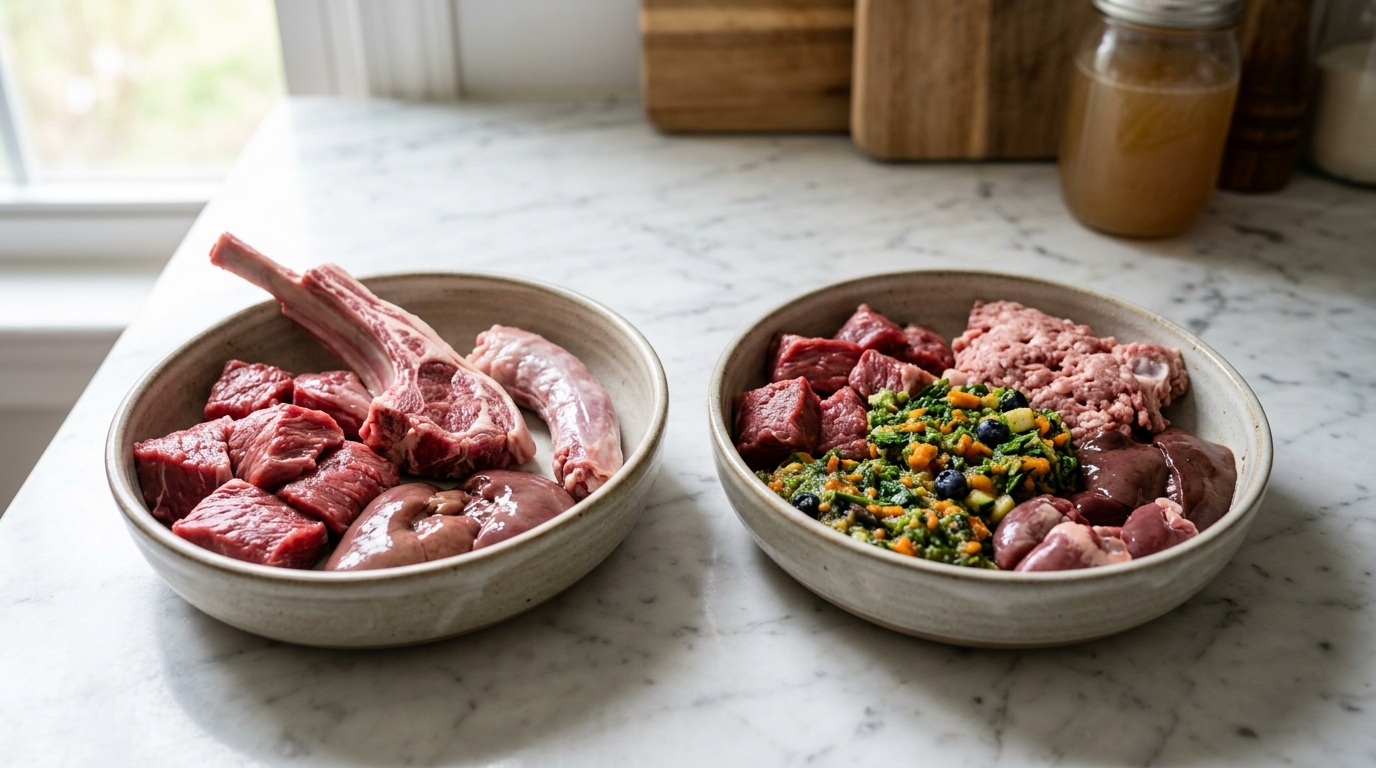
If you're new to raw feeding, you've probably encountered these two terms: BARF and PMR. Both are legitimate, scientifically-informed approaches to feeding raw diets to dogs, but they differ in philosophy, ratios, and practical considerations. Understanding these differences helps you choose the model that best suits your dog's needs, your lifestyle, and your goals. Let's break it down. Our PMR guide and BARF guide provide detailed implementation advice for both approaches.
What is PMR? The Prey Model Raw Diet
PMR stands for "Prey Model Raw." It's based on the idea that dogs should eat what their wild ancestors ate: whole prey animals. The PMR model attempts to replicate the nutritional profile of a whole kill—muscle, organs, bones, and all.
PMR Ratio: 80/10/5/5
- 80% Muscle meat (chicken, beef, lamb, pork, game)
- 10% Raw meaty bones (RMBs) like chicken wings, lamb ribs
- 5% Liver (organ meat)
- 5% Other organs (kidney, heart, spleen, pancreas)
PMR Philosophy
PMR advocates believe that dogs don't need vegetables, grains, or supplements because whole prey provides complete nutrition. It's a more purist, minimalist approach. The philosophy emphasises mimicking what wolves and wild dogs eat in nature.
Adherents to PMR argue that this simplicity makes it easier to feed a complete, balanced diet without overthinking it. You're not juggling multiple ingredients or worrying about vegetable ratios—you're simply feeding meat in the proportions that whole prey would provide.
What is BARF? The Biologically Appropriate Raw Food Diet
BARF stands for "Biologically Appropriate Raw Food" (some say "Bones And Raw Food"). It was formalised by Dr. Ian Billinghurst, an Australian veterinarian, in the 1990s. BARF includes vegetables and supplements alongside raw proteins, aiming to mirror what a dog might scavenge in addition to fresh kills.
BARF Ratio: 70/10/5/5/10
- 70% Muscle meat
- 10% Raw meaty bones
- 5% Liver
- 5% Other organs
- 10% Vegetables, fruits, and supplements
BARF Philosophy
BARF philosophy argues that domestic dogs benefit from the additional nutrients, fibre, and micronutrients that vegetables and supplements provide. Vegetables like broccoli, spinach, and carrots offer phytonutrients and antioxidants that supplement pure meat feeding.
Dr. Billinghurst's research suggested that adding vegetables increased micronutrient availability and digestive health. Many BARF feeders also include supplements like fish oil for omega-3s, probiotics for gut health, and sometimes ground eggshells for additional calcium. Consult RSPCA guidance on supplementation where needed.
Head-to-Head Comparison: BARF vs PMR
| Aspect | PMR | BARF |
|---|---|---|
| Core Ratio | 80/10/5/5 | 70/10/5/5/10 |
| Includes Vegetables | No | Yes (10%) |
| Supplements | Minimal, if any | Often recommended |
| Complexity | Very simple | Moderate (more ingredients) |
| Cost (typically) | Slightly higher (more meat) | Slightly lower (veg bulk) |
| Strictness | High (exact ratios) | More flexible |
| Origin | Natural evolution of raw feeding philosophy | Formalised by Dr. Ian Billinghurst (1990s) |
Which Dogs Thrive on BARF?
BARF feeding can be particularly beneficial for certain dogs:
Dogs with Digestive Sensitivity
Dogs prone to constipation often benefit from BARF's vegetable content, which provides fibre that aids digestion and bowel regularity.
Dogs with Yeast Issues (Potentially)
Some raw feeders report that dogs with yeast issues may benefit from BARF's inclusion of anti-inflammatory vegetables like green tripe and organ meats, which may help balance the immune system.
Dogs Requiring Extra Micronutrients
Older dogs, those recovering from illness, or those with specific health conditions may benefit from the additional micronutrients vegetables and supplements provide.
Owners Who Value Supplementation Control
BARF allows owners to fine-tune nutrition by adding specific supplements like fish oil, probiotics, or kelp powder based on their dog's individual needs. The Blue Cross provides useful nutritional information on supplementation.
Which Dogs Thrive on PMR?
PMR is ideal for many dogs too:
Dogs with Sensitive Stomachs
Some dogs do better with a meat-only approach because vegetables can irritate sensitive digestive systems. Fewer ingredients sometimes mean fewer triggers.
Dogs with Food Sensitivities or Allergies
PMR's simplicity makes it easier to identify and eliminate potential allergens. There are simply fewer moving parts to troubleshoot.
Busy Owners Who Value Simplicity
PMR requires minimal preparation compared to BARF. You're not juggling vegetables, measuring supplements, or rotating ingredients constantly. It's straightforward: thaw meat, feed, done.
Dogs Thriving on Meat-Only Diets
Some dogs simply thrive without vegetables. Their coat condition, energy levels, digestion, and overall health suggest they don't need the vegetable component.
Can You Combine BARF and PMR?
Absolutely. In fact, many UK raw feeders use a hybrid approach, sometimes called "PMR+" or flexible BARF. You might feed pure PMR most of the time but add vegetables or supplements weekly or monthly. This gives you the simplicity of PMR with some of BARF's nutritional flexibility.
There's no raw feeding police—what matters is that your dog is healthy, thriving, and getting complete nutrition. Some months you might run to PMR because you're busy; other months you might explore BARF more fully because you have time for more complex feeding.
Cost Comparison in the UK
The cost difference between BARF and PMR is modest. PMR is typically slightly more expensive because it uses more meat relative to total weight. BARF bulks out the diet with vegetables, making the per-kilogram cost slightly lower overall. However, if you're buying quality vegetables, some BARF approaches can be equally expensive.
Typical UK Monthly Costs (25kg Dog, 2.5%)
PMR: £120-180/month (depending on meat sources)
BARF: £110-170/month (vegetable bulk saves money)
Costs vary significantly based on where you source meat and vegetables, whether you buy pre-made raw or assemble yourself, and your location in the UK.
What Do UK Raw Feeding Communities Recommend?
UK raw feeding forums and Facebook groups are fairly balanced. Most experienced feeders recommend starting with whichever model appeals to you philosophically and practically, then assessing your dog's response after 6-8 weeks.
The consensus is clear: the best raw diet is the one your dog thrives on and that you can sustain long-term. A dog on PMR that's healthy and happy is better off than a dog on an inconsistently-fed BARF diet, and vice versa.
Our Recommendation: Try Both, Use the Calculator for Either
At Nature's Bowl, we believe both BARF and PMR are valid approaches backed by real-world results. Rather than declaring one "better," we recommend:
- 1. Start with the philosophy that resonates with you. Do you prefer simplicity (PMR) or nutritional flexibility (BARF)?
- 2. Feed that model consistently for 6-8 weeks, monitoring your dog's coat, energy, digestion, and body condition.
- 3. If your dog thrives, stick with it. If you notice issues (constipation, dull coat, etc.), try the other approach.
- 4. Many dogs do best on a hybrid—mostly PMR with occasional vegetable additions or seasonal BARF additions.
Learn More: Detailed Guides for Both Models
For deeper dives into each approach, we've created comprehensive guides:
Complete BARF Diet Guide
Learn exact BARF ratios, vegetable selections, supplement recommendations, and how to switch to BARF safely.
Read the BARF Guide →Complete PMR Diet Guide
Master the PMR approach with detailed ratios, protein selections, bone feeding, and troubleshooting advice.
Read the PMR Guide →Calculate Your Dog's Perfect Portions
Whether you choose BARF or PMR, our free calculator works for both. Enter your dog's details, select your preferred model, and get exact daily portion recommendations tailored to your dog's unique needs. For more information, read our guide on raw dog food budgeting in the UK.
Ready to decide between BARF and PMR?
Use Our Free CalculatorRelated Posts
How Much Raw Food Should I Feed My Dog? Complete UK Guide
Master portion sizes with the 2-3% rule and learn exact amounts for your dog's age and activity level.
Raw Dog Food on a Budget UK: Save Money
Practical tips from bulk buying to DIY prep—save money without compromising nutrition.
Get Personalized Portion Recommendations for BARF or PMR
Our free calculator works for both BARF and PMR diets. Choose your model and get exact daily portions tailored to your dog's unique needs.
Try the Calculator NowRaw Feeding Tips Delivered Weekly
Get expert raw feeding advice, diet comparisons, and UK supplier recommendations delivered to your inbox every week.
We respect your privacy. Unsubscribe anytime.