10 Raw Dog Food Mistakes UK Owners Make
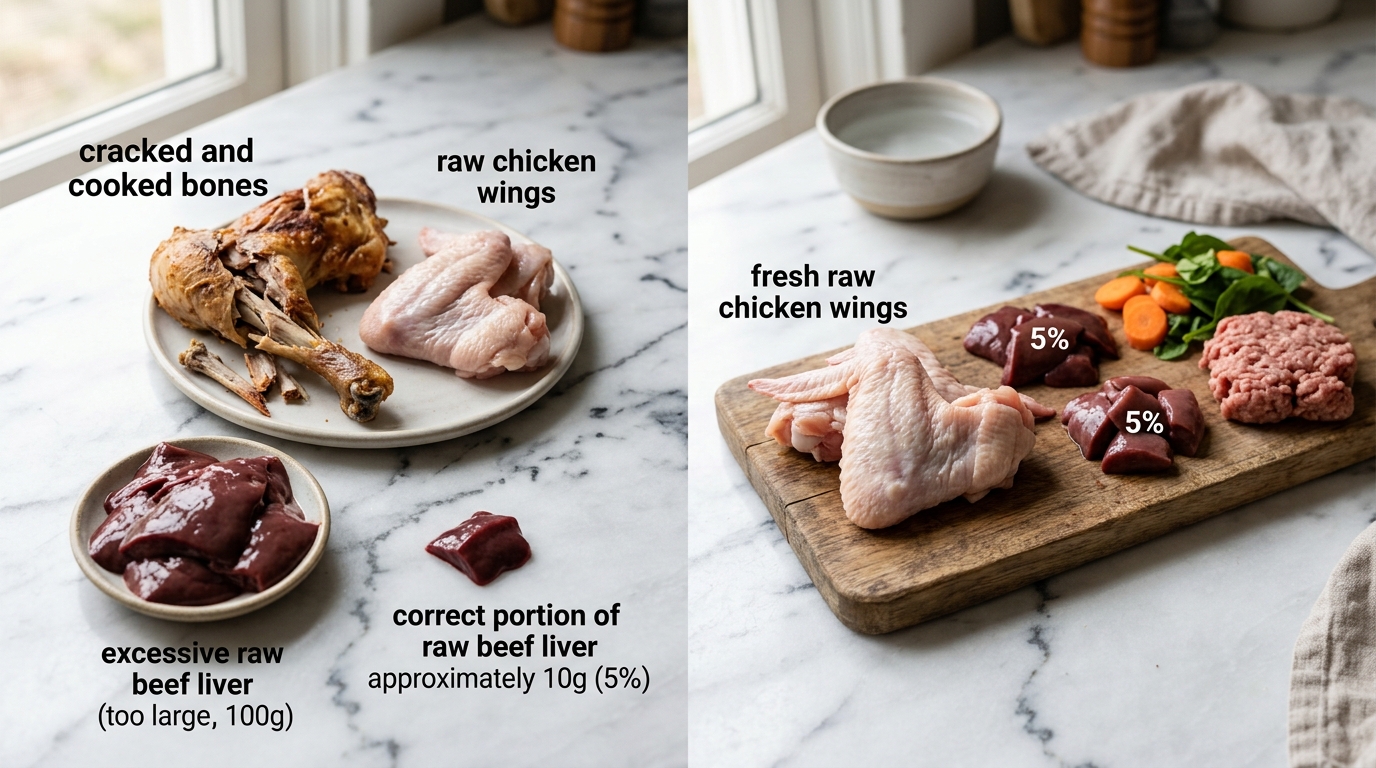
Raw feeding can transform your dog's health—better coat, cleaner teeth, more energy, and improved digestion. But mistakes are common, and they can undermine all the benefits. Whether you're new to raw feeding or looking to refine your approach, these 10 mistakes will help you feed your dog safely and correctly. See our guide on BVA guidance on raw feeding for veterinary perspective.
1. Not Following the Correct Ratio (Random Meat + Guesswork)
What Goes Wrong:
The foundation of raw feeding is balance. Dogs need muscle meat, organ meat, and bone in specific proportions. Without measuring, you'll likely overfeed some nutrients and underfeed others—your dog might look full but lack essential vitamins and minerals.
Why It's a Problem:
Incorrect ratios lead to mineral imbalances (especially calcium and phosphorus), vitamin deficiencies, or toxicities. Over time, this can cause weak bones, poor coat health, or worse. Adult dogs need roughly: 80% muscle meat, 10% organ meat (5% liver, 5% other organs), and 10% bone content by weight. Use our free calculator to determine exact portions for your dog's weight and activity level.
2. Feeding Weight-Bearing Bones (Cracked Teeth and Broken Jaws)
What Goes Wrong:
Large weight-bearing bones like marrow bones, femurs, and knuckle bones are extremely hard. Even powerful jaw muscles can crack or chip teeth on them. Splintered bone fragments can lodge in the mouth or throat, creating emergencies that cost hundreds in emergency vet visits.
Why It's a Problem:
Dental damage in dogs is painful and expensive. A cracked tooth can lead to infection, abscess, or tooth extraction. The hardness of weight-bearing bones far exceeds what even raw-fed dogs with strong teeth should handle. Cooked bones are even worse—they splinter and lose their natural flexibility.
How to Fix It:
Feed soft, edible raw bones instead: chicken wings and necks, turkey necks, fish spines, or lamb ribs. These are soft enough to chew and digest whilst providing essential bone content. Avoid femurs, marrow bones, knuckle bones, and any cooked bones entirely. If you want recreational chewing, offer raw meaty bones under supervision, but don't rely on them as meal components.
3. Too Much Liver (Vitamin A Toxicity)
What Goes Wrong:
Liver is nutritious and inexpensive, making it tempting to overfeed. But liver is extremely high in vitamin A. If it exceeds 5% of your dog's weekly food intake, vitamin A can accumulate in the body, causing hypervitaminosis A—a serious and often irreversible condition.
Why It's a Problem:
Excess vitamin A damages joints, bones, and connective tissue. Dogs with hypervitaminosis A develop brittle bones, joint pain, stiffness, and poor coat condition. The condition can take weeks or months to develop, making it hard to connect to diet. In severe cases, it causes permanent damage. Consult the PDSA for vitamin guidance.
How to Fix It:
Cap liver at 5% of your dog's weekly food. If your dog weighs 20kg and eats 400g per day (2.8kg per week), liver should never exceed 140g per week—about 20-30g per day or 140g twice a week. Balance with other organs: kidney, heart, spleen, and lung. These provide similar nutrition without the vitamin A overload.
4. Ignoring the Transition Period (Cold Turkey into Digestive Chaos)
What Goes Wrong:
Some owners switch their dogs from kibble to raw overnight. The gut microbiome needs time to adapt. Abrupt changes cause diarrhoea, vomiting, and temporary nutrient absorption issues—and many owners blame raw feeding instead of the transition method.
Why It's a Problem:
A dog's digestive system gradually adapts to food changes. Kibble-fed dogs have different gut bacteria than raw-fed dogs. A sudden switch shocks the system. Whilst healthy adult dogs can sometimes handle it, most benefit from a 7-10 day gradual transition. For senior dogs or those with sensitive stomachs, a gradual transition is essential.
How to Fix It:
Use our step-by-step transition guide: start with 25% raw + 75% old food, then gradually shift the ratio over 7-10 days. Most dogs tolerate this beautifully. For sensitive dogs, extend the transition to 14 days. Start with bland proteins like chicken, then introduce new proteins and bones week by week.
5. Not Adjusting Portions as Your Dog's Weight Changes
What Goes Wrong:
Dogs' nutritional needs change as they age, gain muscle, or lose weight. If you calculated portions when your dog was 20kg but they're now 22kg (or gained weight), you're underfeeding them relative to their new body composition. Conversely, older, less active dogs might gain weight on portions designed for younger, active dogs.
Why It's a Problem:
Overfeeding leads to obesity, joint stress, and health issues. Underfeeding causes energy loss, poor coat health, and muscle loss. Raw feeding allows precise control, but only if you recalculate regularly. Most owners set portions once and forget—a missed opportunity for optimal health.
How to Fix It:
Weigh your dog monthly. Use our calculator to recalculate portions whenever weight changes by more than 1kg. Adjust activity level settings if your dog's exercise routine changes. As dogs age, metabolic rate slows—reduce portions slightly for senior dogs to prevent weight gain. Body condition score is your guide: you should feel ribs easily but not see them prominently.
6. Feeding Only One Protein Source (Nutritional Monotony)
What Goes Wrong:
Some owners settle on chicken because it's cheap and their dog loves it. Feeding the same protein exclusively for months or years limits nutritional diversity. Different proteins provide different micronutrient profiles, amino acid ratios, and beneficial compounds.
Why It's a Problem:
Variety ensures complete nutrition. Beef provides different minerals than chicken; fish provides omega-3s; lamb and turkey add nutrients that single-source diets miss. Long-term monotony can eventually lead to deficiencies or imbalances. Additionally, rotating proteins reduces the risk of developing food sensitivities.
How to Fix It:
Rotate proteins regularly: chicken one week, turkey the next, beef or pork the following week. Introduce new proteins every 5-7 days during the first month. Add fish once weekly for omega-3s. Include a variety of organs from different animals. Most dogs thrive on 3-4 main protein sources rotated weekly. This is simpler than you'd think and dramatically improves nutritional completeness.
7. Not Accounting for Treats in Daily Allowance
What Goes Wrong:
Raw feeding allows precise calorie control, but only if you count all food. Dogs get training treats, dental chews, occasional table scraps, or vegetables. These add up. If a dog gets 400g raw food plus 200 calories in treats daily, they're actually consuming 20-30% more than calculated—leading to weight gain.
Why It's a Problem:
Unaccounted treats silently contribute to overfeeding. Within a few months, a lean dog becomes overweight. Excess weight stresses joints, complicates health, and shortens lifespan. The irony is that raw feeding enthusiasts are often most meticulous about diet, yet accidentally overfeed because they forget to count treats.
How to Fix It:
Reserve 10% of daily calories for treats. If your dog's daily portion is 400g, allocate 40g for treats and reduce the main meal to 360g. Choose low-calorie treats: raw meaty bones, organ pieces, or vegetables. Track training treat calories if you train frequently. Use our calculator and note the "treat allowance" to make it automatic.
8. Incorrect Puppy Portions (Growing Pups Need Different Ratios)
What Goes Wrong:
Puppies are often fed adult portions or, conversely, fed too much trying to support rapid growth. Puppies grow at different rates depending on breed. A 4-month-old Labrador and a 4-month-old Chihuahua have completely different nutritional needs. Using adult portion formulas for puppies creates problems.
Why It's a Problem:
Large breed puppies fed too much grow too fast, stressing developing bones and joints—leading to hip dysplasia and arthritis later in life. Underfed puppies develop poorly, lack energy, and have poor immune function. Raw-fed puppies also need slightly higher calcium ratios (12-15% bone) compared to adults (10%) to support skeletal development.
How to Fix It:
Puppies need higher daily percentages (more than adults at 1.5-2%), split into multiple meals. Large breed puppies benefit from slower growth—feed at the lower end to prevent developmental orthopedic disease. Use our calculator's puppy mode, which automatically adjusts portions by age and breed size. Increase portions monthly as the puppy grows. Your vet can confirm growth is on track with body condition assessments every 4-6 weeks.
9. Poor Food Hygiene and Storage (Bacterial and Freezer Burn)
What Goes Wrong:
Raw meat requires careful handling. Thawing at room temperature, leaving food in the bowl for hours, or storing in the freezer without organisation invites bacterial growth (E. coli, Salmonella) or freezer burn, which degrades nutrition and taste.
Why It's a Problem:
Bacterial contamination can sicken your dog (and you, if you handle meat without care). Freezer burn doesn't harm your dog but degrades nutritional value and taste. Poor storage means wasted money. Dogs have stronger stomach acid than humans and tolerate raw meat well, but poor hygiene is unnecessary risk.
How to Fix It:
Thaw in the fridge 24 hours before feeding—never at room temperature. Use sealed containers to prevent cross-contamination. Remove uneaten food after 30 minutes. Label frozen portions with the date and contents. Rotate stock (oldest first). Use airtight containers to prevent freezer burn. Clean food bowls immediately after feeding. Wash hands and surfaces after handling raw meat, just like you would with any raw meat preparation. This takes minimal extra effort and keeps everyone safe.
10. Not Consulting a Vet When Needed (Ignoring Health Conditions)
What Goes Wrong:
Raw feeding is wonderful for healthy dogs, but dogs with certain health conditions need professional guidance. Pancreatitis, kidney disease, arthritis, or immune issues sometimes require modified diets. Some owners assume raw is always best and skip vet consultations—potentially worsening their dog's condition.
Why It's a Problem:
Your vet is your dog's health advocate. Raw feeding fits most healthy dogs perfectly, but health conditions are individual. A dog with kidney disease might need lower phosphorus; one with pancreatitis might need lower fat; one with arthritis benefits from specific supplements. Skipping professional guidance means missing these opportunities to support your dog's health.
How to Fix It:
Discuss raw feeding with your vet before starting—or shortly after. If your dog has health issues, work with your vet to adapt raw feeding appropriately. Many vets support raw feeding when done correctly; some don't. Either way, transparency and collaboration ensure your dog gets the best nutrition for their individual situation. Annual vet checks are essential for monitoring raw-fed dogs, just as for any dog.
The Bottom Line
Raw feeding transforms dogs' health when done correctly. These 10 mistakes are avoidable with a bit of knowledge and a few simple systems: use a calculator for portions, track ingredients, rotate proteins, handle food safely, and consult your vet. The result? A healthier, happier dog with years of vitality ahead.
Ready to Feed Raw the Right Way?
Use our free raw dog food calculator to determine exact portions for your dog, accounting for weight, age, activity level, and health status. No guesswork—just precision nutrition.
Try Our Free CalculatorRelated Reading
How to Transition Your Dog to Raw Food
Step-by-step guide to switching from kibble safely.
Raw Dog Food on a Budget UK
Feed raw for less with smart sourcing and batch prep.
Complete PMR Guide
Master the basics of balanced raw feeding.
Get Raw Feeding Tips in Your Inbox
Join UK dog owners learning to feed raw safely. Fortnightly guides, sourcing tips, and calculator updates.