Raw Dog Food Protein Sources Compared UK: Beef, Chicken & Lamb
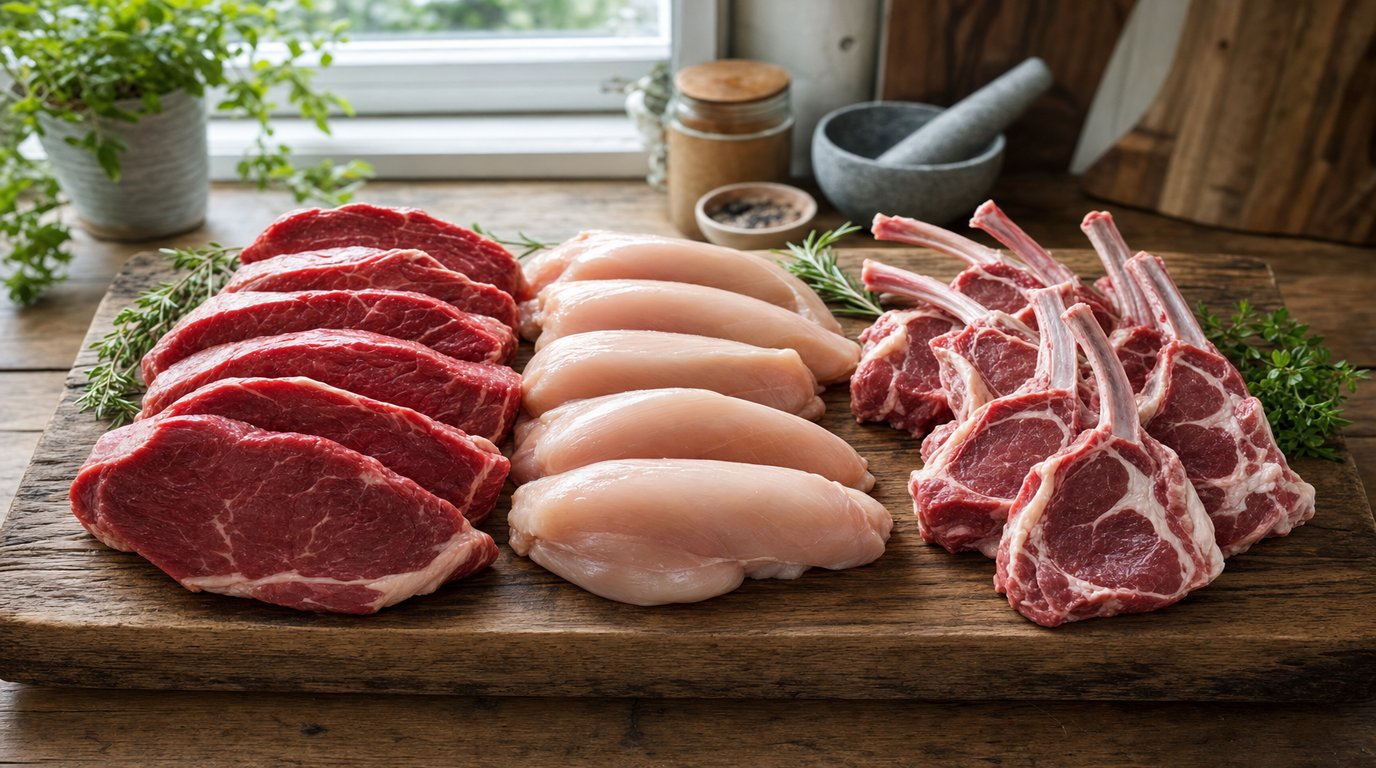
Choosing between raw dog food protein sources is one of the first real decisions a UK owner faces after deciding to feed raw. Beef, chicken and lamb are the three most widely available raw dog food protein sources in Britain, and each brings a distinct profile of nutrition, cost, fat content and allergy risk. Picking the right rotation of raw dog food protein sources is not about finding one perfect meat — it is about combining them so their strengths cover each other’s gaps. This guide compares beef, chicken and lamb head to head so you can build a balanced, cost-effective diet.
Variety is the golden rule here: a dog fed a wide rotation gets a fuller spread of amino acids, fats and micronutrients, and is far less likely to develop the food sensitivities that come from eating a single protein for years. With that principle in mind, let’s compare the three staples on the measures that matter to a UK household — nutrition, fat content, cost and allergy risk.
Beef: A Nutrient-Dense Raw Dog Food Protein Source
Beef is one of the most popular raw dog food protein sources in the UK, valued for its rich flavour, high iron content and dense supply of B vitamins and zinc. Most dogs find it highly palatable, and it forms a solid backbone for a rotation.
- •Nutrition: high in iron, zinc, B vitamins and complete protein
- •Fat: moderate to high depending on the cut, which suits active dogs but can be rich for sensitive ones
- •Cost: mid-range; cheaper cuts and offal keep it affordable
- •Allergy risk: beef is one of the more common protein allergens in dogs, so watch for reactions
Because beef sits at the richer, fattier end of the spectrum, it pairs well with leaner meats in a rotation to balance overall fat intake.
Chicken: The Accessible Raw Dog Food Protein Source
Chicken is often the starting point among the main raw dog food protein sources because it is affordable, widely available and gentle on most dogs’ digestion. Chicken carcasses, wings and thighs are staples of many UK raw diets and provide edible bone as well as meat.
- •Nutrition: lean, easily digestible protein with a mild flavour
- •Fat: relatively low, especially in breast meat, though skin adds fat
- •Cost: usually the cheapest of the three, making it budget-friendly
- •Allergy risk: chicken is also a common allergen, so rotate rather than feed it exclusively
Chicken’s gentleness makes it a favourite first protein when transitioning, but relying on it alone is a mistake — variety is what keeps the diet complete.
Lamb: The Rich Raw Dog Food Protein Source
Lamb rounds out the trio of core meats and is prized as a flavourful, novel-tasting red meat. It is often chosen for dogs that have developed sensitivities to more common proteins, though it is no longer truly novel now that it is widely fed.
- •Nutrition: good source of protein, iron, zinc and B vitamins
- •Fat: the highest of the three, making it very palatable but calorie-dense
- •Cost: usually the most expensive of the three raw dog food protein sources
- •Allergy risk: lower than beef or chicken for many dogs, but not guaranteed
Because lamb is the fattiest of these raw dog food protein sources, it is best used as part of a rotation rather than a daily staple, especially for dogs prone to weight gain.
Whichever raw dog food protein sources you choose, portioning them correctly is what keeps the diet balanced. Use our free calculator to work out your dog’s ideal daily feeding amount based on weight, age and activity level.
Try Our Free CalculatorComparing the Three Raw Dog Food Protein Sources
Putting the three main options side by side makes the trade-offs clear:
- •Cheapest to richest: chicken is the most affordable, beef sits in the middle, lamb is usually the priciest
- •Leanest to fattiest: chicken is leanest, beef moderate, lamb the fattiest and most calorie-dense
- •Digestibility: chicken is gentlest for most dogs, with beef and lamb both well tolerated in rotation
- •Allergy profile: beef and chicken are the more common allergens, lamb slightly less so for many dogs
The takeaway is that no single meat wins. A smart UK feeder combines these raw dog food protein sources across the week, leaning on affordable chicken as a base, using beef for iron-rich density, and adding lamb for variety and palatability.
Building a Rotation With Raw Dog Food Protein Sources
The most robust diets rotate multiple raw dog food protein sources, ideally four or five across the week including the three covered here plus additions like turkey, fish or game. Rotation spreads the nutritional load, reduces the risk of building sensitivities, and keeps meals interesting.
Introduce new proteins one at a time, allow stools to settle between changes, and keep the overall balance close to the 80/10/10 model of muscle meat, edible bone and offal. Over time you will learn which of these meats your individual dog thrives on, and can weight the rotation toward them.
Frequently Asked Questions About Raw Dog Food Protein Sources
Which of the raw dog food protein sources is best for my dog?
There is no single best choice — the strongest approach is to rotate raw dog food protein sources rather than pick one. Chicken suits budget-conscious owners and sensitive stomachs, beef adds iron-rich density, and lamb brings palatable variety. Watch how your individual dog responds to each and build a rotation around the ones it digests best.
Are some raw dog food protein sources more likely to cause allergies?
Beef and chicken are among the more commonly reported protein allergens in dogs, largely because they are so widely fed. Lamb is less commonly implicated for many dogs but is not risk-free. If you suspect a food sensitivity, work with your vet on an elimination approach and rotate raw dog food protein sources carefully to identify the culprit. The PDSA guide to food allergies in dogs explains how these reactions are diagnosed.
Can I feed only one of these raw dog food protein sources?
You can, but it is not ideal. Feeding a single protein long-term narrows the range of nutrients your dog receives and raises the chance of developing a sensitivity to that meat. Rotating several raw dog food protein sources across the week gives a fuller amino acid and micronutrient profile and keeps the diet more resilient.
Bottom Line
When you compare the main raw dog food protein sources, beef offers iron-rich density, chicken offers affordable, gentle digestibility, and lamb offers rich, palatable variety. None is a complete answer on its own. Rotate all three — plus the odd addition of fish or game — keep close to the 80/10/10 balance, and adjust to your dog’s individual tolerance for a diet that is both balanced and cost-effective.