How to Read Raw Dog Food Labels UK 2026: An Owner's Guide
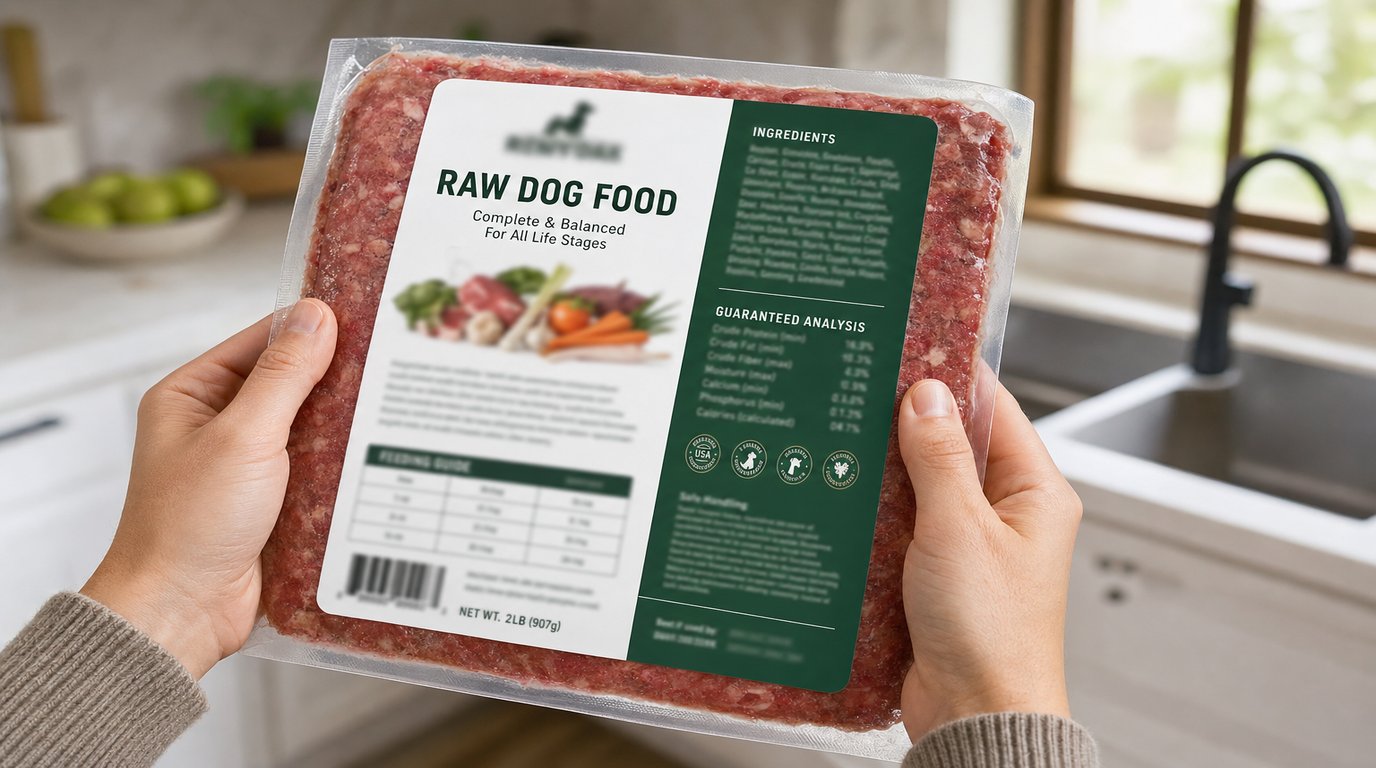
Learning how to read raw dog food labels is one of the most useful skills a UK owner can pick up. Packaging is covered in percentages, legal phrases and analytical figures that can look baffling at first glance, yet the label holds everything you need to judge whether a product is genuinely balanced and worth feeding. Knowing how to read raw dog food labels lets you compare brands fairly, spot marketing fluff, and make sure your dog is getting a complete, correctly balanced diet. This 2026 guide decodes every part of a UK raw food label.
By the end, the whole process will feel second nature. We will work through the ingredients list, the analytical constituents panel, the crucial ‘complete’ versus ‘complementary’ distinction, and the legal terms that reveal what is really in the bag — and the marketing phrases that are safe to ignore.
How to read raw dog food labels: Complete vs Complementary
The single most important step in how to read raw dog food labels is finding whether the product is labelled ‘complete’ or ‘complementary’. This one word changes how you should feed it.
- •Complete: legally formulated to provide all the nutrients a dog needs in the stated portion — it can be fed on its own
- •Complementary: designed to be fed alongside other foods and is not nutritionally balanced by itself (see the UK Pet Food labelling code of practice for the legal definitions)
Missing this distinction is the most common mistake owners make. Feeding a complementary product as if it were complete leaves nutritional gaps over time. Always check this classification first — it is usually printed near the product name or the feeding guidelines.
How to read raw dog food labels: The Ingredients List
The ingredients list is central to how to read raw dog food labels because ingredients are listed in descending order by weight. The first few items make up the bulk of the product, so you want to see named meats and organs at the top.
Named vs Vague Ingredients
Look for specific, named ingredients such as ‘beef muscle meat’, ‘chicken liver’ or ‘lamb heart’. Vague terms like ‘meat and animal derivatives’ tell you little about what is actually inside and are a red flag when assessing quality. The rule of thumb is to prefer transparency over generic wording.
Checking the Percentages
Better labels state the percentage of each ingredient, for example ‘80% beef, 10% bone, 10% offal’. These percentages let you confirm the product follows a sound ratio and help you compare it fairly against others. A high, clearly stated meat percentage is a good sign.
How to read raw dog food labels: Analytical Constituents
The analytical constituents panel is the part of how to read raw dog food labels that trips people up most, because the figures are given as percentages of the whole food — including its high moisture content. This makes raw figures look low compared with dry kibble, but that is expected.
The typical values you will see are:
- •Protein — the crude protein percentage; raw diets are moisture-rich so the figure looks lower than kibble
- •Fat (crude oils and fats) — indicates energy density; higher suits active dogs
- •Crude ash (inorganic matter) — largely reflects bone and mineral content
- •Crude fibre — usually low in a meat-based raw diet
- •Moisture — high in raw food, which is why the other figures appear small
The key habit here is to compare like with like: judge raw products against other raw products, not against dried food, or the moisture difference will mislead you.
Once you know how to read raw dog food labels and have chosen a balanced product, get the portion right. Use our free calculator to work out your dog’s ideal daily feeding amount based on weight, age and activity level.
Try Our Free CalculatorHow to read raw dog food labels: Additives and Legal Terms
A thorough approach to how to read raw dog food labels also covers the additives and legal wording. UK and EU labelling rules require certain information, and understanding it helps you separate genuine quality from clever marketing.
- •Additives: added vitamins and minerals are often listed here, which can indicate a product engineered to be nutritionally complete
- •Best-before and batch codes: essential for safety, storage and traceability of raw products
- •Manufacturer details: a named, contactable UK manufacturer signals accountability
- •Feeding guidelines: a starting point only, to be adjusted to your individual dog’s condition
Marketing terms such as ‘natural’, ‘premium’ or ‘grain-free’ are not tightly regulated and should not sway your judgement. Focus on the regulated, factual sections rather than the front-of-pack claims.
Putting How to read raw dog food labels Into Practice
With these steps, how to read raw dog food labels becomes a quick, repeatable check. Confirm complete versus complementary, scan the ingredients for named meats near the top, sanity-check the percentages and analytical constituents, and glance at the additives and manufacturer details.
Do this every time you consider a new product and you will quickly build an instinct for which raw foods are genuinely well formulated and which rely on packaging to sell an ordinary recipe.
Frequently Asked Questions About How to Read Raw Dog Food Labels
What is the first thing to check when learning how to read raw dog food labels?
Always check whether the product is labelled ‘complete’ or ‘complementary’ first. A complete food can be fed on its own, while a complementary one must be balanced with other foods. This single distinction is the foundation of how to read raw dog food labels, because it determines whether the product can form your dog’s entire diet or only part of it.
Why do the protein figures look low when I read raw dog food labels?
Raw food is high in moisture, and analytical constituents are shown as a percentage of the whole food including that water. This makes the protein figure look lower than on dry kibble, where most moisture has been removed. When you read raw dog food labels, compare raw products against other raw products rather than against dried food to avoid being misled.
Do marketing words matter when learning how to read raw dog food labels?
Not much. Terms like ‘natural’, ‘premium’ and ‘grain-free’ are not tightly regulated and can be applied loosely. When you learn how to read raw dog food labels properly, you focus on the regulated sections — the ingredients list, percentages, analytical constituents, additives and ‘complete’ or ‘complementary’ status — rather than the front-of-pack marketing claims.
Bottom Line
Once you know how to read raw dog food labels, choosing a good product becomes straightforward. Start with the ‘complete’ versus ‘complementary’ label, look for named meats high in the ingredients list, sanity-check the percentages and moisture-adjusted analytical constituents, and review the additives and manufacturer details. Ignore vague marketing claims, compare raw with raw, and you will confidently pick genuinely balanced food for your dog.