Freezing and Defrosting Raw Dog Food: The Safe UK Method
Freezing and defrosting raw dog food is one of the most important skills any raw feeder in the UK needs to master. Done correctly, it keeps meat safe, preserves nutritional value, and — crucially for budget-conscious owners — lets you buy in bulk and freeze without worry.
Done wrong, it can introduce harmful bacteria or cost you money when food spoils before you use it. This guide covers everything you need to know about freezing and defrosting raw dog food: how to freeze properly, how long each protein lasts, which defrosting methods are safe, and which shortcuts to avoid entirely.
Whether you are new to raw feeding or simply looking to refine your routine, understanding freezing and defrosting raw dog food correctly is the single biggest factor in keeping costs down and meals safe.
Why Freezing and Defrosting Raw Dog Food Matters
Unlike kibble or canned food, raw dog food has a very short fridge life — typically just two to three days once thawed. For UK raw feeders who want to save money and reduce waste, the freezer is not optional; it is the backbone of a sustainable raw feeding routine.
The process of freezing and defrosting raw dog food affects everything from bacterial safety to the texture your dog experiences at mealtimes. Getting it right means fewer vet visits and less food waste.
- •Kills some surface pathogens: Freezing at −18°C or below (standard UK domestic freezer temperature) does not sterilise meat, but it does reduce the viability of certain parasites, including Toxoplasma gondii and some tapeworm larvae — an added safety benefit for dogs eating raw pork or wild game. This is one reason freezing and defrosting raw dog food with pork requires particular care.
- •Extends usable shelf life dramatically: A chicken carcass that lasts two days in the fridge can safely be stored for up to six months in the freezer, giving you far more flexibility in your feeding schedule.
- •Enables bulk buying: Purchasing whole chickens, lamb mince, or offal in larger quantities — then freezing in portioned bags — is the single most effective way to cut the cost of feeding raw. UK suppliers regularly offer discounts of 15–30% on bulk orders precisely because they expect you to freeze. Mastering freezing and defrosting raw dog food on a larger scale unlocks these savings consistently.
- •Preserves nutritional integrity: When frozen promptly at peak freshness, raw meat retains virtually all its amino acids, enzymes, and moisture. Freezing does not “cook away” the nutrients that make raw feeding worthwhile.
UK raw feeders who master freezing and defrosting raw dog food can realistically cut their monthly food bill by 20–40% compared with buying smaller quantities more frequently.
How to Freeze Raw Dog Food Correctly
Good freezer technique is straightforward, but the details matter. Follow these steps every time you freeze raw dog food to ensure safety and minimise waste.
Freezing and defrosting raw dog food correctly starts before the food even enters the freezer — preparation at this stage determines how safe and convenient the whole process will be.
1. Portion Before Freezing
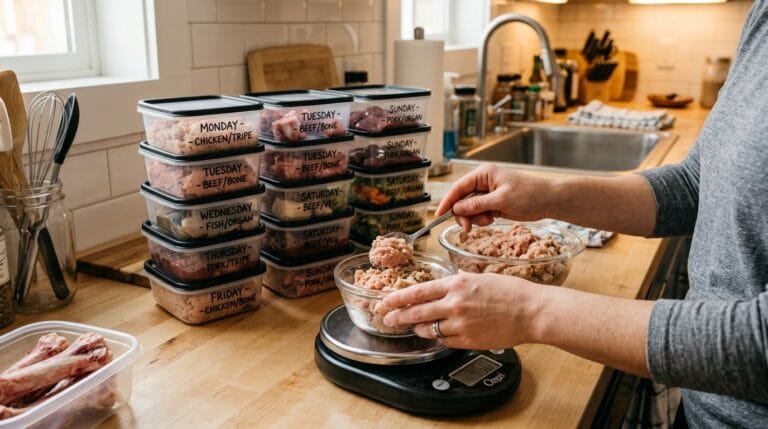
Never freeze a large block of meat and expect to chisel off a daily serving later. Portion into single-day or single-meal quantities before they go into the freezer. For most medium-to-large dogs this means 200–500g portions. This way you only ever thaw exactly what you need, reducing waste and bacterial risk. Proper portioning is the first rule of freezing and defrosting raw dog food efficiently.
2. Use the Right Packaging
Packaging choice affects both food quality and safety:
- •Freezer bags (zip-seal): The most practical option for most feeders. Squeeze out as much air as possible before sealing to prevent freezer burn. Lay flat for quick, even freezing and easy stacking.
- •Rigid airtight containers: Better for minces and wet blends that would leak through a bag. Leave a small gap at the top — liquids expand when frozen.
- •Vacuum sealing: The gold standard for long-term storage. A vacuum sealer removes virtually all air, extending quality by several additional months and virtually eliminating freezer burn. Worth the investment if you bulk-buy regularly. For anyone serious about freezing and defrosting raw dog food at scale, a vacuum sealer is the most impactful upgrade you can make.
3. Label Everything
Always label each portion with the protein type and the date frozen. A permanent marker directly on a zip-seal bag takes five seconds and saves considerable confusion later. UK households frequently lose track of unlabelled packages, leading to waste when owners can no longer tell how long something has been stored. Good labelling is a simple but essential part of freezing and defrosting raw dog food safely at home.
4. Freeze Fast
The quicker meat freezes, the smaller the ice crystals that form inside the tissue, and the better the texture and nutrient retention when thawed. Place new portions directly against the freezer floor or back wall — the coldest spots — rather than stacking on top of existing frozen food. If your freezer has a “fast freeze” or “super freeze” setting, use it for large batches. When freezing and defrosting raw dog food in quantity, this step protects both quality and food safety.
How Long Can You Freeze Raw Dog Food? (By Protein Type)
Freezer life varies by protein because fat content, muscle density, and bone structure all affect how well meat holds up at −18°C. The table below gives safe maximum storage times for a standard UK domestic freezer. Quality (texture and smell) may begin to decline before these limits; always use your senses as a secondary check.
Knowing these windows is a key part of freezing and defrosting raw dog food responsibly — it helps you rotate stock efficiently and avoid waste.
| Protein Type | Max Freezer Life at −18°C | Notes |
|---|---|---|
| Chicken (whole, portions, mince) | Up to 6 months | Low fat; freezes very well. Vacuum-sealed can reach 9 months. |
| Turkey | Up to 6 months | Similar to chicken; excellent for bulk buying after Christmas. |
| Beef (mince, chunks, bone) | Up to 4–6 months | Higher fat content can turn rancid; use within 4 months for best quality. |
| Lamb | Up to 4 months | High fat — rancidity risk increases beyond 4 months. |
| Pork | Up to 6 months | Freeze pork thoroughly before feeding to reduce parasite risk. |
| Oily fish (mackerel, sardines, salmon) | Up to 3 months | High omega-3 oils oxidise quickly; use soonest of all proteins. |
| White fish (cod, pollock, haddock) | Up to 4 months | Lower fat than oily fish; slightly longer storage life. |
| Offal (liver, kidney, heart) | Up to 3–4 months | Organ meats deteriorate faster; label clearly and prioritise use. |
| Raw meaty bones (RMBs) | Up to 6 months | Freeze individually or in layers to prevent clumping. |
| Complete raw minces (BARF blends) | Up to 3 months | Mixed ingredients mean shorter life; follow supplier guidance. |
Freezing and Defrosting Raw Dog Food: Safe Thawing Methods
How you thaw raw meat matters just as much as how you freeze it. The correct method keeps bacterial growth in check and protects both your dog and your household.
When freezing and defrosting raw dog food, the defrost phase is where most mistakes happen — so understanding your options is critical.
The Fridge Method (Recommended)
Move tomorrow’s portion from the freezer to the fridge the evening before you need it. At fridge temperature (1–5°C), meat thaws slowly and stays in the safe zone the entire time. A typical 250g portion will be fully thawed in 12–16 hours; larger portions (500g+) may need 24 hours. The fridge method is the cornerstone of freezing and defrosting raw dog food safely in any UK household.
This is the safest method and the one recommended by the Food Standards Agency for all raw meat handling, which advises that raw meat should always be stored at or below -18°C to prevent bacterial growth. For freezing and defrosting raw dog food, overnight fridge thawing should be your default approach every single day.
Keep thawing raw meat on the bottom shelf of the fridge, on a plate or in a container, to prevent drip contamination onto other foods. Thawed raw dog food should be used within 24–48 hours and never refrozen.
Cold Water Defrosting (Acceptable for Same-Day Use)
If you have forgotten to move food to the fridge in advance, place the sealed bag or container in a bowl of cold water. Change the water every 30 minutes. A 250g portion will thaw in roughly 45–60 minutes. The food must be used immediately after thawing — do not refrigerate and use later. This emergency approach to freezing and defrosting raw dog food is acceptable occasionally but should not become your standard method.
Getting freezing and defrosting raw dog food right also saves money by preventing spoilage — so building the fridge-thaw habit is worth the small planning effort it requires.
What NOT to Do When Defrosting
Avoid these common mistakes — they can make your dog seriously ill.
- •Do not use hot or warm water: The outer layer of the meat will warm into the bacterial “danger zone” (8–63°C) while the centre remains frozen. This creates ideal conditions for Salmonella, Listeria, and E. coli to multiply rapidly. When freezing and defrosting raw dog food, temperature control during the thaw is every bit as important as the freeze itself.
- •Do not defrost on the worktop at room temperature: UK room temperatures (18–22°C in most homes) push raw meat into the danger zone within an hour. Bacterial counts can double every 20 minutes at these temperatures.
- •Do not use a microwave to defrost: Microwaves heat unevenly, partially cooking some sections while others remain frozen. Partially cooked meat loses its raw feeding benefits and can develop hot spots that damage bones, making them brittle and unsafe.
- •Do not refreeze thawed raw meat: Once meat has been fully thawed, the bacterial population has increased — even under safe refrigeration. Refreezing slows but does not reverse this process. You should never refreeze raw dog food that has been completely thawed. The golden rule of freezing and defrosting raw dog food is: thaw only what you will use.
How to Tell If Raw Dog Food Has Gone Off
Even with careful freezer and defrost management, food occasionally spoils. Trust your senses — your nose is your most reliable tool.
- •Smell: Spoiled raw meat smells sour, acidic, or distinctly putrid — not just “meaty.” Fresh raw chicken, for example, has almost no odour. Any sharp, unpleasant smell is a red flag.
- •Colour: A slight greying of red meat is normal oxidation. However, green or grey patches on chicken, or a dull grey-brown throughout beef mince, can indicate spoilage — especially if accompanied by bad smell.
- •Texture: Sliminess on the surface is a clear sign of bacterial proliferation. Good raw meat should feel firm and moist, not tacky or viscous.
- •Freezer burn: Greyish-white, dried-out patches indicate the meat has been exposed to air in the freezer. It is safe to feed but the quality will be reduced — nutritional value and palatability both decline in heavily freezer-burned sections. Proper packaging during freezing and defrosting raw dog food prevents this entirely.
If in doubt, discard the food. The cost of a spoiled portion is far less than a vet visit for gastrointestinal illness. Consistently checking for these signs is part of responsible freezing and defrosting raw dog food practice.
Batch Freezing to Save Money: The Raw Feeder’s Best Strategy
Freezing and defrosting raw dog food is the foundation of every budget-conscious raw feeding routine. Here is how to use your freezer actively as a money-saving tool, not just a storage space.
- •Buy on offer, freeze immediately: Supermarket whole chickens, lamb mince, and pork shoulder regularly go on markdown in the evening. Buy as many as your freezer allows, portion at home, and freeze the same day. UK shoppers can routinely save 30–50% this way. Freezing and defrosting raw dog food bought on markdown is one of the most effective money-saving habits you can build.
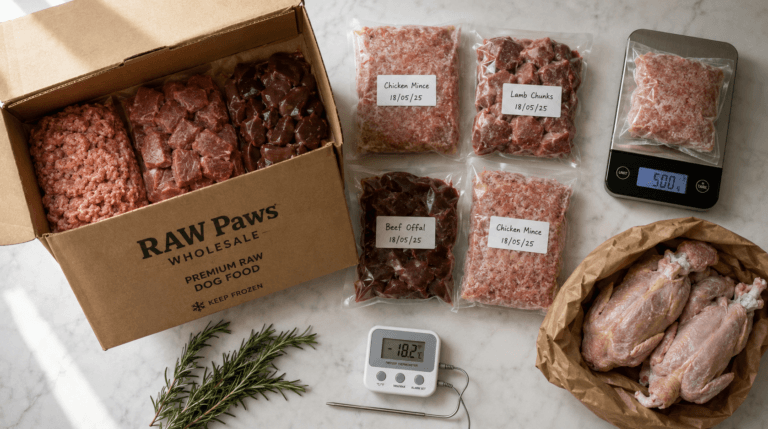
- •Order bulk from raw food suppliers: Most UK raw dog food suppliers offer 10–20 kg boxes at significantly lower per-kg prices than smaller packs. Order a mixed protein box, portion everything upon delivery, and freeze in labelled daily servings. Your freezer does the hard work; you benefit all month. Committing to freezing and defrosting raw dog food from bulk orders is how experienced raw feeders cut costs most dramatically.
- •Create a freezer rotation system: Use a simple “first in, first out” rule. When you add new stock, move older portions to the front of the freezer drawer. A whiteboard or sticky note on the freezer door listing contents and dates takes two minutes to maintain and prevents costly waste. Consistent rotation is central to freezing and defrosting raw dog food without any waste.
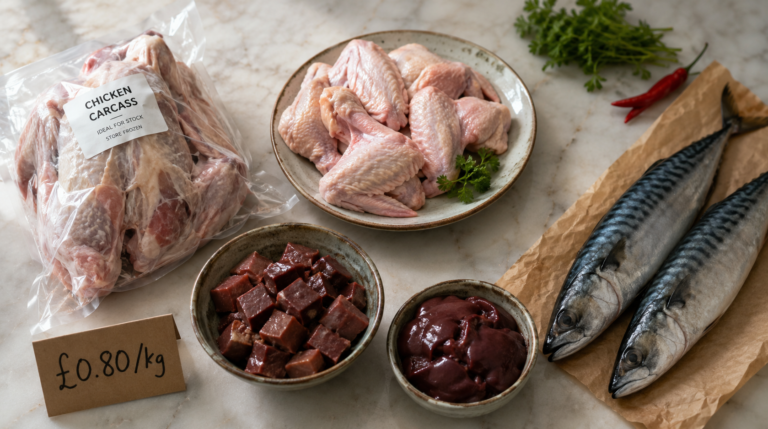
- •Freeze offal in small quantities: Offal should make up roughly 10% of a balanced raw diet, but it is easy to overfeed if you open a large tub. Freeze offal in 50–100g portions so you always add exactly the right amount and nothing goes off unused.
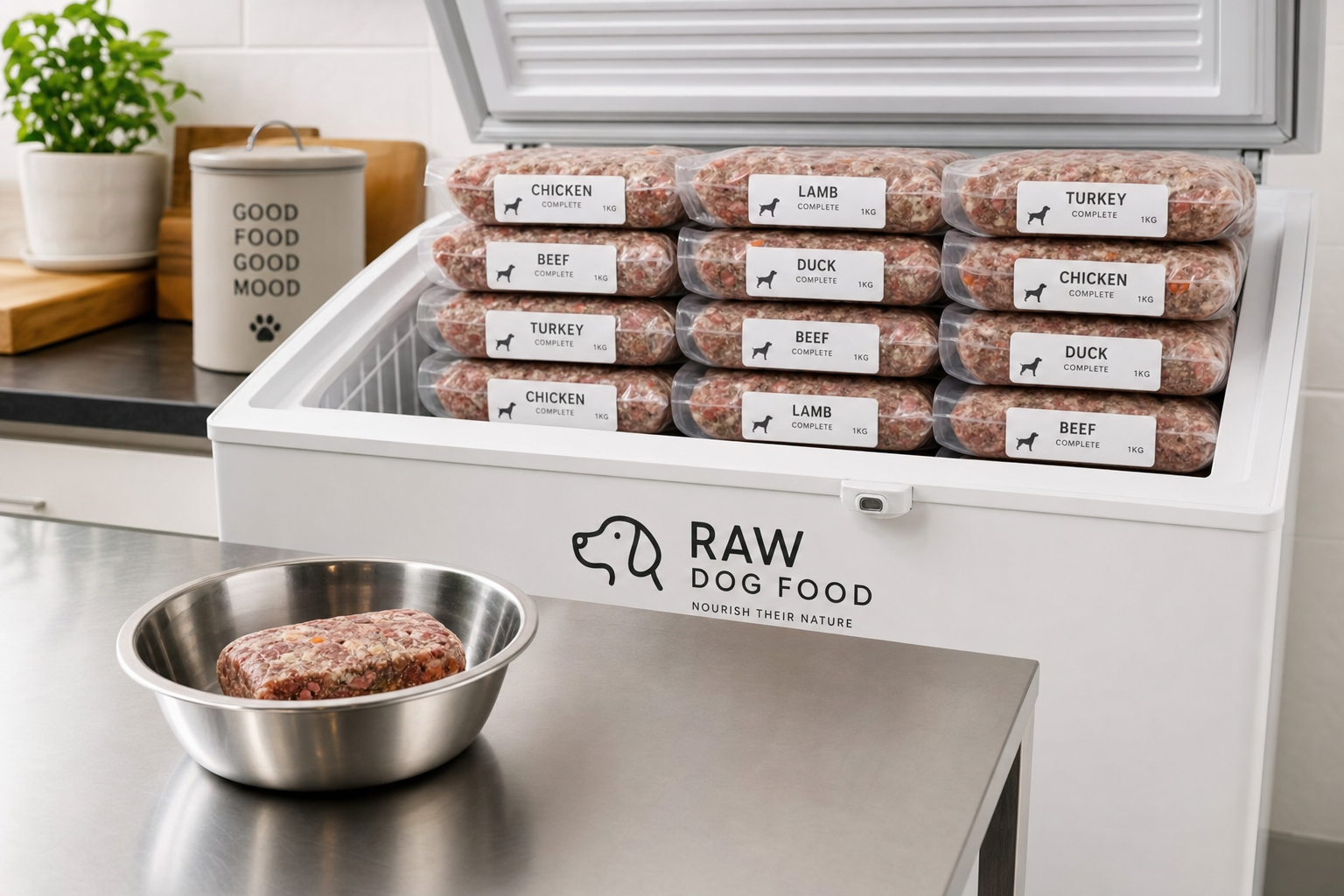
- •Consider a chest freezer: If you have the space, a dedicated chest freezer costs under £150 new in the UK and pays for itself within months through bulk buying savings. Energy consumption is low — typically 30–50p per week — making it a sound investment for anyone feeding more than one dog. More freezer space means more opportunity to practise freezing and defrosting raw dog food at bulk-buy prices.
Frequently Asked Questions
How long does freezing and defrosting raw dog food take safely?
Freezing is immediate — just ensure food is portioned and sealed before placing in the freezer. Safe defrosting in the fridge takes 12–24 hours depending on portion size. A standard 500g portion for a medium dog will defrost overnight. Never defrost at room temperature or in hot water as this encourages bacterial growth in the outer layers while the centre remains frozen. When freezing and defrosting raw dog food for the first time, building the habit of moving tomorrow’s portion the night before is the key step.
Can you refreeze raw dog food once defrosted?
No — you should never refreeze raw dog food once it has been fully defrosted. Refreezing degrades texture, nutrient quality and — more importantly — allows bacteria that multiplied during defrosting to survive in greater numbers. If you have defrosted too much, cooked leftovers can be refrigerated for up to 24 hours, but raw leftovers should be discarded. Freezing and defrosting raw dog food safely means portioning precisely so there is nothing left over to refreeze.
How long can you freeze different types of raw dog food?
Most raw dog food can be frozen safely for 3–6 months without significant nutrient loss. Fatty fish like mackerel and salmon are best used within 2–3 months as the oils oxidise over time. Lean proteins like chicken and turkey hold well for up to 6 months. Always label portions with the date frozen and use the oldest stock first. Proper freezing and defrosting raw dog food technique, combined with a rotation system, means you will always be feeding at peak freshness within safe windows.
The Bottom Line
Handling raw dog food safely in the freezer comes down to a few non-negotiable habits: portion before freezing, label everything, thaw in the fridge overnight, and never refreeze thawed meat. Get those four steps right and the freezer becomes a powerful tool — one that simultaneously keeps your dog’s food safe, preserves nutrition, and significantly cuts your monthly raw feeding bill. Freezing and defrosting raw dog food safely protects your dog from foodborne illness while stretching every pound you spend on quality meat.
The table above gives you the exact storage windows for every protein type; combine that with a simple rotation system and you will rarely waste a gram. Proper freezing and defrosting raw dog food technique is genuinely simple once the habits are in place.
The upfront effort of a good freezer routine — portioning a bulk delivery in 20 minutes, scribbling dates on bags — pays dividends every single day. Once the habit is established, the whole routine becomes second nature, and the savings compound week after week.
Ready to Start Raw Feeding?
Use our free raw dog food calculator to get the perfect daily portion for your dog — then batch-freeze with confidence knowing exactly how much to prepare.
Try Our Free Calculator