Raw vs Kibble: 7 Essential UK Truths Worth Knowing in 2026
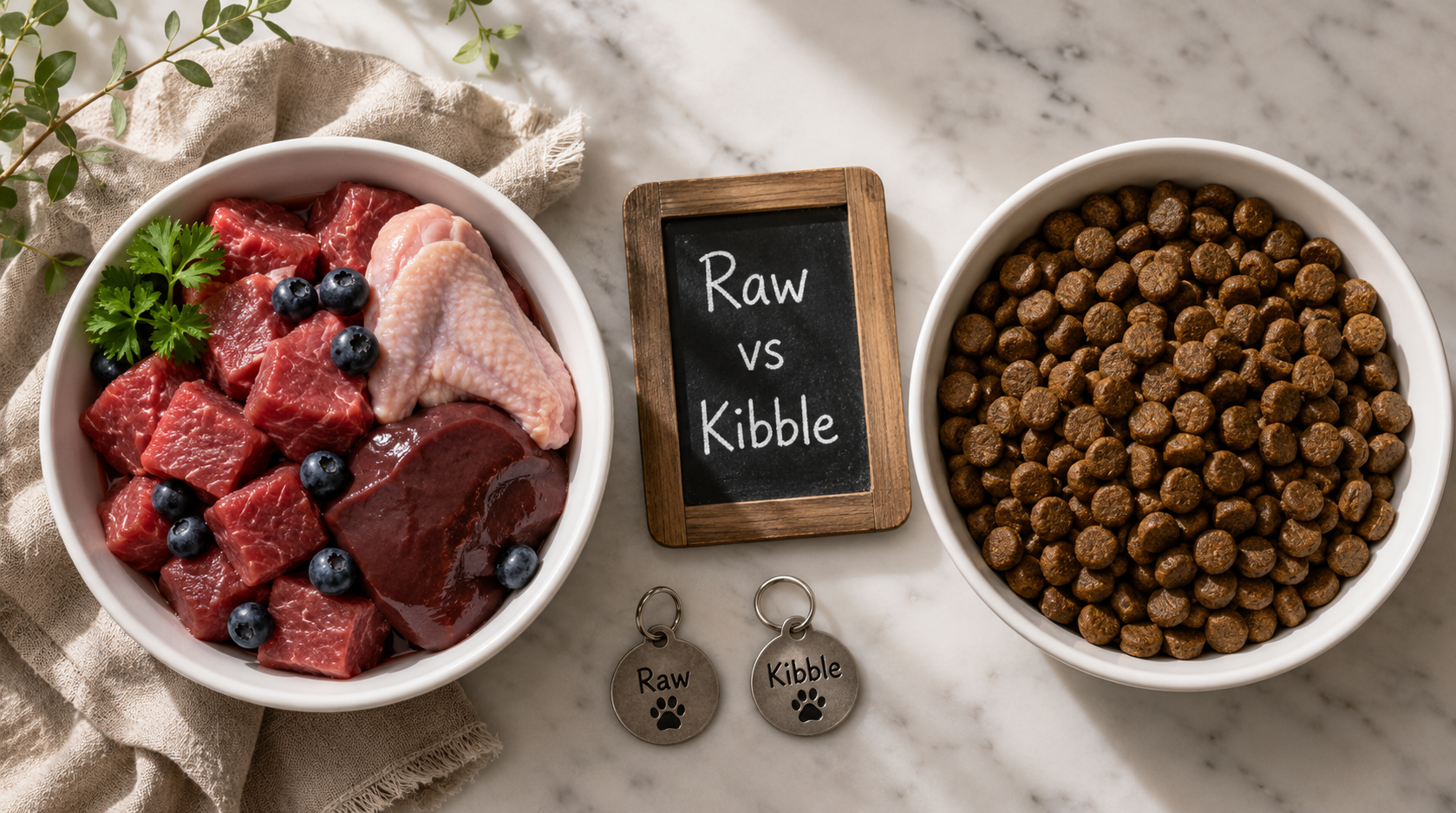
Raw vs kibble is the single biggest decision any new dog owner faces in 2026, and the honest answer is more nuanced than most blogs admit. Kibble is convenient, shelf-stable, and cheap. Raw is biologically appropriate, fresher, and increasingly affordable when bought sensibly. This UK guide compares raw vs kibble across the seven dimensions that actually matter — weekly cost, nutritional density, dental health, coat condition, vet bills, convenience, and long-term welfare — so you can decide what genuinely suits your dog and your budget. For a refresher on how raw feeding works, start with our BARF guide or our PMR guide.
1. Raw vs Kibble: The True UK Cost Comparison
The number one objection to raw feeding is cost. Open any UK forum and you’ll see owners insisting raw vs kibble is a luxury vs essential debate. The reality in 2026 is more interesting: if you bulk buy and source carefully, raw can sit within £5 a week of a mid-range kibble for a medium-sized dog. Here’s a realistic side-by-side for a 20kg adult dog eating roughly 2.8kg of food per week.
| Feeding option | Typical weekly cost (20kg dog) | Annual cost |
|---|---|---|
| Supermarket own-brand kibble | £6 – £9 | £312 – £468 |
| Mid-range kibble (Burns, Harringtons) | £10 – £14 | £520 – £728 |
| Premium kibble (Orijen, Acana) | £18 – £24 | £936 – £1,248 |
| DIY raw (bulk butcher sourcing) | £8 – £12 | £416 – £624 |
| Pre-made raw (DAF, Bulmer) | £12 – £18 | £624 – £936 |
| Premium raw (Nutriment, Natural Instinct) | £20 – £28 | £1,040 – £1,456 |
In other words, the raw vs kibble cost gap collapses once you compare like-for-like quality. A DIY raw feeder spending £10 a week is paying less than the owner buying premium kibble, and getting fresh whole foods in return. For a deeper breakdown, see our UK raw dog food budget guide and our bulk buying raw meat guide.
2. Nutritional Density: Raw vs Kibble Head-to-Head
Comparing raw vs kibble purely on a price-per-kilogram basis misses the point. Kibble is around 10% moisture by weight; raw food is 65–75% moisture. When you strip the water out, a 400g raw meal contains roughly the same dry-matter nutrition as 150g of kibble — which is why raw-fed dogs eat smaller volumes of dry-matter than the bag-weight suggests.
Beyond moisture, the macro and micronutrient profile differs sharply:
Protein quality
Raw diets typically deliver 18–22% protein on an as-fed basis (50–55% on a dry-matter basis), almost entirely from whole animal sources. Most kibble lists protein at 22–30% as-fed but a significant slice comes from plant proteins like pea, potato, and lentil, which dogs digest less efficiently.
Carbohydrate load
Even grain-free kibble is 30–50% carbohydrate by dry matter. Raw diets sit at 0–10% carbs. Dogs have no nutritional requirement for carbohydrate, and lower-carb diets are increasingly linked to better weight management and steadier energy levels in active breeds.
Bioavailability
The extrusion process used to make kibble cooks ingredients twice at high temperatures, which damages heat-sensitive vitamins, enzymes, and amino acids. Manufacturers compensate by spraying synthetic vitamins back on — but the bioavailability is rarely equivalent to the same nutrients from whole, raw ingredients.
3. Dental Health: Where Raw vs Kibble Becomes No Contest
This is one area where the raw vs kibble debate has a fairly clear winner. The widely repeated claim that “kibble cleans teeth” doesn’t survive scrutiny — most kibble shatters on first bite rather than scrubbing the tooth surface, and the starch content actually feeds the bacteria responsible for plaque.
Periodontal disease affects an estimated 87% of dogs over the age of three in the UK, according to research summarised by the PDSA. Raw feeders who include appropriate raw bones report visibly cleaner teeth within weeks — the chewing action mechanically removes tartar and exercises the jaw muscles. For safe options, see our raw bones safety guide.
A single dental cleaning at a UK vet typically costs £300–£600 under anaesthesia. Avoid two of those across a dog’s lifetime and you’ve covered the cost difference between budget kibble and DIY raw several times over.
4. Coat, Skin and Stools: What Owners Actually Notice
Ask any UK raw feeder what changed first when they switched from kibble and three answers come up repeatedly: shinier coat, less itching, and dramatically smaller, firmer stools. There’s a reason for each.
- • Coat shine — raw diets are naturally higher in unprocessed omega-3 and omega-6 fatty acids from fish, organ meats, and quality muscle meat. These oxidise quickly, so kibble manufacturers either limit them or spray them on after extrusion.
- • Less itching — common kibble allergens (wheat, maize, soy, synthetic preservatives) are absent from a balanced raw diet. For dogs with confirmed protein allergies, raw makes elimination diets far easier to construct.
- • Smaller, firmer stools — raw food is roughly 90% digestible vs around 70–75% for typical kibble. Less waste in means less waste out — usually around half the volume.
These aren’t trivial cosmetic wins. Chronic itching and digestive upset are the two most common reasons UK owners visit the vet — both of which raw feeding tends to ease.
5. Convenience: The Honest Case for Kibble
If the raw vs kibble argument were only about nutrition, raw would win comfortably. But convenience is a real factor and pretending otherwise is dishonest. Kibble’s strengths:
- • Shelf-stable — no freezer, no thaw cycles, no rushed meal prep on busy mornings.
- • Travel friendly — easy to take on holidays, leave with sitters, or ration into puzzle feeders.
- • Low hygiene overhead — no thawing meat, no bone supervision, no extra hand-washing routine.
- • Single-purchase simplicity — one bag, done. Raw feeders juggle muscle meat, bone, organs, and supplements.
Raw vs kibble convenience can be closed by buying complete pre-made raw meals (DAF, Bulmer, Nutriment, Natural Instinct) — they arrive in portioned blocks and only need defrosting overnight. But you do need freezer space and a basic raw hygiene routine. For first-timers, our raw transition guide walks through the practical setup.
6. Long-Term Vet Bills: The Hidden Side of Raw vs Kibble
The headline weekly cost of raw vs kibble is only half the story. The full lifetime cost includes the vet bills that come with diet-driven conditions: obesity, dental disease, recurrent ear infections, anal gland issues, and skin allergies. The British Veterinary Association and PFMA both highlight obesity as the leading nutritional concern affecting UK dogs, with PFMA data showing roughly 50% of UK dogs are overweight.
Typical recurring UK vet costs that diet can influence:
| Issue | Average UK cost | Diet relevance |
|---|---|---|
| Dental cleaning (under GA) | £300 – £600 | High — raw bones reduce frequency |
| Anal gland expression | £15 – £30 per visit | High — firmer raw stools express glands naturally |
| Skin allergy workup | £150 – £400 | Moderate — many allergies improve on raw |
| Weight loss consults | £40 – £80 | Moderate — low-carb raw aids weight control |
None of this means raw guarantees a vet-free life. Plenty of raw-fed dogs still get unwell, and many kibble-fed dogs live to a healthy old age. But across thousands of UK households, raw-fed dogs tend to have fewer diet-linked chronic complaints — which closes the lifetime cost gap further.
7. Raw vs Kibble: Who Wins in 2026?
The honest verdict on raw vs kibble in 2026 isn’t a clean knockout. It depends on your household, your dog, and your budget realism:
- • Raw wins on nutritional density, dental health, coat condition, stool quality, lower diet-linked vet bills, and (for DIY feeders) often on raw cost too.
- • Kibble wins on day-to-day convenience, shelf stability, travel-friendliness, and lower hygiene overhead.
- • A middle path works for many UK owners — for example, raw mornings and kibble evenings, or weekday kibble with weekend raw meals. Dogs digest mixed diets perfectly well provided you space them by a few hours.
If you’ve already been tempted by raw, run your dog’s numbers through our free UK raw dog food calculator. Seeing the actual weekly grams of muscle meat, bone and organ tends to make the raw vs kibble decision much more concrete — and far less intimidating — than abstract comparisons.
Frequently Asked Questions
Is raw vs kibble really worth the effort for a healthy adult dog?
For most healthy adults, raw delivers visible improvements in coat, stools and dental health within 4–8 weeks. Whether that’s “worth it” depends on how much your freezer space, prep routine and budget allow. Many UK owners start with a 50/50 raw and kibble split and decide from there.
Is raw vs kibble safe for puppies?
Yes — provided the diet is properly balanced for growth (12–15% bone, careful calcium-to-phosphorus ratios, appropriate organ content). See our UK raw feeding puppies guide for breed-specific guidance. Avoid feeding raw to puppies under 8 weeks; weaning onto raw should be gradual.
Can I mix raw and kibble in the same meal?
Most raw feeders prefer to space them by a few hours because raw digests faster than kibble and the differing transit times can cause loose stools in sensitive dogs. Splitting them between morning and evening meals avoids the issue while keeping the convenience benefits.
Is raw vs kibble more expensive once you factor in supplements?
A properly balanced raw diet (around 80% muscle meat, 10% bone, 5% liver, 5% other organ, plus optional fish and veg) doesn’t require routine supplements. The exception is omega-3 (fish or fish oil) and sometimes vitamin E. Total supplement cost rarely exceeds £3–£5 per month for a 20kg dog.
What does the UK Food Standards Agency say about raw feeding?
The FSA treats raw pet food the same as any raw meat for hygiene purposes — wash hands, surfaces and bowls thoroughly, store below 5°C in the fridge, and defrost in a sealed container. There are no UK regulations preventing raw feeding; commercial raw products must meet DEFRA labelling standards.
The Bottom Line
Raw vs kibble isn’t a moral choice — it’s a practical trade-off between nutritional quality and day-to-day convenience. In 2026, the cost gap between mid-range kibble and well-sourced DIY raw is genuinely small, and the nutritional, dental and coat benefits of raw are well evidenced. If convenience is non-negotiable, premium kibble served sensibly will keep a dog perfectly healthy. If you’re ready for a freezer routine and slightly more meal prep, raw is one of the most impactful changes you can make to your dog’s long-term health. Many UK owners land happily in the middle.
Compare Real Costs for Your Dog
Use our free UK raw dog food calculator to see exactly how much raw food your dog needs each week — and what it would cost based on real UK supplier prices. Compare it directly with your current kibble spend in under a minute.
Try Our Free Calculator