Raw Dog Food for Working Dogs UK: The Complete Feeding Guide
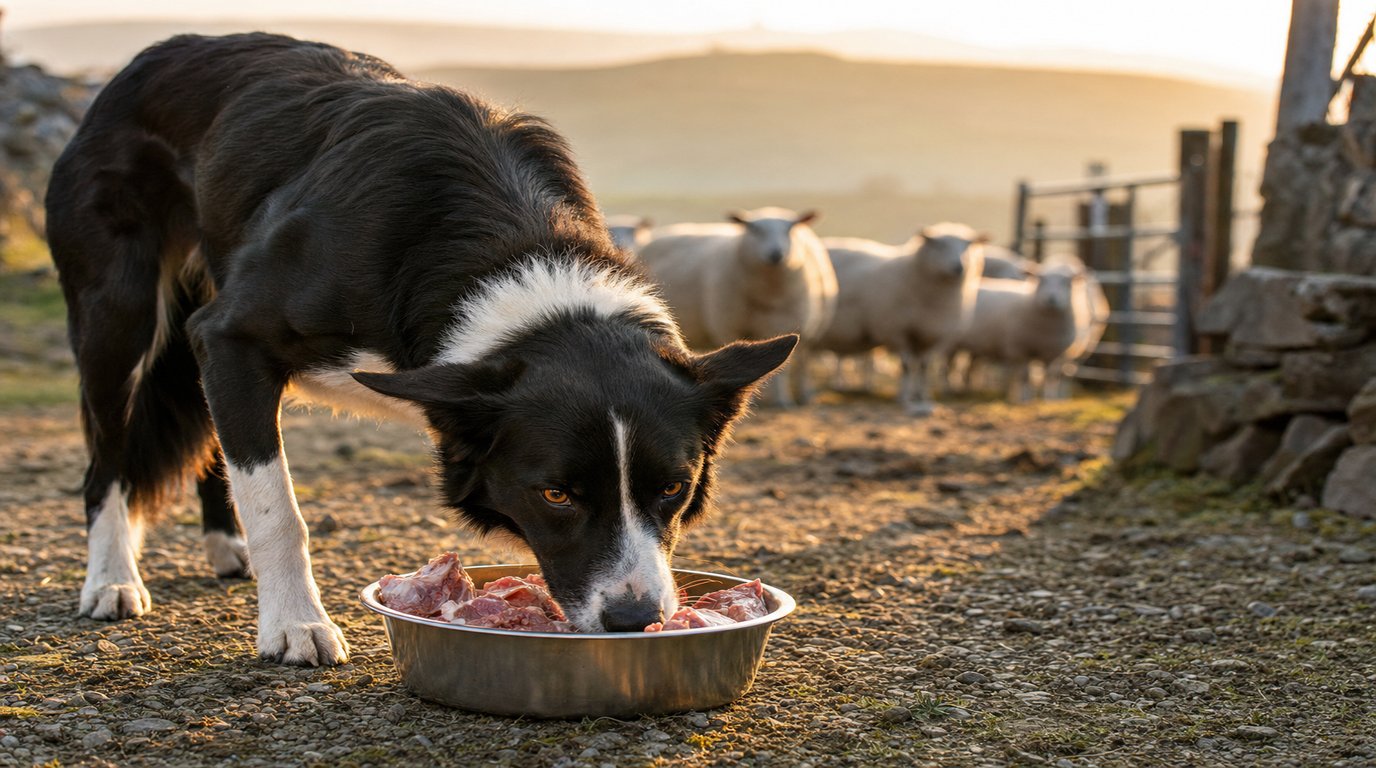
Feeding raw dog food for working dogs in the UK is a very different task from feeding a family pet that spends most of the day on the sofa. A sheepdog covering twenty miles across Welsh hillsides, a gundog working long shoot days, or a sled dog training through a cold winter burns energy at a rate that a standard maintenance diet simply cannot sustain. Getting raw dog food for working dogs right means matching calories, protein and fat to the genuine workload in front of you — and adjusting as that workload changes with the seasons. This guide explains exactly how to build a raw feeding plan that keeps hard-working dogs in peak condition all year round.
The core principle here is simple: energy in must match energy out. Where owners go wrong is treating a working animal like a pet and either underfeeding it into a drop in stamina, or overfeeding it into sluggish weight gain during the off-season. Below we break down the science, the ratios, and the practical UK-specific adjustments that keep your dog performing.
Why Raw dog food for working dogs Needs a Different Approach
A working dog’s metabolism runs hot. Studies of sled dogs and herding breeds show energy requirements two to four times higher than a sedentary dog of the same weight. When you feed raw dog food for working dogs, you are not just topping up a maintenance diet — you are fuelling sustained aerobic effort, muscle repair and thermoregulation. That changes the maths on every single meal.
Because a working animal draws so heavily on its reserves, small feeding errors compound quickly. A dog that is fractionally underfed for a week of hard herding will lose condition noticeably, while one that is overfed on light-duty days quietly gains fat. Precision matters far more here than it does for the average pet.
The three factors that drive requirements are:
- •Workload intensity — a gundog flushing game all day burns far more than one that works a couple of hours
- •Duration — endurance work draws heavily on fat as a fuel source, not just protein
- •Ambient temperature — cold UK winters raise the calories a dog needs just to stay warm
Because these vary week to week, the best feeding plans are flexible rather than fixed. You set a baseline and then dial portions up or down around it, responding to what the dog is actually being asked to do.
Energy and Macronutrients in Raw dog food for working dogs
The macronutrient balance is where a performance diet really diverges from pet feeding. Working dogs perform best on a diet rich in fat as well as protein, because fat is the primary fuel for sustained, low-to-moderate intensity effort like herding or trailing.
Fat: The Endurance Fuel in Raw dog food for working dogs
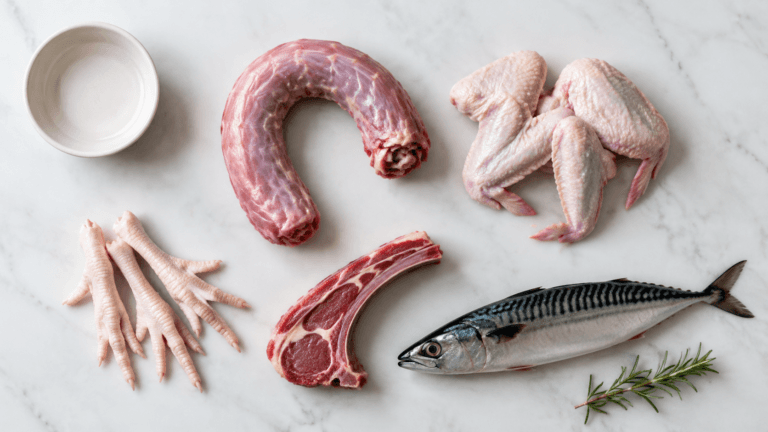
For endurance workers, fat should typically supply the majority of dietary energy. Fattier cuts, salmon and oily fish, and the natural fat on raw meaty bones all help meet this need. Dogs adapt to burning fat efficiently over a few weeks, which is why sudden diet changes before a big working season are a mistake.
Protein: Muscle Repair for Raw dog food for working dogs
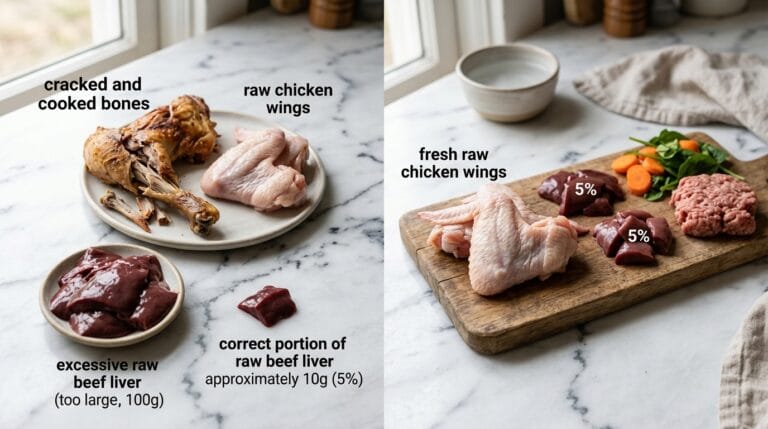
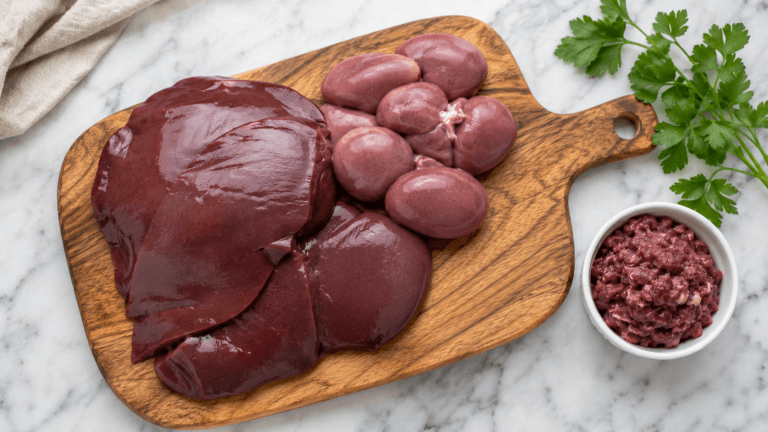
Protein rebuilds the muscle stressed during work. A varied rotation of beef, lamb, chicken, turkey and game keeps the amino acid profile complete. Aim for the muscle-meat portion to carry the bulk of the protein load, with organ meat supplying dense micronutrients.
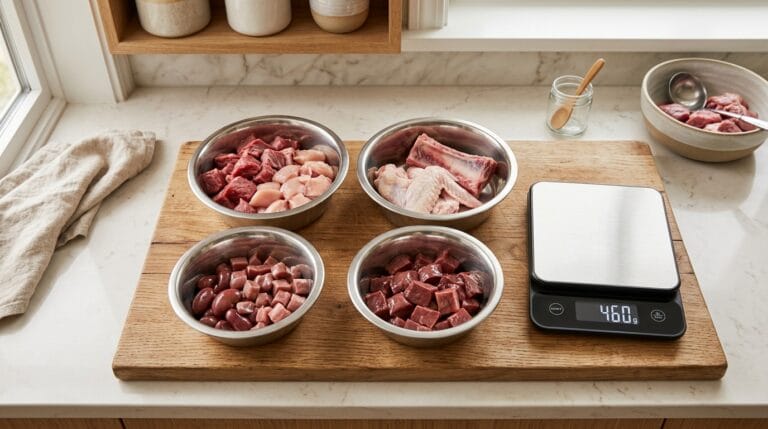
A practical starting ratio for raw dog food for working dogs follows the familiar 80/10/10 model — 80% muscle meat (choosing fattier cuts for hard workers), 10% raw edible bone and 10% offal — with oily fish added two or three times a week.
How Much Raw dog food for working dogs to Feed
Pet dogs are usually fed around 2 to 3% of bodyweight per day. Working dogs sit well above this. During heavy work, raw dog food for working dogs intake may climb to 4 to 6% of bodyweight, and elite endurance dogs can exceed even that on the hardest days.
Use these bands as a starting point, then adjust by body condition:
- •Light work (occasional walks, light herding): 2.5–3% of bodyweight
- •Moderate work (regular herding, part-day gundog work): 3–4%
- •Heavy work (full shoot days, sledding, all-day herding): 4–6%
- •Off-season rest: drop back toward pet maintenance levels of 2–2.5%
The single most reliable guide is the dog itself. You should feel ribs easily without seeing them, and see a clear waist from above. Weigh your dog weekly during the working season and adjust portions promptly if condition slips. For general canine feeding principles, the PDSA guide to your dog’s diet is a useful reference point.
Before fine-tuning raw dog food for working dogs portions by hand, get an accurate baseline. Use our free calculator to work out a starting daily feeding amount based on your dog’s weight, age and activity level, then scale up for their workload.
Try Our Free CalculatorTiming Meals Around Raw dog food for working dogs Work
When you feed matters almost as much as what you feed. A key rule for raw dog food for working dogs is never to work a dog hard on a full stomach — deep-chested breeds are at risk of bloat, and a heavy meal diverts blood to digestion when muscles need it.
- •Feed the main meal in the evening after the day’s work is done, so the dog digests and repairs overnight
- •Offer only a small, easily digested portion before a working day if anything at all
- •Always allow at least an hour of calm rest before and after eating
- •Keep fresh water available at all times, especially in summer
This evening-loaded pattern suits most UK working routines and works with the dog’s natural digestion rather than against it.
Seasonal Adjustments for Raw dog food for working dogs in the UK
The British climate demands seasonal thinking. In winter, cold weather and heavier workloads mean portions and fat content should rise to cover the extra energy spent staying warm and working through mud and rain. This is when raw dog food for working dogs intake peaks. In the quieter summer months, requirements fall and portions should come down to prevent unwanted weight gain.
Track the transition carefully — many owners forget to reduce food when the working season ends, and a fit sheepdog can become an overweight one within a couple of months of unchanged feeding.
Frequently Asked Questions About Raw dog food for working dogs
Is raw dog food for working dogs better than kibble?
Many UK handlers prefer raw dog food for working dogs because it offers dense, highly digestible energy and lets them adjust fat content precisely for workload. It is not automatically superior to a high-quality performance kibble, but it gives you fine control over macronutrients, which matters for hard-working animals. Provided the diet is balanced and portioned correctly, raw feeding suits working dogs very well.
How much raw dog food for working dogs should I feed on a rest day?
On rest days, drop back toward maintenance levels — around 2.5 to 3% of bodyweight — rather than the 4 to 6% used during heavy work. Feeding full working rations on rest days is the fastest route to unwanted weight gain. Adjust raw dog food for working dogs to the actual work being done that week, not a fixed number.
Can puppies destined to be working dogs eat raw dog food for working dogs?
Growing pups have different needs and should be fed a balanced puppy raw diet, not adult working rations. Do not overload a young dog with the high-fat, high-volume approach used for mature workers. Focus on steady growth and correct calcium-to-phosphorus balance, and only transition to full working portions once the dog is mature and actually doing sustained work.
Bottom Line
Feeding raw dog food for working dogs well is about matching fuel to effort. Build a balanced 80/10/10 base, lean toward fattier cuts and oily fish for endurance, feed 3 to 6% of bodyweight scaled to workload, load the main meal in the evening, and adjust with the UK seasons. Weigh regularly, read body condition honestly, and your working dog will hold peak form through the hardest days of the year.