Vegetables Dogs Can Eat Raw: The Complete UK Guide
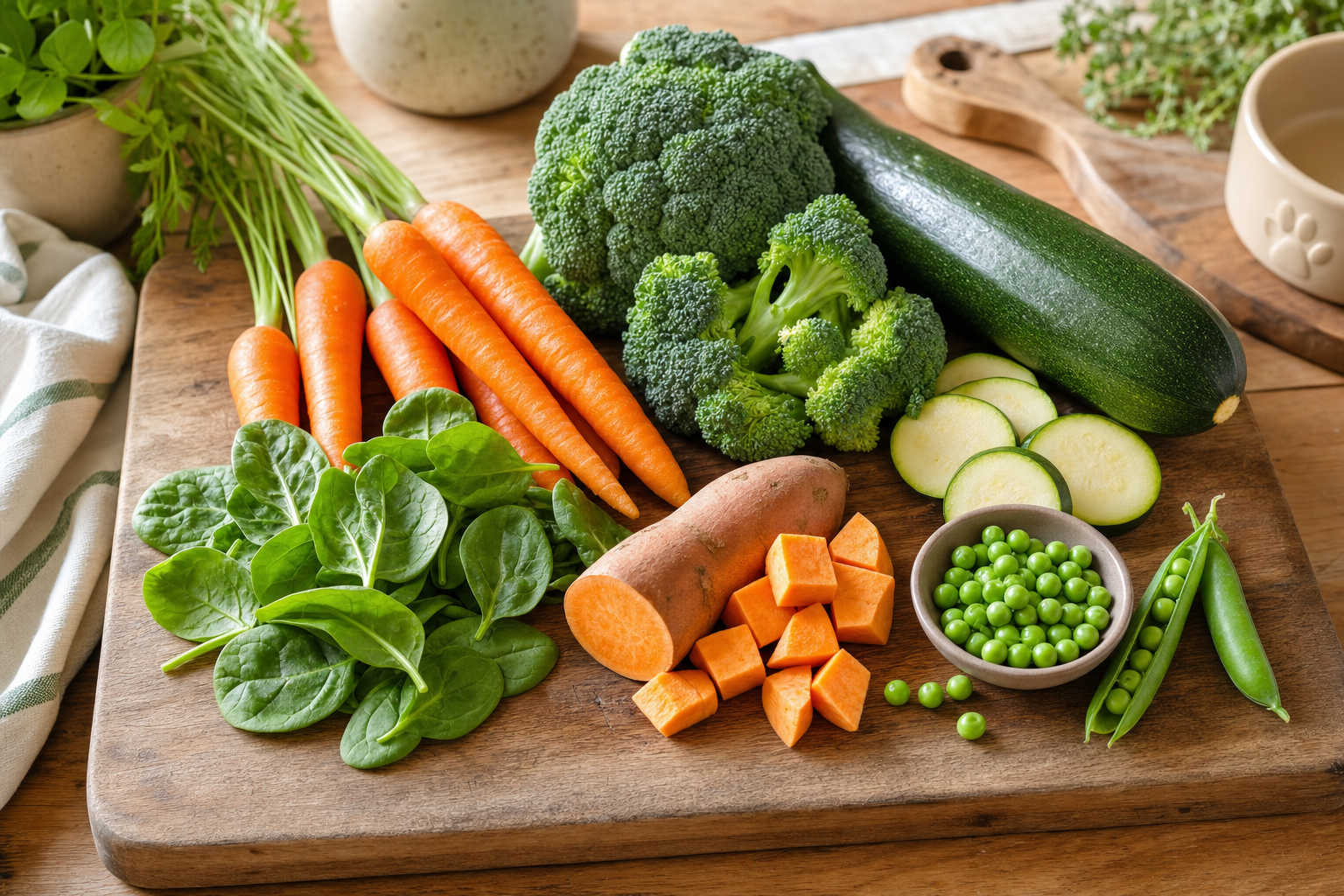
If you feed your dog a raw diet — or you’re simply curious about supplementing their meals with fresh produce — knowing which vegetables dogs can eat raw is essential. Not all veg is created equal: some provide brilliant nutritional support, others are outright toxic, and a few sit in a grey area that depends on the individual dog.
This complete guide covers the safest and most beneficial choices available to UK pet owners, the ones to avoid entirely, and exactly how to prepare and serve raw vegetables for maximum benefit. Whether you’re new to raw feeding or looking to refine an existing routine, understanding which vegetables dogs can eat raw is one of the most practical steps you can take for your dog’s long-term health.
Adding vegetables dogs can eat raw to your dog’s bowl is one of the simplest ways to increase fibre and micronutrient intake without significantly raising calorie load. The vegetables dogs can eat raw that deliver the most consistent results are those that are easy to source, easy to prepare, and genuinely palatable to most dogs — and the good news is that most of the best options are available at any UK supermarket.
Vegetables Dogs Can Eat Raw: The Safe List
The following vegetables are well-tolerated by most dogs, easy to source across the UK, and genuinely add nutritional value to a raw diet. Each entry includes the key benefit so you can choose based on what your dog actually needs. These are the vegetables dogs can eat raw with confidence — based on widely accepted canine nutritional guidance. When choosing vegetables dogs can eat raw, prioritise fresh, unwashed produce and always introduce them one at a time.
- •Carrot — One of the best raw vegetables for dogs. High in beta-carotene (a precursor to vitamin A) and naturally sweet. The crunch also helps reduce plaque build-up on teeth. Ideal as a training treat or frozen in summer. Carrots are among the vegetables dogs can eat raw every single day without issue.
- •Broccoli — Rich in vitamin C, vitamin K, and fibre. Offer small florets raw; large quantities can cause gas, so keep it to less than 10% of the meal. The stalk can be given as a chew.
- •Courgette (Zucchini) — Low-calorie, high in potassium and B vitamins. Brilliant for dogs watching their weight. Slice raw and offer as a treat or mix into a raw meal. Courgette is one of the most versatile vegetables dogs can eat raw, equally welcome grated into meals or sliced as a standalone treat.
- •Cucumber — Composed of around 96% water, making it an outstanding hydration booster. Low in calories and very easy on the digestive system. Cucumber is one of the vegetables dogs can eat raw in generous quantities, making it ideal for dogs that need low-calorie snacking options.
- •Spinach — A good source of iron, folate, and antioxidants. Feed sparingly due to its oxalic acid content, which can interfere with calcium absorption over time. A small handful blended or finely chopped is sufficient.
- •Kale — Packed with vitamins A, C, and K. Like spinach, it belongs in the occasional treat category rather than daily large servings, as it contains compounds that may affect the thyroid in very high amounts.
- •Celery — Known to freshen breath and contains vitamins A, B, and C. The stringy texture can present a mild choking risk for small dogs, so chop finely or blend.
- •Green beans — Low in calories and high in fibre. Whole raw green beans can double as a crunchy snack. Often used in weight-management protocols to add bulk without adding calories. Green beans are among the vegetables dogs can eat raw that are particularly well-suited to dogs on calorie-controlled diets.
- •Peas — A solid source of plant-based protein, thiamine, and vitamin K. Fresh or frozen (thawed) peas work well mixed into raw food. Avoid tinned peas, which are high in sodium.
- •Butternut squash — High in fibre and beta-carotene. Remove the skin and seeds before offering raw. It can support digestive regularity and is gentle on sensitive stomachs.
- •Beetroot — Rich in folate, manganese, and natural nitrates. A small amount adds colour and antioxidants to a raw meal. Note: it will turn your dog’s urine and stool pink — entirely harmless.
- •Parsnip — A good source of vitamins C and B6, plus folic acid. Easily sourced throughout the UK and readily accepted by most dogs. Grate or slice thinly before serving raw.
Vegetables Dogs Must Never Eat
Several vegetables that are nutritious for humans are dangerous — or even lethal — for dogs. Recognising these is just as important as knowing which vegetables dogs can eat raw. Not all vegetables dogs can eat raw are interchangeable — some require portion limits, and others must be avoided entirely regardless of how they are prepared.
- ✕Onion, leeks, and chives — All members of the Allium family are toxic to dogs regardless of whether they are raw, cooked, or powdered. They cause oxidative damage to red blood cells, leading to haemolytic anaemia. Even small repeated doses are harmful.
- ✕Garlic — Frequently listed as a folk remedy in older raw feeding communities, but the scientific consensus is clear: garlic contains thiosulphate, which is toxic to dogs. It is five times more potent than onion. Do not feed it.
- ✕Rhubarb — The leaves and stalks contain oxalic acid at levels high enough to cause kidney damage. Keep rhubarb plants out of reach in the garden.
- ✕Wild mushrooms — Many species found across UK woodland are highly toxic. Even if you are confident in identification, err on the side of caution and avoid feeding any foraged mushrooms to your dog.
- ✕Tomato leaves and unripe tomatoes — The solanine in green tomatoes and their plant material is toxic. Ripe, red tomato flesh in small amounts is considered generally safe, but the plant itself is not.
- ✕Raw potato — Contains solanine, particularly in the skin, eyes, and green parts. Always keep raw potatoes well out of reach. Cooked, plain potato without seasoning is a different matter — but it has no place in a raw feeding context.
- ✕Avocado — Contains persin, a fungicidal toxin that can cause vomiting, diarrhoea, and myocardial damage in dogs. The seed also presents a serious choking and obstruction hazard.
Quick-Reference: Safe vs Unsafe Vegetables for Dogs
Use this table as a handy reference when you’re unsure whether a vegetable belongs in your dog’s bowl. The vegetables dogs can eat raw are marked with a green tick; those marked with a warning should be offered only in small amounts; and anything marked toxic should never be given under any circumstances.
| Vegetable | Safe Raw? | Key Benefit / Risk | Notes |
|---|---|---|---|
| Carrot | ✓ Yes | Beta-carotene, dental health | Excellent everyday treat |
| Broccoli | ✓ Yes | Vitamins C & K, fibre | Under 10% of meal — can cause gas |
| Courgette | ✓ Yes | Low calorie, potassium | Great for weight management |
| Cucumber | ✓ Yes | Hydration, low calorie | Safe in generous amounts |
| Green beans | ✓ Yes | Fibre, low calorie bulk | Good weight-management tool |
| Spinach | ⚠ In moderation | Iron, folate, antioxidants | Oxalic acid — limit frequency |
| Kale | ⚠ In moderation | Vitamins A, C, K | Not daily; thyroid compounds |
| Peas | ✓ Yes | Plant protein, vitamin K | Fresh or frozen (thawed) only |
| Butternut squash | ✓ Yes | Fibre, beta-carotene | Remove skin and seeds first |
| Onion / Garlic / Leek | ✕ Toxic | Causes haemolytic anaemia | All forms — raw, cooked, dried |
| Rhubarb | ✕ Toxic | Kidney damage (oxalic acid) | Leaves and stalks both harmful |
| Raw potato | ✕ No | Solanine toxicity | Keep away from dogs entirely |
| Avocado | ✕ Toxic | Persin — cardiac risk | Flesh, skin, pit — all dangerous |
How to Prepare and Serve Vegetables Dogs Can Eat Raw
Dogs lack the amylase enzyme in their saliva that humans use to begin breaking down plant cell walls, so whole raw vegetables — particularly firm ones like carrot or butternut squash — pass through largely undigested. To maximise the nutritional uptake from the vegetables dogs can eat raw, use one of these preparation methods. Preparing vegetables dogs can eat raw correctly is the difference between a nutritious addition and one that passes through with little benefit.
- •Blending or pulsing — The most effective method. A few seconds in a food processor breaks the cell walls and releases nutrients, effectively making them bioavailable. Blend a batch at the start of the week and refrigerate for up to four days.
- •Grating — Carrot, beetroot, courgette, and parsnip can be finely grated and mixed directly into raw meals. Quick, no equipment needed beyond a box grater.
- •Chopping into small pieces — Better for softer vegetables such as cucumber, courgette, and peas. Aim for pieces no larger than your thumbnail for a medium-sized dog.
- •Whole as treats — Carrots, green beans, and broccoli stalks are fine to offer whole as chews or treats — the mechanical chewing action itself has dental benefits, even if the vegetable is not fully digested. Offering whole pieces of vegetables dogs can eat raw is a great way to support dental health between meals.
- •Frozen — Frozen carrot sticks, cucumber rounds, and green beans are popular in summer and can help soothe teething puppies. Always supervise to prevent choking.
Hygiene and Sourcing Tips
- •Always wash raw vegetables thoroughly before serving, even if they are organic — pesticide residues, soil bacteria, and surface contamination are real risks. The same rule applies to all vegetables dogs can eat raw: wash first, serve second.
- •Buy British where possible. UK-grown produce is subject to strict pesticide regulations and tends to be fresher with shorter supply chains.
- •Avoid pre-seasoned, pickled, or preserved vegetables. Any added salt, vinegar, sugar, or spice makes them unsuitable for dogs.
- •Introduce new vegetables one at a time and observe your dog for 24–48 hours. Some dogs have individual sensitivities to specific plants. Not every vegetable dogs can eat raw suits every individual dog, so slow and steady is always the right approach.
How Much Vegetable Should Be in a Raw Dog’s Diet?
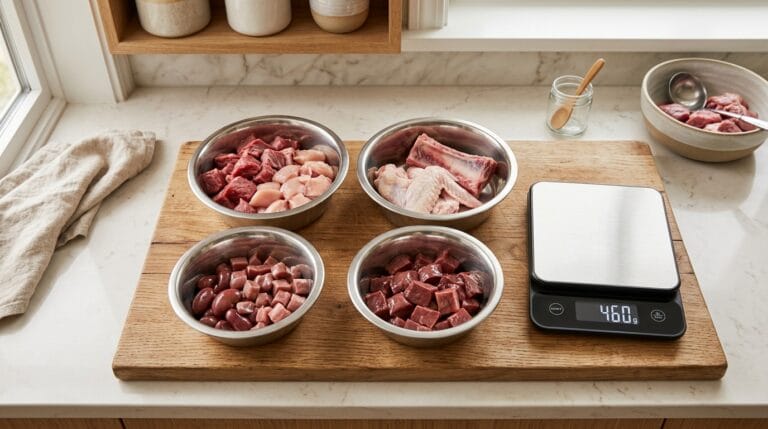
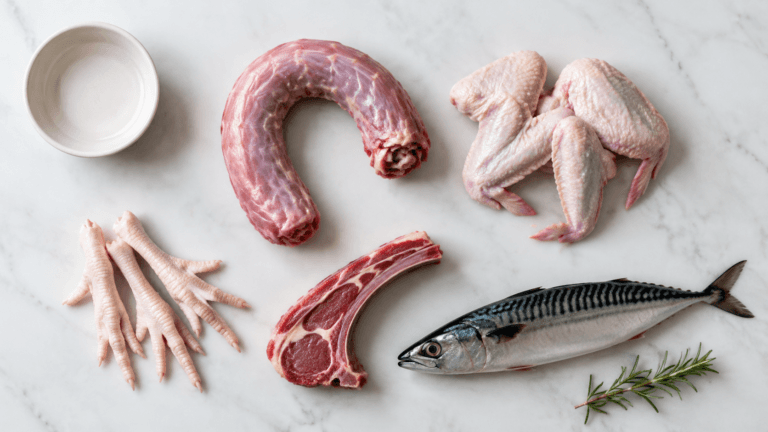
Vegetables dogs can eat raw are a supplement to — not a replacement for — the core raw diet of muscle meat, raw meaty bones, and organ meat. Knowing how much to include is just as important as knowing which vegetables dogs can eat raw in the first place. The widely used BARF (Biologically Appropriate Raw Food) model recommends roughly the following split by weight — and PFMA guidelines similarly recommend keeping plant matter to no more than 10% of a dog’s diet:
- •70–80% — Muscle meat (including heart)
- •10% — Raw meaty bones
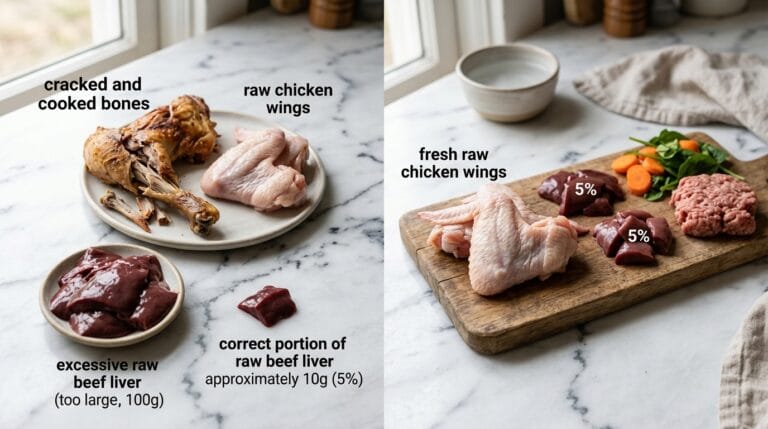
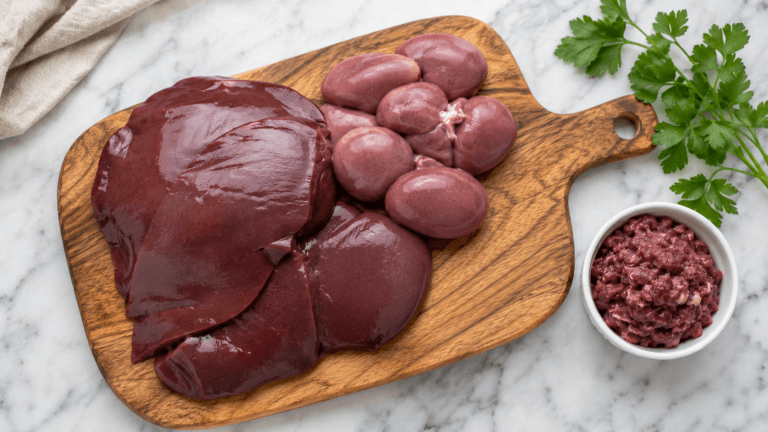
- •10% — Organ meat (5% liver, 5% secreting organs)
- •5–10% — Vegetables, fruit, and other plant matter
That 5–10% plant allowance translates to roughly one or two tablespoons of blended or grated vegetables per meal for a medium-sized dog (around 20 kg). For a large breed (40+ kg), you might scale up to three or four tablespoons. For very small dogs and toy breeds, even a teaspoon mixed in is sufficient. The safest vegetables dogs can eat raw in everyday quantities include carrot, cucumber, courgette, and green beans — all are low in calories and high in useful micronutrients.
Dogs are facultative carnivores, meaning they can utilise plant matter but do not require it in the way omnivores do. Think of vegetables as a nutrient and fibre boost rather than a cornerstone of the diet. Knowing which vegetables dogs can eat raw — and in what quantities — keeps the diet balanced without displacing the protein and fat their bodies are built to thrive on.
Tip: Rotate Your Vegetables
Just as variety in protein sources supports a balanced raw diet, rotating through different vegetables week by week broadens the micronutrient profile your dog receives. Carrot and green beans one week, courgette and peas the next, then broccoli and beetroot — this approach also reduces the likelihood of any single vegetable’s anti-nutrient building up over time. Some of the best vegetables dogs can eat raw are also the most affordable, so rotating your choices need not add much to your weekly shop.
Frequently Asked Questions
Can dogs eat raw carrots every day?
Yes — raw carrots are one of the safest daily additions to a dog’s diet. They are low in calories, high in fibre, and help naturally clean teeth. Keep portions small (a few sticks for a medium dog) to avoid excess sugar intake. Among all the vegetables dogs can eat raw, carrots are consistently the top recommendation from canine nutritionists for everyday use.
Do vegetables dogs can eat raw need to be blended?
For best nutrient absorption, yes. Dogs cannot fully break down the cellulose walls of raw vegetables, so blending, grating or lightly steaming them improves bioavailability significantly. Whole raw carrots and cucumber are fine as-is for chewing purposes. The vegetables dogs can eat raw that benefit most from blending are the denser, firmer ones — carrot, butternut squash, and beetroot chief among them.
What vegetables are toxic to dogs?
Onions, garlic, leeks, chives and shallots are all toxic to dogs and must be avoided entirely — even in cooked or powder form. Avocado contains persin which can cause vomiting. Always check before introducing any new food to your dog’s diet. Sticking to the established list of vegetables dogs can eat raw — those covered in this guide — is the safest approach until you have confirmed a new item with a vet or canine nutritionist.
The Bottom Line
Understanding which vegetables dogs can eat raw empowers you to add real nutritional value to your dog’s meals without the risks that come from guesswork. The safest and most practical choices for UK raw feeders are carrot, cucumber, courgette, green beans, peas, butternut squash, broccoli, and parsnip — all widely available, affordable, and genuinely beneficial when prepared correctly. These are the core vegetables dogs can eat raw that should form the backbone of any plant supplementation strategy for a raw-fed dog in the UK.
Always avoid the Allium family (onion, garlic, leeks, chives), rhubarb, raw potato, and avocado entirely. When in doubt about any vegetable not covered here, consult a canine nutritionist or your vet before adding it to the bowl. If you want a quick checklist to pin on the fridge, bookmark this page — it covers everything you need to know about which vegetables dogs can eat raw safely in a UK household.
Blend, grate, or chop vegetables to improve bioavailability, keep the plant component at 5–10% of the overall diet, and rotate your choices regularly. Do that consistently and your dog will benefit from every scrap of goodness that good British produce has to offer. The vegetables dogs can eat raw are one of the easiest and most cost-effective ways to elevate the quality of a raw diet — and with the guidance above, you now have everything you need to get started confidently.
Not Sure How Much to Feed?
Use our free raw dog food calculator to get an instant portion recommendation tailored to your dog’s weight, age and activity level.
Try Our Free Calculator