Raw Dog Food Storage: The Complete UK Safety Guide (2026)
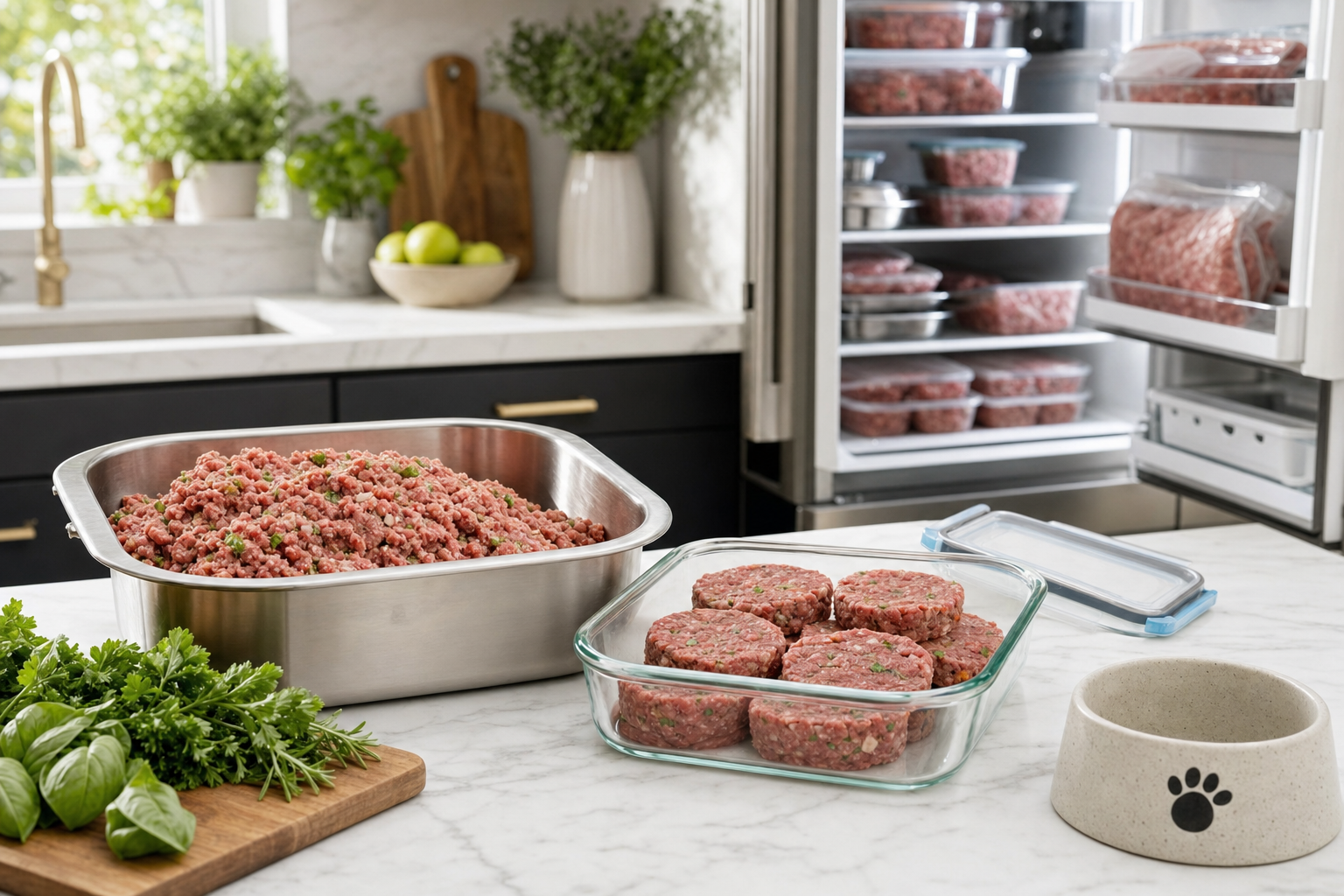
Proper raw dog food storage is one of the most important — and most overlooked — parts of feeding a raw diet in the UK. Get it right and you will have safe, nutritious meals ready at a moment’s notice. Get it wrong and you risk bacterial contamination, freezer burn, or wasted money. This complete guide covers fridge and freezer times, the best containers, how to defrost safely, and the hygiene steps every UK raw feeder should follow. Whether you’re new to raw feeding or sharpening your routine, our free UK raw dog food calculator can help you portion and plan with confidence.
1. Why Raw Dog Food Storage Matters More Than You Think
Uncooked meat, organ, and bone carry the same food safety considerations as raw meat prepared for humans. The UK Food Standards Agency (FSA) classifies raw pet food under the same hygiene rules as raw meat, so correct handling isn’t optional — it protects your dog, yourself, and everyone in the household.
The two main risks from poor handling are:
- • Bacterial growth — pathogens like Salmonella, Listeria, and E. coli multiply rapidly above 5°C. This can cause illness in immunocompromised dogs and poses a genuine cross-contamination risk to humans.
- • Nutritional degradation — repeated freeze-thaw cycles and improper containers degrade the fats and proteins you’re paying for. A simple routine protects both safety and food quality.
Fortunately, keeping raw dog food safe is straightforward once you have a system in place. The steps below are what experienced UK raw feeders use every day.
2. How Long Does Raw Dog Food Last in the Fridge?
The fridge is for short-term use only — meals you plan to serve within the next day or two. Keep everything below 5°C and always store it on the bottom shelf so drips don’t cross-contaminate human food above.
| Food type | Max fridge time | Notes |
|---|---|---|
| Minced complete raw meals | 2–3 days | Keep sealed, below 5°C |
| Whole muscle meat cuts | 3–5 days | Whole cuts hold longer than mince |
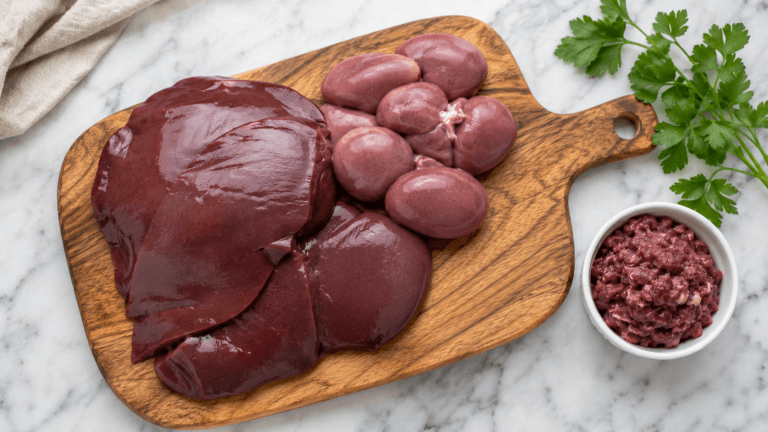
| Organ meat (liver, kidney) | 1–2 days | Spoils fastest — use first |
| Meaty bones | 2–3 days | Store in a sealed container |
| Defrosted complete meals | 2–3 days | Never refreeze after thawing |
| Fish | 1–2 days | Very perishable — use quickly |
Always keep your dog’s meals in a designated sealed container in the fridge — not open on a plate — to avoid contamination and odour transfer to human food.
3. Freezer Storage: The UK Raw Feeder’s Best Friend
The freezer is where the bulk of your supply should live. Freezing halts bacterial growth entirely and allows bulk buying — one of the most effective ways to cut costs, as covered in our bulk buying raw meat UK guide. Here’s how long different proteins keep at -18°C:
| Food type | Freezer life | Quality notes |
|---|---|---|
| Pre-made complete mince | 4–6 months | Best within 3 months for fat quality |
| Whole muscle meat cuts | 6–12 months | Well-wrapped whole cuts freeze excellently |
| Organ meat | 3–4 months | Vacuum seal recommended |
| Meaty bones | 6 months | Wrap tightly to prevent freezer burn |
| Whole fish | 2–3 months | Vacuum seal extends life significantly |
| Green tripe (minced) | 4–6 months | Seal well — odour is strong |
Never refreeze thawed meat
Once thawed in the fridge, meat must not be refrozen. Bacteria multiply during the thaw cycle and refreezing locks them back in at higher counts. Portion before freezing so you only ever thaw exactly what you need.
Consider a dedicated chest freezer
Many UK raw feeders invest in a small chest freezer dedicated to their dog’s diet — especially when buying in bulk. A basic model starts around £120–£150 and pays for itself quickly. See our guide to the best places to source raw dog food in the UK for bulk buying options.
4. Best Containers for Storing Raw Dog Food
The right container makes a significant difference to both safety and quality. Here’s what works best at each stage:
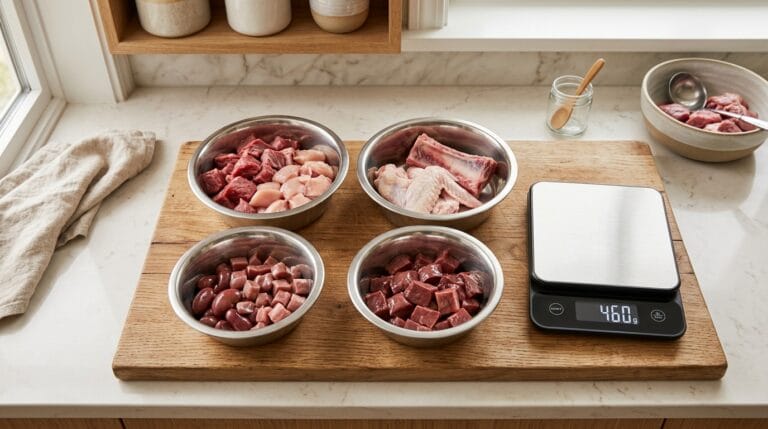
- • Glass containers with locking lids — the gold standard for fridge use. Non-porous, easy to clean, won’t absorb odours or bacteria. Ideal for thawed daily portions.
- • Vacuum-seal bags — best for long-term freezer use. Removing air prevents freezer burn and dramatically extends shelf life, particularly for organ meat and fish.
- • Stainless steel containers — hygienic and durable for the fridge. Excellent for portioning out a week’s worth of thawed meals in advance.
- • BPA-free plastic tubs with lids — acceptable for short-term fridge use, but replace them if cracked or scratched as grooves harbour bacteria.
- • Labelled zip-lock freezer bags — convenient for portioning mince into daily servings before freezing. Write the date and protein type on each bag.
Containers to avoid
Never use thin carrier bags, cling film alone, or open bowls for anything beyond immediate serving. Avoid containers with deep scratches or cracks — bacteria colonise these grooves and cannot be cleaned out. Do not reuse supermarket meat trays as they are not airtight.
5. How to Defrost Raw Dog Food Safely
How you defrost is just as important as how you freeze. There are three safe methods for UK households:
- • In the fridge overnight (recommended) — transfer tomorrow’s portion from freezer to fridge the night before. This keeps everything at a safe temperature throughout the thaw. Use a sealed container to prevent drips on other food.
- • In cold water — submerge the sealed bag in cold (not warm) water, changing it every 30 minutes. A standard 500g portion defrosts in 1–2 hours.
- • In a cool room (under 15°C) — acceptable in a UK winter for a short defrost, but not recommended in summer months.
Never defrost at room temperature
Leaving meat on the counter allows the outer surface to reach 20°C+ while the centre is still frozen — exactly where bacterial growth accelerates fastest. This is one of the most common raw feeding mistakes UK owners make.
6. Daily Hygiene Routine for Raw Dog Food Storage
A consistent hygiene routine keeps both your dog and your household safe. Here’s what to do every day:
- • Wash hands thoroughly before and after handling — plain soap and water for at least 20 seconds, the same as you would with raw meat for cooking.
- • Use a dedicated chopping board — colour-code it so it’s never accidentally used for human food preparation.
- • Wash dog bowls after every meal — hot soapy water is sufficient; dishwasher is better.
- • Clean surfaces immediately — wipe down worktops with antibacterial spray straight after portioning. Don’t let residue dry.
- • Protect vulnerable household members — young children, pregnant women, the elderly, and immunocompromised individuals should avoid contact with the feeding area until it’s been cleaned.
7. Organising Your Freezer for a Smooth Raw Feeding Routine
A well-organised freezer turns the weekly prep into a two-minute task. Here’s the system most experienced UK raw feeders use:
- • Portion before freezing — weigh out individual daily servings before you freeze. Only ever take out exactly what you need. Use our raw dog food calculator to find your dog’s correct daily amount.
- • Label everything — mark each bag with protein type and date frozen. Rotate stock first-in, first-out.
- • Separate protein types — keep different proteins in their own labelled zone to make variety rotation easy.
- • Keep a two-day thaw cycle running — always have the next two days’ portions defrosting in the fridge. When you use Day 1, move another portion down from the freezer.
- • Review stock weekly — a quick check prevents anything being buried and forgotten past its best.
How much freezer space do you need?
A 20kg dog eating BARF or PMR goes through roughly 400–500g per day — about 3kg per week. A month’s supply is approximately 12–14kg. A 60-litre chest freezer suits one medium dog; a second dog or regular bulk buying warrants 100 litres or more.
Frequently Asked Questions
How long can raw dog food sit out at room temperature?
No more than 30–60 minutes in a typical UK indoor environment. After that, bacterial growth increases rapidly. If your dog doesn’t finish a meal within an hour, refrigerate any leftovers immediately. Discard anything left out longer than two hours.
Can I refreeze raw dog food that has been thawed?
No. Once defrosted, it must not go back in the freezer. Bacteria multiply during the thaw cycle and refreezing locks them in at higher counts. Portion into individual daily servings before freezing so you only ever defrost exactly what you need.
Does freezing kill bacteria?
Freezing puts bacteria into a dormant state but does not kill them. Pathogens like Salmonella and Listeria survive freezing and become active again once the meat thaws. Correct handling practices remain essential even with previously frozen food.
How do I travel with frozen dog food in the UK?
A good-quality cool bag with ice packs is sufficient for day trips. For overnight stays, most dog-friendly holiday cottages and hotels will accommodate a fridge request if you contact them in advance. Pre-portioned frozen meals are the easiest option — they simply defrost in the accommodation fridge overnight.
How do I know if the meat has gone off?
Trust your senses. Signs of spoilage include a sour or unusually sharp smell (beyond normal raw meat odour), a slimy surface texture, grey or greenish discolouration, and visible mould. If any of these are present, discard the food. When in doubt, throw it out — a fresh portion costs far less than a vet visit.
The Bottom Line
Good raw dog food storage doesn’t need to be complicated — it just needs to be consistent. Keep the freezer as your main store, portion before freezing, thaw in the fridge overnight, use airtight containers, and follow a simple daily hygiene routine. With these habits in place, your dog gets the full benefit of fresh, nutrient-dense meals every day. Ready to nail the portions? Run the numbers with our free UK raw dog food calculator.
Calculate Your Dog’s Raw Food Portions
Use our free calculator to find exactly how much your dog needs each day — by weight, age, breed, and activity level. Takes less than a minute.
Try the Free Calculator