Organ Meat for Dogs: The Complete UK Raw Feeding Guide (2026)
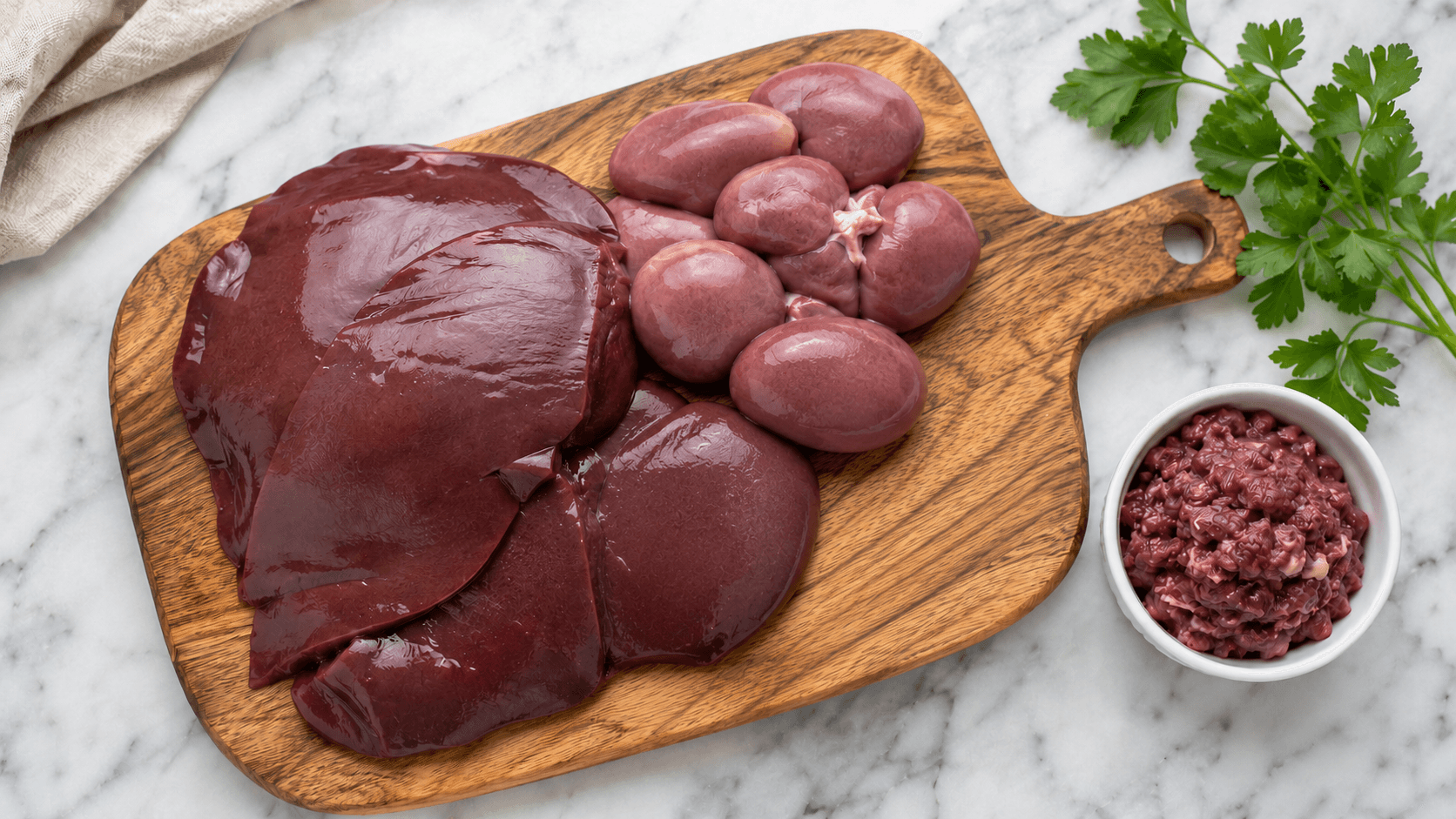
Organ meat for dogs is the most nutrient-dense part of a raw diet — and the most commonly misunderstood. Feed too little and your dog misses out on critical vitamins and minerals that muscle meat simply cannot supply. Feed the wrong organs in the wrong amounts and you risk toxicity. This guide covers every type of offal worth including, exactly how much to feed each week, why some organs count differently to others, and where to source it all cheaply across the UK. For the full raw feeding framework, see our prey model raw guide or our BARF guide.
Why Organ Meat Is Non-Negotiable in a Raw Diet
Organ meat — also called offal — is nature’s multivitamin. Whole prey animals carry concentrated stores of fat-soluble vitamins, minerals, and co-enzymes in their organs because that’s where metabolic activity is highest. Liver alone contains more vitamin B12 per 100g than almost any other food on earth, alongside meaningful amounts of vitamin A, iron, copper, folate, and zinc.
A raw diet built on muscle meat and bone alone will develop deficiencies over time — most commonly in vitamin A, B vitamins, manganese, and zinc. Organs close that gap. They’re also relatively cheap compared to premium muscle meat cuts, making them one of the most cost-effective parts of a budget raw feeding plan.
The Pet Food Manufacturers’ Association (PFMA) recognises offal as a legitimate and valuable ingredient in complete pet diets — it features in commercial raw minces for exactly this reason.
The 80:10:10 Rule — Where Organs Fit
Both the prey model raw (PMR) and BARF approaches use a core ratio of:
- • 80% muscle meat (the energy base)
- • 10% edible bone (calcium and phosphorus source)
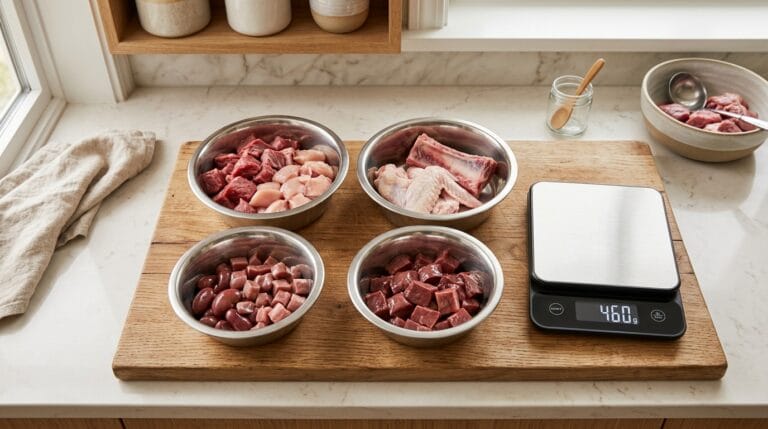
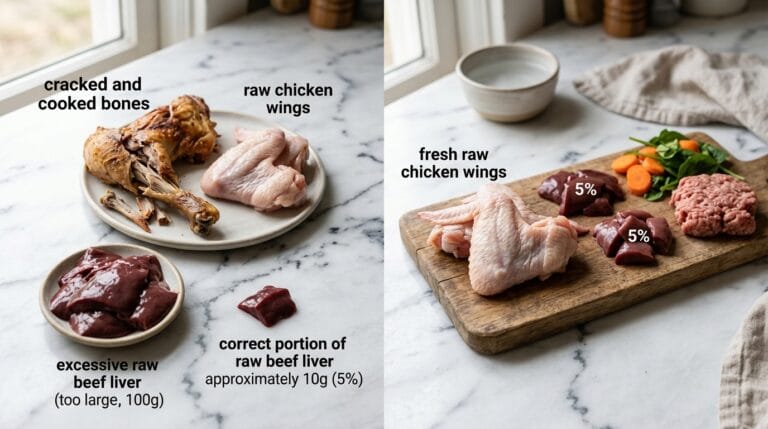
- • 10% organ meat — split into 5% liver and 5% other secreting organs
That organ split is the important detail most beginners miss. Not all offal counts the same way. Only secreting organs — glands and organs with metabolic roles — count toward the 10% organ allocation. Lung and tripe, for example, are nutritionally closer to muscle meat and are treated differently.
Use our free raw dog food calculator to work out the exact grams of liver and organ your dog needs each week based on their weight and activity level.
| Dog weight | Daily food (2%) | Weekly liver (5%) | Weekly other organs (5%) |
|---|---|---|---|
| 5 kg | 100 g | 35 g | 35 g |
| 10 kg | 200 g | 70 g | 70 g |
| 20 kg | 400 g | 140 g | 140 g |
| 30 kg | 600 g | 210 g | 210 g |
| 40 kg | 800 g | 280 g | 280 g |
Based on 2% of body weight per day for a typical adult dog. Puppies and very active dogs need more — use the calculator for a personalised figure.
A Guide to Each Type of Organ Meat
Liver — 5% of the weekly diet
Liver is the single most important organ to include. It supplies vitamin A, B12, riboflavin, folate, copper, iron, and zinc at levels that dwarf most other foods. Chicken liver and lamb liver are the most affordable options in the UK; beef liver is richer still but also stronger in vitamin A.
The 5% cap is critical. Vitamin A is fat-soluble and accumulates in the body — long-term overfeeding causes hypervitaminosis A, which leads to bone deformity, lethargy, and joint pain. Stick to 5% of weekly food intake and you’re well within safe limits. For a 20kg dog eating 2.8kg per week, that’s around 140g of liver per week — roughly one large chicken liver per day or a palm-sized piece of lamb liver every other day.
Liver from any species counts: chicken, duck, lamb, beef, pork, rabbit, venison. Rotating species keeps the nutrient profile varied and reduces the chance of over-relying on any single mineral.
Kidney — a versatile secreting organ
Kidney is one of the easiest organs to source in the UK and one of the safest to feed. Lamb kidney and ox kidney are widely available at butchers for £2–£4/kg. Kidney is rich in B12, selenium, and iron, with a gentler fat-soluble vitamin load than liver — making it ideal for filling that second 5% organ slot.
Kidney counts as a secreting organ and goes toward the 5% other-organ allocation. For a 20kg dog, that’s around 140g of kidney across the week — typically two to three lamb kidneys. Split across a few meals rather than one large dose to keep digestion smooth. Dogs new to raw may find kidney slightly looser on the stool at first — introduce gradually alongside more familiar muscle meat.
Heart — muscle meat, not organ
Heart is one of the most common points of confusion in raw feeding. Despite being called an organ, heart is classified as muscle meat in the 80:10:10 model because it’s cardiac (involuntary smooth muscle), not a secreting gland. It counts toward the 80% muscle meat allocation, not the 10% organ slot.
That said, heart is extraordinarily nutritious — it’s the richest natural source of taurine (critical for heart health in dogs) and CoQ10, alongside high levels of iron and B vitamins. Beef heart, chicken heart, and lamb heart are all excellent. Include as much heart as you like within the 80% muscle allowance; many raw feeders use it as 20–30% of their total muscle meat. If you feed a low-taurine diet or a giant breed, heart is especially worth prioritising — check our supplements guide for more on taurine in raw diets.
Other secreting organs — spleen, pancreas, brain, testicles
Beyond liver and kidney, there’s a useful range of secreting organs to rotate through. These all count toward the 5% other-organ slot:
- • Spleen — rich in iron and B12, often available cheaply from lamb carcasses. Strong smell, so introduce slowly.
- • Pancreas — sometimes called sweetbreads alongside thymus. High in digestive enzymes — useful for dogs with EPI or poor digestion, though rarely available from standard UK butchers.
- • Brain — very high in fat and DHA. Excellent for brain and nervous system health. Lamb and pig brain are the most accessible. Feed in small amounts (20–40g) as a rotation rather than a staple.
- • Testicles — increasingly available via raw pet food suppliers. Nutritionally similar to other glands, high in zinc and B vitamins.
- • Thymus (sweetbreads) — rich in zinc and nucleotides that support immune function. Often sold frozen by raw pet food suppliers.
Lung and green tripe — count as muscle meat
Lung and green tripe are both highly nutritious but are not secreting organs, so they count toward the 80% muscle meat portion, not the organ allocation. Green tripe in particular is widely regarded as one of the best additions to any raw diet — it contains natural digestive enzymes, probiotics, and a near-perfect calcium-to-phosphorus ratio. Lung is lighter, lower in fat, and a useful lean muscle protein. Neither replaces liver or kidney.
If you’re seeing loose stools after organ introductions, check our common raw feeding mistakes guide — overloading organs too quickly is one of the top reasons new raw feeders run into digestive issues.
Sourcing Organ Meat in the UK
Offal is one of the cheapest food categories in the UK — often available for a fraction of the cost of muscle meat. Here’s where to look in 2026:
| Source | Best organs available | Approx. price |
|---|---|---|
| Local butcher | Lamb liver, ox kidney, chicken liver, lamb heart | £1–£3/kg |
| Supermarket (reduced) | Chicken liver, lamb liver, ox kidney | £1–£2.50/kg |
| Asian / ethnic supermarket | Goat liver, chicken heart, beef kidney, spleen | £1–£2.50/kg |
| Raw pet food supplier (DAF, Naturaw, etc.) | Spleen, pancreas, thymus, pre-mixed organ mince | £2–£5/kg frozen |
| Farm / game dealer | Venison liver/kidney, rabbit offal, pheasant liver | £1–£3/kg seasonal |
Asian and ethnic supermarkets are a particularly underused resource in the UK raw feeding community — they routinely stock harder-to-find items like goat liver, beef spleen, and chicken hearts at very competitive prices. For a deeper look at keeping costs low across the whole raw diet, see our raw dog food budget guide.
Buy in bulk and freeze in pre-weighed weekly portions. Organ meat freezes extremely well and shows no nutritional degradation over three to four months at -18°C, per Food Standards Agency guidance on chilling and freezing.
Practical Tips for Feeding Organ Meat
Spread organs across the week, not in one sitting. Some dogs — particularly those new to raw — get loose stools if they eat a large dose of liver in one meal. Splitting the weekly allowance across three to five meals is far easier on the digestive system.
Freeze organs before feeding. The PDSA recommends freezing raw meat for at least four days at -18°C before feeding to reduce the risk of parasites. This is especially worth doing with brain and organ meat from game species.
Rotate species and organ types. Different animals have different micronutrient profiles. Rotating between chicken liver and lamb liver, or between ox kidney and lamb kidney, ensures a broader range of nutrients and reduces the risk of excess in any single mineral.
Watch for orange-tinged stools or skin. If you notice your dog’s stool becoming very dark or their skin or mucous membranes take on an orange tinge, reduce liver immediately — these can be early signs of excess vitamin A. This is rare if you’re sticking to 5%, but worth monitoring in the early weeks.
Use pre-mixed organ mince as a shortcut. Most UK raw pet food suppliers sell “organ mince” or “offal mince” containing blended liver, kidney, and spleen. These are an easy option for owners who don’t want to weigh multiple items — just confirm the ingredients and calculate your percentages from the total weight. If you want to see whether organs fit your overall supplement picture, check our raw feeding supplements guide.
Frequently Asked Questions
Can I feed organ meat every day?
Yes — in fact, spreading organ across most days of the week is preferable to one large weekly portion. The key is keeping the total quantity within the 5% liver and 5% other-organ limits over the week. Daily small amounts are easier on digestion than infrequent large doses.
What if I can’t find secreting organs other than liver?
Kidney is available in virtually every UK butcher and most supermarkets, so start there. If you genuinely can’t source any other secreting organ, you can slightly increase kidney to cover the full 10% organ allocation — but rotating is always better. Pre-mixed organ mince from a raw pet food supplier is the easiest shortcut.
Is organ meat safe for puppies?
Yes, but introduce it gradually and keep quantities proportional. Puppies need the same 5% liver / 5% other organ split. Start with small amounts of chicken liver from around 8 weeks and build up over two to three weeks. Their digestive systems are more sensitive than adults, so go slowly and watch stool consistency.
My dog refuses to eat liver — what can I do?
Some dogs find the smell or texture of liver off-putting, especially if coming from kibble. Try freezing it and grating it frozen over their meal so it blends in with muscle meat. Alternatively, lightly sear the surface for a few seconds — the Maillard crust changes the smell without cooking the centre. You can also use pre-mixed organ mince where liver is blended with other ingredients.
Does organ meat count toward my dog’s protein intake?
Yes — organ meat is a high-protein food. Liver is roughly 20% protein by weight, kidney around 17%. It counts fully toward your dog’s daily protein intake, alongside muscle meat. The 10% organ allocation in the 80:10:10 model is in addition to — not separate from — the overall protein picture.
The Bottom Line
Organ meat is the nutritional cornerstone of any balanced raw diet — without it, even a well-planned muscle-and-bone menu will develop gaps over time. Feed 5% liver and 5% other secreting organs (such as kidney, spleen, or pancreas) each week. Keep heart, lung, and tripe in the 80% muscle meat portion. Rotate organ species and types where possible, introduce slowly, spread across the week, and freeze before feeding. Done consistently, organ meat delivers a level of nutrition that no synthetic supplement can match.
Work Out Your Dog’s Organ Portions
Our free UK raw dog food calculator gives you exact weekly grams of liver, secreting organs, muscle meat, and bone — personalised to your dog’s weight, age, and activity level.
Try Our Free Calculator