Raw Dog Food and Dental Health UK: What Owners Should Know
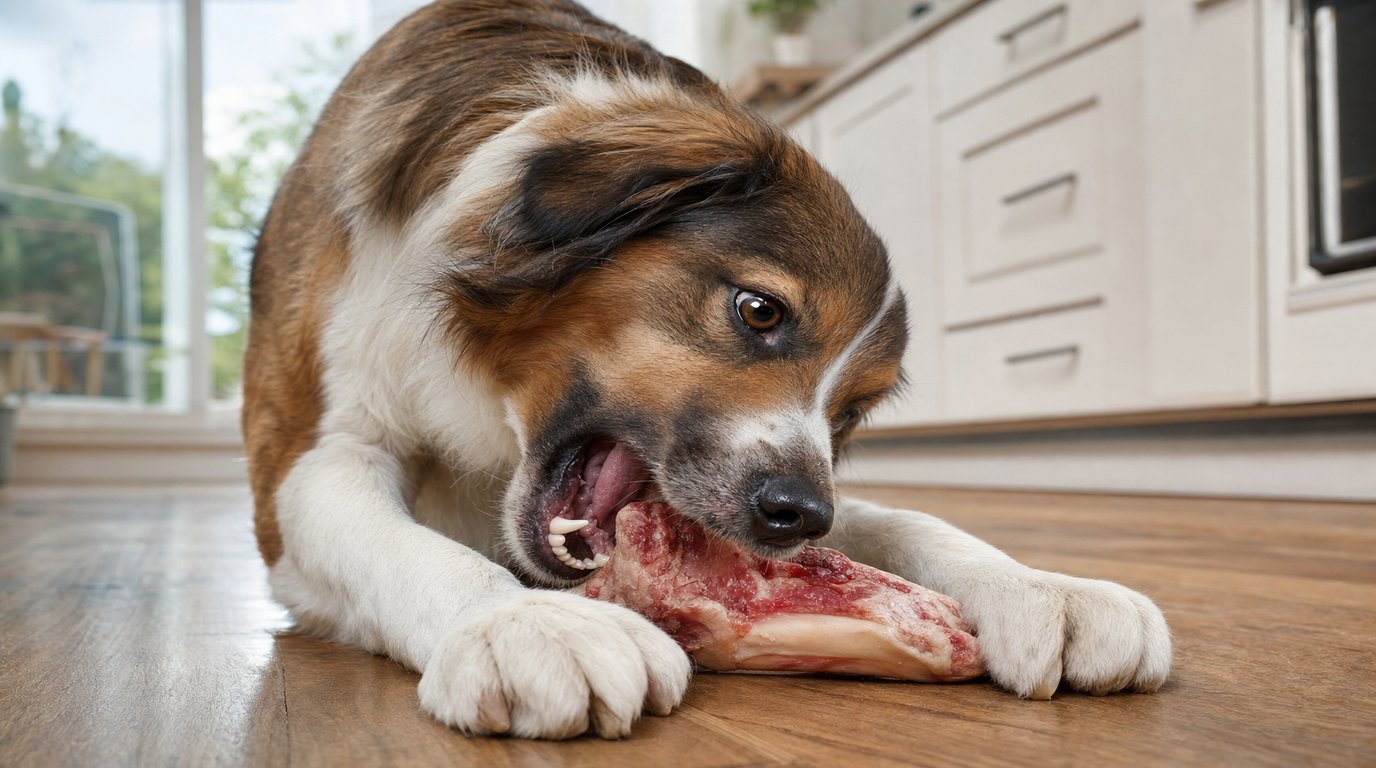
The link between raw dog food and dental health is one of the most talked-about benefits of raw feeding in the UK. Many owners switch partly because they have heard that a raw diet, and raw meaty bones in particular, can keep teeth cleaner and breath fresher than a diet of soft kibble. There is genuine truth in this, but the relationship between raw dog food and dental health is more nuanced than the marketing suggests. This guide explains how raw feeding actually affects your dog’s teeth and gums, how to chew safely, and where the real limits of the dental benefit lie.
This subject matters because dental disease is one of the most common health problems in UK dogs, affecting a large majority by middle age. If raw feeding can genuinely help reduce plaque and tartar, that is a meaningful welfare benefit — but only if it is done correctly and safely. Untreated dental disease is not just about bad breath; it causes pain, tooth loss and can affect the heart, liver and kidneys over time, so anything that helps slow it is worth taking seriously. The PDSA overview of dental disease in dogs explains just how widespread and serious the problem is.
How Raw dog food and dental health Are Connected
The core mechanism behind raw dog food and dental health is mechanical cleaning. When a dog tears and chews raw meat and gnaws on raw meaty bones, the fibrous texture scrapes against the tooth surface, helping to lift away soft plaque before it hardens into tartar. Dry kibble, contrary to a common myth, tends to shatter rather than clean, and the starchy residue can actually feed plaque-forming bacteria.
The dental advantages most often reported by raw feeders include:
- •Reduced plaque and tartar build-up from natural abrasive chewing
- •Fresher breath as bacterial load in the mouth falls
- •Cleaner tooth surfaces, especially the large carnassial teeth used for chewing
- •Healthier gums from the massaging action of tearing and gnawing
None of this happens automatically, though. The dental benefit depends heavily on the dog actually chewing appropriate items, not simply swallowing soft minced food. A dog fed only smooth raw mince gets very little of the mechanical cleaning that gives raw feeding its reputation for clean teeth.
The Role of Raw Bones in Raw dog food and dental health
Raw meaty bones are the single biggest driver of the whole dental benefit. The act of gnawing provides the abrasion and jaw exercise that keeps teeth clean, working the tooth surfaces in a way no bowl of soft food ever could. But bones must be raw, appropriately sized and supervised — this is where safety becomes critical.
Choosing Safe Raw Bones
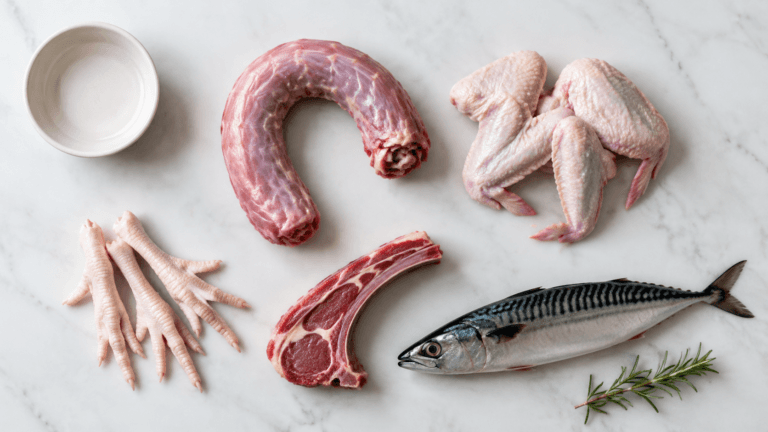
Match the bone to the dog: a raw chicken wing suits a small breed, while a lamb neck or beef rib suits a larger dog. The bone should be large enough that the dog cannot swallow it whole, and soft enough to be edible rather than tooth-cracking.
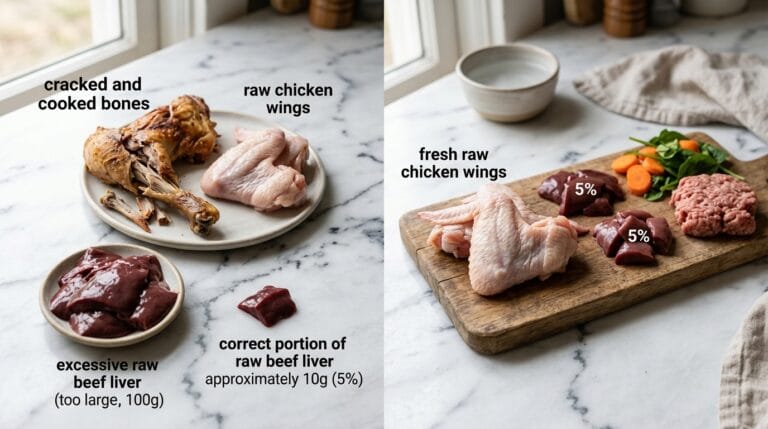
Never feed cooked bones under any circumstances — cooking makes bone brittle and prone to splintering, which can cause serious internal injury. This is the most important safety rule in the whole subject.
Introduce recreational bones slowly, and if your dog has existing dental damage or a history of gulping, speak to your vet before offering hard chews at all.
Bones to Avoid
Weight-bearing bones from large animals, such as beef marrow bones and knuckle bones, are extremely hard and are a leading cause of slab fractures to the carnassial teeth. Ironically, a bone chosen for dental benefit can break a tooth if it is too dense. Choose softer, edible bones instead.
Raw dog food and dental health work best when the overall diet is balanced and correctly portioned. Use our free calculator to work out your dog’s ideal daily feeding amount, including the right proportion of raw meaty bones.
Try Our Free CalculatorSafe Chewing Practices for Raw dog food and dental health
Realising the raw dog food and dental health benefit safely comes down to sensible chewing habits. A few simple rules protect your dog:
- •Always supervise bone chewing and remove the bone once it is worn down to a swallowable size
- •Introduce bones gradually, especially for dogs new to raw, to avoid digestive upset
- •Feed bones as part of the balanced 10% bone portion, not as unlimited extras
- •Store and handle raw bones hygienically, just as you would raw meat
- •Check your dog’s mouth regularly for chipped teeth, redness or swelling
Gulpers and aggressive chewers need extra care. If your dog tends to bolt food rather than gnaw, larger bones fed under close supervision, or frozen bones to slow them down, can make chewing safer.
The Limits of Raw dog food and dental health
It is important to be honest about the limits of raw dog food and dental health as a strategy. Raw feeding and chewing can slow plaque accumulation, but it does not cure existing dental disease. Tartar that has already hardened, or infection below the gum line, will not be reversed by diet alone and requires veterinary treatment, often including a professional scale and polish under anaesthetic.
Raw feeding is best seen as one part of a complete dental care routine, alongside regular tooth brushing where the dog tolerates it and routine dental checks at your vet. Relying on diet alone and skipping veterinary dental care is a mistake.
Frequently Asked Questions About Raw dog food and dental health
Does raw dog food and dental health really mean cleaner teeth?
Yes, in most cases raw feeding supports cleaner teeth, largely because of the mechanical abrasion from tearing meat and gnawing raw meaty bones. The raw dog food and dental health connection is real but depends on the dog actually chewing appropriate items. Minced raw food swallowed quickly provides far less dental benefit than a well-chosen raw meaty bone.
Can raw dog food and dental health benefits replace tooth brushing?
No. Even with regular bone chewing, brushing remains the gold standard for removing plaque along the gum line where bones cannot reach. Think of raw feeding as a strong supporting player, not a full replacement. The best results come from combining raw feeding, appropriate chewing and regular brushing where your dog will tolerate it.
Are raw bones safe for the sake of raw dog food and dental health?
Raw bones are generally safe when they are raw, correctly sized, edible rather than weight-bearing, and always supervised. The danger comes from cooked bones, which splinter, and from very hard weight-bearing bones, which can fracture teeth. Choose softer edible bones matched to your dog’s size and remove them before they become a swallowing hazard.
Bottom Line
The connection between raw dog food and dental health is genuine: tearing raw meat and gnawing appropriate raw meaty bones helps lift plaque, freshen breath and exercise the gums. But it is not a cure-all. Choose safe, edible bones, always supervise, never feed cooked bones, and keep up regular brushing and vet dental checks. Treated as part of a complete routine, raw feeding is a valuable ally for your dog’s teeth.