Raw Bones for Dogs UK: A Complete Safety Guide
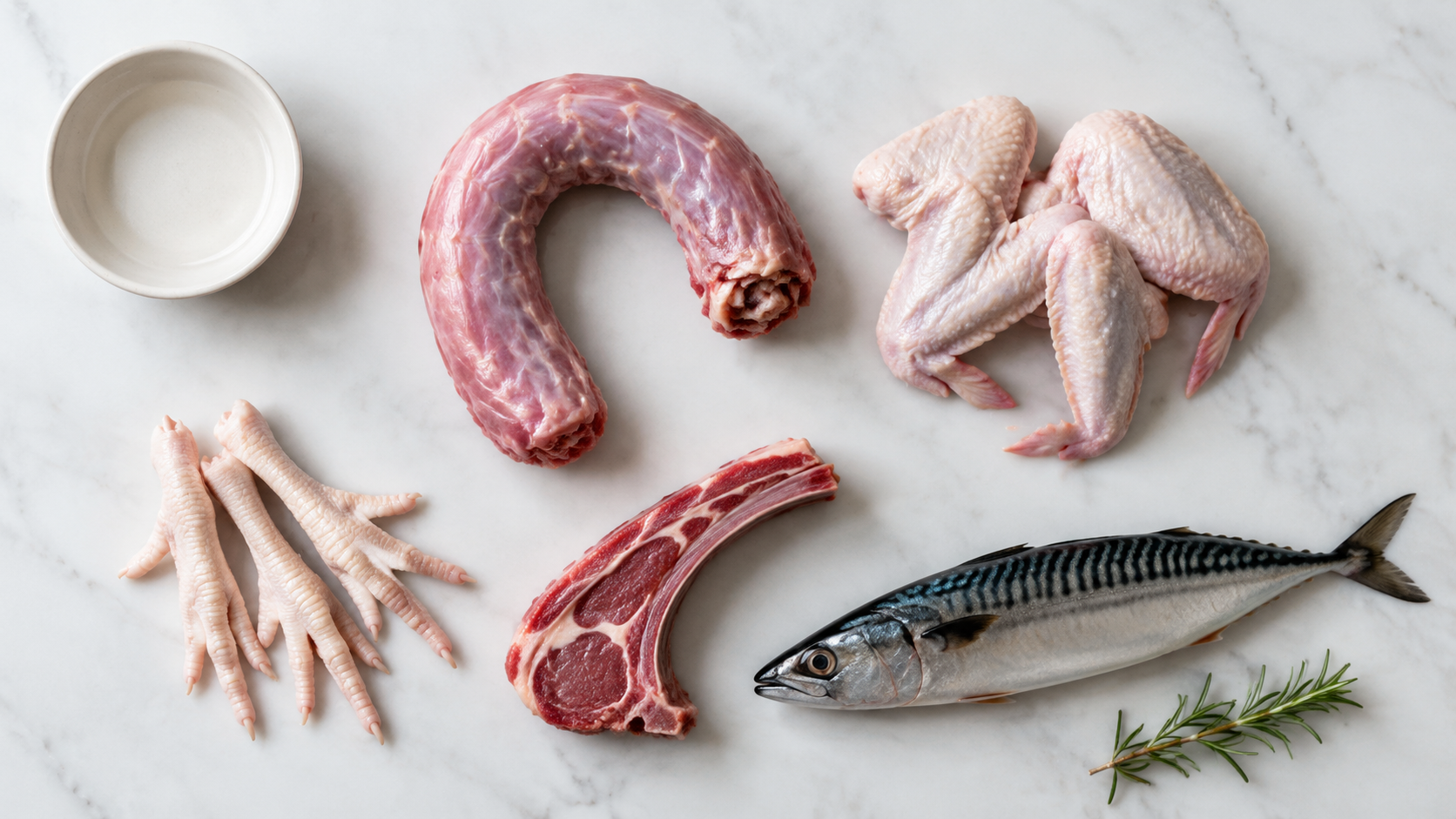
Raw bones are a cornerstone of any well-balanced raw diet. They deliver natural calcium and phosphorus, scrub teeth clean, exercise jaw muscles, and give dogs the kind of mental enrichment kibble can never match. They also carry real risks if you pick the wrong type. This UK guide breaks down exactly which raw bones are safe, which to avoid, how much to feed, and where to source them — so you can introduce bones to your dog with confidence. For a refresher on raw feeding fundamentals, see our PMR guide or our BARF guide.
Why Raw Bones Belong in a Dog’s Diet
In a balanced PMR or BARF model, around 10% of your dog’s weekly food intake should come from edible bone content. That ratio isn’t arbitrary — it’s the proportion that keeps calcium and phosphorus in the correct balance for healthy bones, teeth, and cell function. Skip the bone content and you’ll need to supplement with eggshell powder or bone meal to avoid deficiency.
The benefits go beyond minerals. Chewing through a raw chicken wing is one of the best dental cleaners available — the abrasive action removes plaque far more effectively than a brush. It also tires dogs out mentally, satisfies natural chewing instincts, and slows down fast eaters. Use our free raw dog food calculator to work out exactly how much bone your dog needs each week.
Edible Bones vs Recreational Bones
Edible bones
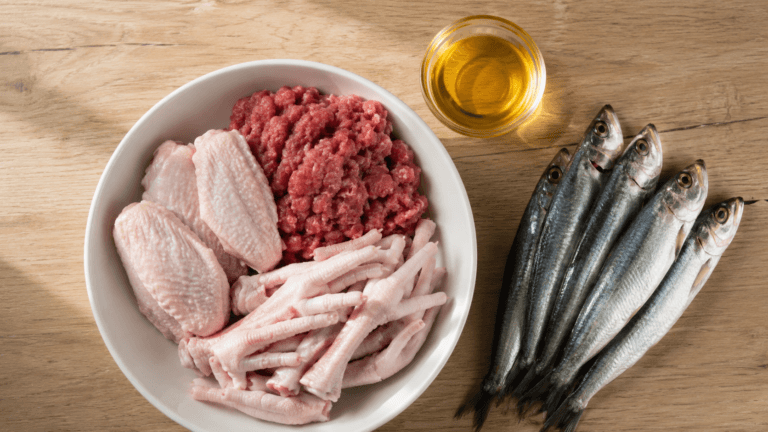
Soft, fully consumable bones that count toward your dog’s 10% bone content. Examples: chicken wings, chicken necks, chicken feet, turkey necks, duck necks, lamb ribs, fish frames. These are crushed and digested, providing the calcium your dog needs.
Recreational bones
Larger, harder bones intended for chewing rather than eating. Examples: raw beef ribs, lamb shanks, pork necks. They don’t usually count as nutritional bone content because little is actually consumed, but they provide enrichment and dental work. Always supervise — and remove them once the meaty parts are gone, before your dog starts grinding the hard core.
Bones to avoid entirely
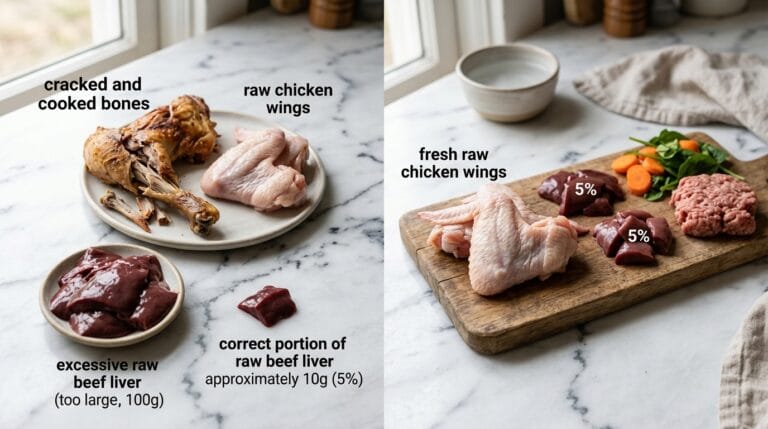
Weight-bearing bones from large animals (beef femurs, marrow bones, knuckle bones) are too dense and a leading cause of cracked teeth and broken jaws. And cooked bones of any kind splinter into sharp shards — never feed leftover Sunday roast bones, even from the dog’s favourite person.
The Safest Raw Bones for UK Dogs
These are the staples most UK raw feeders rely on, ranked from softest to firmest:
- • Chicken wings — the entry-level bone. Soft, easy to crush, ideal for small and medium dogs.
- • Chicken necks — slightly chewier than wings, great for teething pups (always supervised).
- • Chicken feet — high in natural glucosamine, brilliant for joint support.
- • Duck necks — meatier than chicken, suitable for medium to large dogs.
- • Turkey necks — substantial, satisfying, perfect for larger breeds.
- • Lamb ribs — soft enough to eat fully, with plenty of meat attached.
- • Whole sardines or mackerel — bones disappear into the fish; bonus omega-3.
- • Rabbit (whole or jointed) — exceptionally well-balanced bone content.
How Much Bone Does Your Dog Need?
The standard PMR ratio is 10% bone content by weight. For a 20kg adult dog eating roughly 400g of food per day (2.8kg per week), that’s around 280g of bone content across the week. In practice, that might look like:
- • 2 chicken wings (~80g bone content) + 1 turkey neck (~120g) + 4 chicken feet (~80g)
- • Or 3 lamb rib portions (~280g bone content combined)
- • Or 2 whole sardines (~50g bone) + chicken wings on alternate days
Watch your dog’s stools — they’re the best feedback loop. Loose stools mean too little bone; chalky white, crumbly stools mean too much.
Introducing Bones Safely
Start small and supervised
If your dog is new to raw bones, start with the softest option suited to their size. For a medium dog that means a chicken wing; for a large dog, a chicken neck or duck neck. Sit with them the first few times — you’re watching for gulping rather than chewing.
Frozen first for fast eaters
Some dogs treat bones like a sandwich and try to swallow whole. Feeding bones partially frozen forces them to slow down and actually chew. As they learn the technique, you can move to fully thawed.
Match the bone size to the dog
The bone should be larger than what your dog could easily swallow whole. A small dog can manage chicken wings; a large dog needs at least a turkey neck or duck frame to slow them down. If a Labrador is finishing a chicken wing in three seconds, size up.
Bones for Puppies
Puppies need bone content too — actually more than adults. Growing skeletons need 12–15% bone in the diet (vs 10% for adults) to support development. Stick to the softest options: chicken wings, chicken necks, and chicken feet are excellent starter bones once weaning is complete (around 8 weeks).
Always supervise puppies with bones, and break larger bones into manageable pieces. For a complete walk-through of feeding raw to a growing pup, see our UK puppy raw feeding guide.
Common Concerns Answered
“Won’t my dog choke?”
Choking risk is real but easily managed. Choose bones larger than what can be swallowed whole, supervise at first, feed bones frozen if your dog is a gulper, and never feed cut-up bones (they’re easier to swallow whole than to chew through).
“What about bacteria?”
Dogs have far stronger stomach acid than humans and handle natural bacterial loads in raw meat without issue. The risk is to you, not your dog — wash your hands, surfaces, and bowls just as you would after handling any raw chicken. The UK Food Standards Agency guidance on raw meat hygiene applies.
“My dog has dental issues — can they still have bones?”
If your dog has cracked teeth, gum disease, or recent dental work, talk to your vet first. Soft options like chicken necks or fish bones are usually fine, but harder bones may need to wait or be avoided.
“How often should I feed bones?”
Most raw feeders include bone content in 4–7 meals per week. You don’t need to give a whole bone every day — chicken mince with ground bone counts toward your 10%, as does a large bony meal twice a week.
Where to Source Raw Bones in the UK
UK raw feeders have excellent options:
- • Local butchers — often the cheapest. Many will save chicken carcasses, lamb ribs, and necks if you ask. Expect 50p–£2 per kg.
- • Raw food wholesalers — DAF, Nutriment, Natural Instinct, and Bulmer Pet Foods all offer frozen bone packs in bulk.
- • Supermarkets — chicken wings, drumsticks, and whole mackerel are widely available; check reduced sections for bargains.
- • Farm shops and game dealers — particularly good for rabbit, venison, and pheasant in season.
Buying in bulk and freezing in meal-sized portions keeps costs down. For a deeper look at sourcing strategies, see our budget raw feeding guide.
The Bottom Line
Raw bones are one of the most natural and beneficial parts of a balanced raw diet — provided you stick to soft, edible options, match the bone size to the dog, and supervise at first. Avoid weight-bearing bones, never feed cooked bones, and aim for around 10% bone content in your dog’s weekly food. Done well, raw bones deliver clean teeth, strong bones, and a deeply satisfied dog.
Get Your Bone Ratios Right
Use our free UK raw dog food calculator to work out exactly how much bone, muscle meat, and organ your dog needs each week — adjusted for weight, age, and activity level.
Try Our Free Calculator